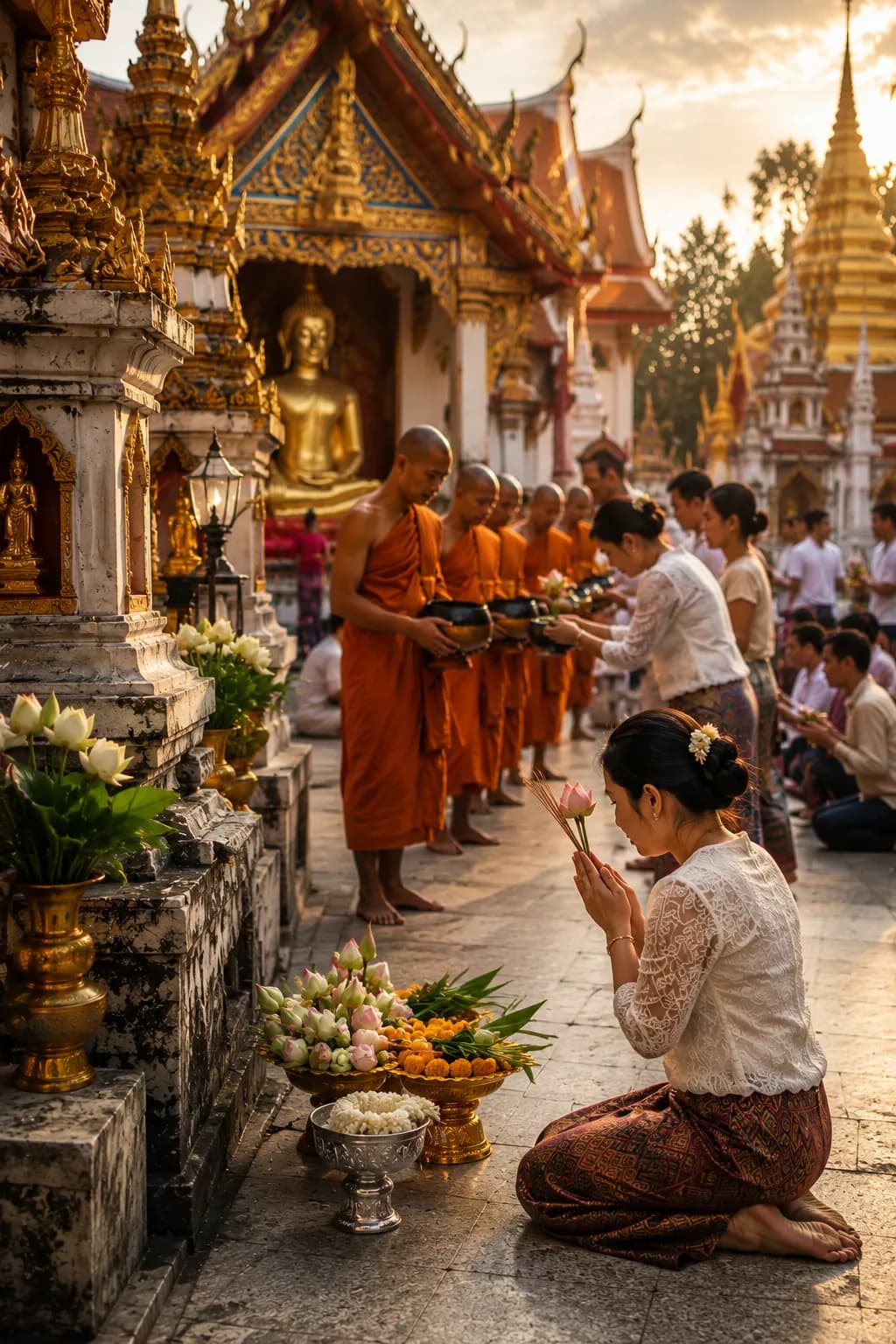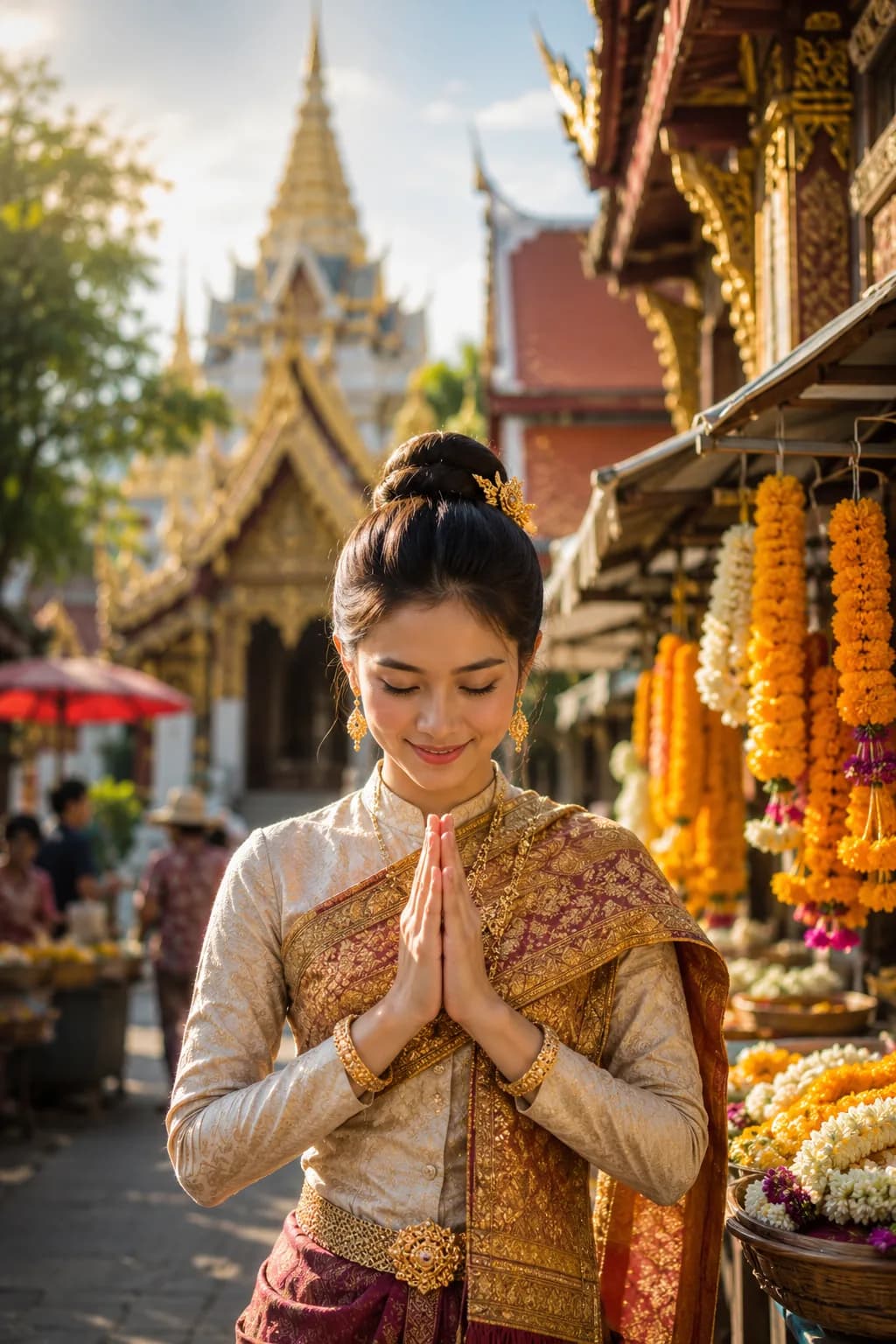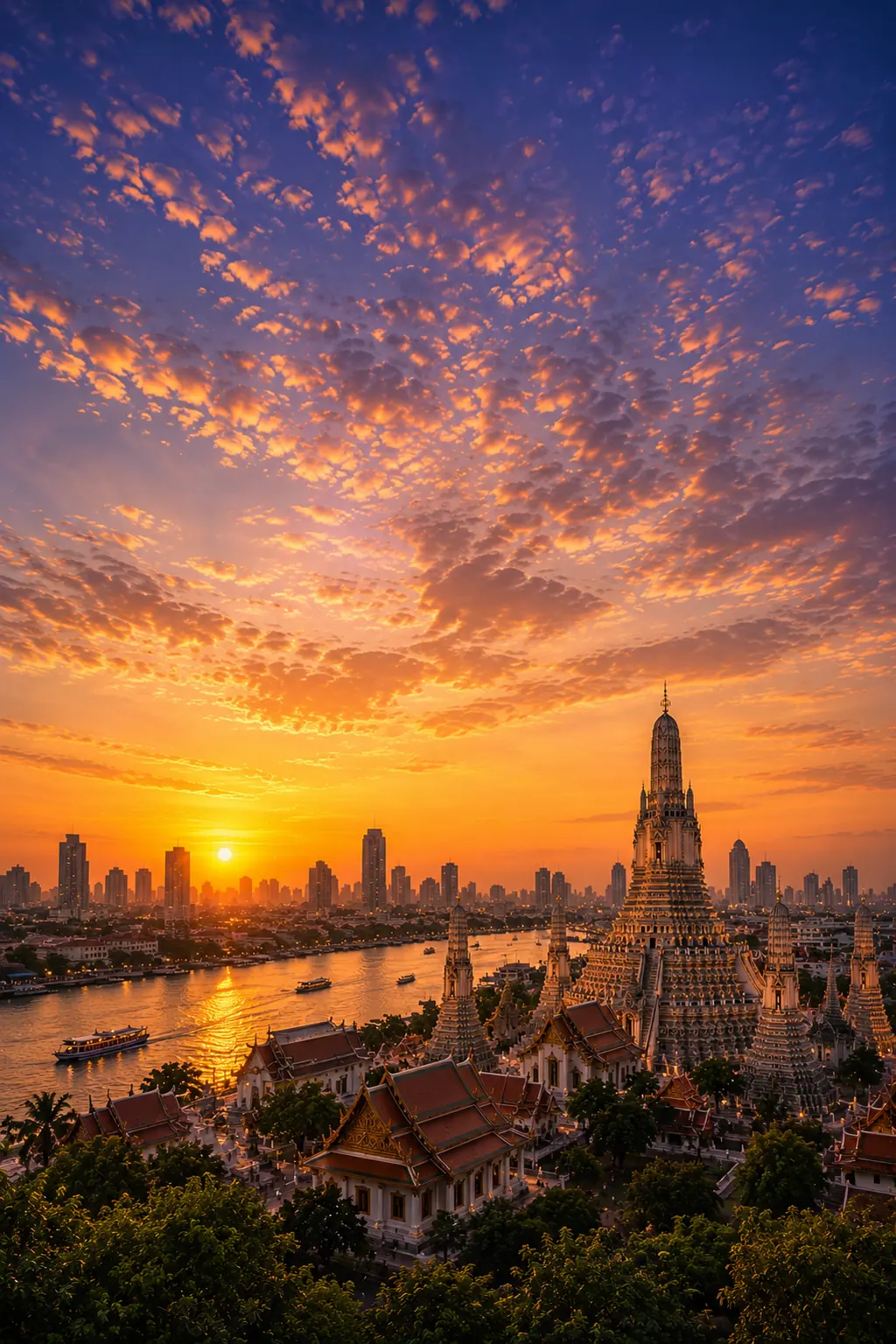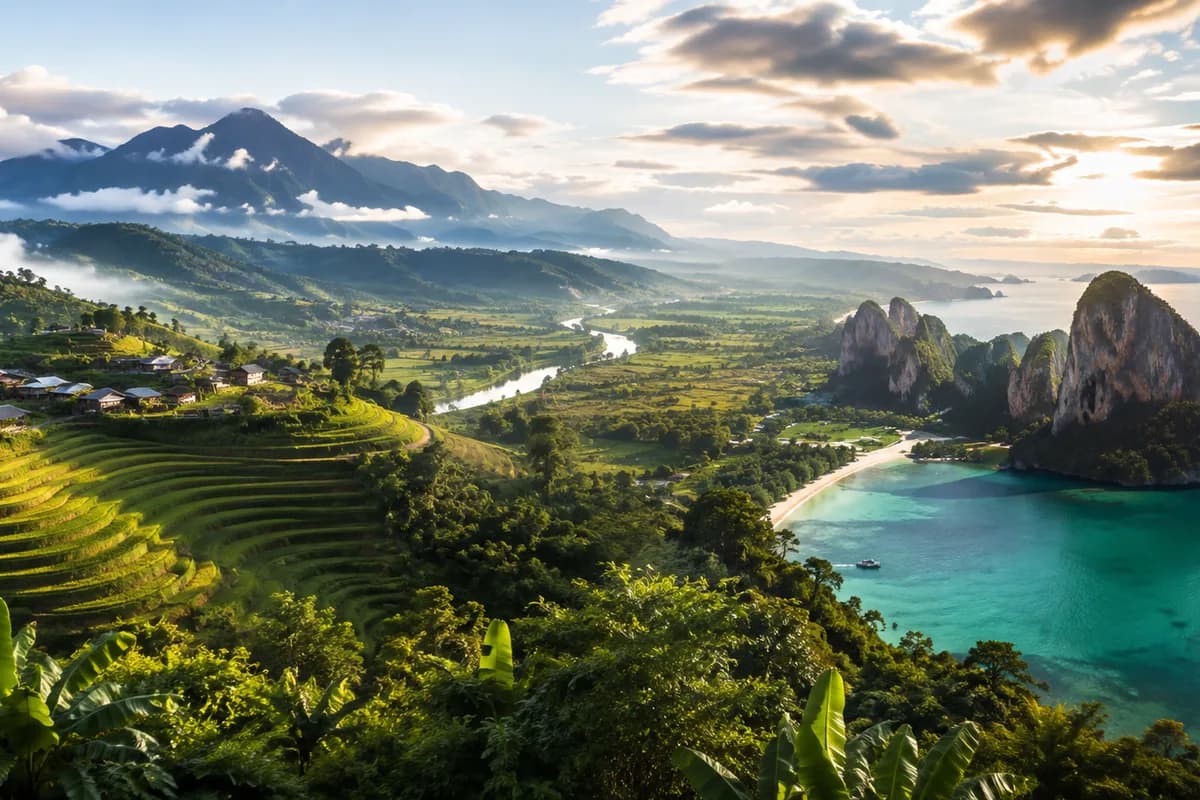
One Country, Several Thailands
Thailand is one country. It doesn't always feel like one place. Travel from Chiang Mai to Bangkok and on to Phuket and you move through different landscapes, food traditions, accents, historical influences and religious environments — sometimes within the space of a single day's flight connections. None of this is absolute: people move constantly, cities mix cultures, Bangkok contains communities from every region, and tourism has transformed large parts of the south. But geography has shaped Thailand deeply, and understanding the broad differences between north, central and south makes the whole country considerably easier to read. (Isaan, the northeast, is distinctive enough to deserve its own treatment entirely — more on that below.)
Thailand stretches a long way from north to south: northern mountains sit close to Myanmar and Laos, the central plains are dominated by the Chao Phraya river system and Bangkok, and the southern peninsula runs between the Andaman Sea and the Gulf of Thailand toward Malaysia. That geography shaped different climates, economies, trade routes and, historically, entirely different kingdoms before they gradually became one centralised state.
The North: Lanna Country
Northern Thailand is generally associated with mountains, cooler winters and the old Lanna cultural region. Chiang Mai is the obvious centre, but the north extends well beyond it — Chiang Rai, Lampang, Lamphun, Mae Hong Son, Nan and Phrae all carry their own character, with mountain districts, river valleys and border regions that rarely make it onto a typical itinerary.
Understanding the region means understanding Lanna itself: a kingdom that developed from the late 13th century, centred on Chiang Mai, with a political history that included periods of Burmese control before gradually integrating with Siam. Lanna identity survived that history in architecture, food, language, textiles and festival styles, which is why northern Thailand can still feel culturally distinctive despite generations of full integration into the modern Thai state. Northern Thai speech, sometimes referred to as Kam Mueang, remains an important marker of that identity alongside standard Thai, and people often move between the two depending on who they're talking to.
The north's food reflects the same distinct history — khao soi (curry noodle soup), sai ua (aromatic sausage) and nam phrik noom (roasted green chilli dip) are all deeply flavoured without relying on the intense chilli heat found further south or in the northeast, and coconut milk generally plays a smaller role than in central or southern cooking. (See our food culture guide for more on how the regional cuisines compare.) The region's long shared border with Myanmar has left visible marks too, in architecture and food particularly, and northern Thailand is also home to ethnic minority communities including Karen, Hmong, Lahu, Akha and Lisu groups, each with distinct languages and histories. Tourism has sometimes presented these communities through simplified, costume-focused imagery; they're living communities, not cultural exhibits, and are worth approaching with the same care you'd extend anywhere else.
Climate matters more here than the tropical stereotype suggests — cool-season mornings in the mountains can genuinely surprise visitors expecting year-round heat, and seasonal air pollution from agricultural burning and forest fires can create serious haze during parts of the dry season, worth checking before you commit to a northern trip around that time of year. Northern temples carry their own visual language too, with rooflines, woodwork and naga staircases distinct from Bangkok's grander style, and Yi Peng — the northern lantern festival, closely tied to Chiang Mai and often confused with the separate tradition of Loy Krathong — has become one of the country's most internationally recognisable festival images (more on that distinction in our guide to Thai festivals).
The Central Region: Water, Rice and the Capital
Central Thailand is shaped by water. The Chao Phraya river basin created fertile agricultural land that supported a succession of powerful historical capitals — Ayutthaya, then Thonburi, then Bangkok — and the region became the political centre of the modern Thai state, giving its language and institutions influence that reaches far beyond its own borders.
Ayutthaya dominated Siamese history for more than four centuries, its location giving it access to both inland agriculture and international trade, before its destruction in 1767 shifted the centre of power first to Thonburi and then, from 1782, to Bangkok under the newly founded Chakri dynasty — a new capital that consciously carried forward Ayutthaya's court culture and religious traditions rather than starting from nothing. Bangkok today dominates the country economically, politically and culturally, pulling people from every region for education, work and opportunity; that makes it both a central Thai city and a genuinely national one, where you can eat Isaan food, northern food, southern food and Chinese-Thai food within a few kilometres, and where regional accents mix constantly. Bangkok isn't really a pure example of "central" culture at all — it's the place where the rest of Thailand collides with itself.
Standard Thai, used nationally in education, government and mainstream media, is closely tied to central Thai speech, which gives it a status regional languages don't share — someone from Isaan or the north may speak their own language at home and switch to standard Thai in formal settings, a language hierarchy that reflects Bangkok's political centrality as much as anything linguistic. The dishes most visitors first think of as simply "Thai food" — green curry, tom yum, pad Thai, boat noodles — are strongly associated with central Thailand and Bangkok specifically, shaped by centuries of Chinese migration and royal culinary tradition (Yaowarat, Bangkok's Chinatown, is a particularly clear example of how deeply that Chinese-Thai history runs). The royal court and national institutions developed around Bangkok too, which means what outsiders sometimes perceive as generic "Thai culture" — from temple style to ceremony to standard language — is often specifically central Thai culture amplified nationally (our guide to the monarchy and Thai national identity goes deeper into this). Climate-wise, central Thailand is hot for much of the year, with a rainy season capable of serious downpours and, given Bangkok's low elevation, recurring flood risk that the north and south don't share in the same way.
The South: Two Coasts, One Peninsula
Southern Thailand feels different again. The peninsula narrows between two seas — the Andaman coast to the west, the Gulf of Thailand to the east — a geography that produced fishing communities, ports, maritime trade and long-standing cultural connections with the Malay world, along with many of the country's most famous tourist destinations.
The two coasts matter more than visitors often realise. The Andaman side includes Phuket, Krabi, Khao Lak, Koh Lanta and Phi Phi; the Gulf side includes Koh Samui, Koh Phangan and Koh Tao (Hua Hin, though technically on the Gulf, sits culturally closer to central Thailand than to the deep south). Weather patterns differ between the two coasts, so a rainy stretch on one side doesn't necessarily mean the same conditions apply on the other — genuinely useful to know when planning trip timing.
Phuket is the south's most internationally famous destination, transformed by tourism into a landscape of beach resorts, nightlife and international restaurants, but it carries a deeper local identity too, shaped by maritime trade and Chinese migration — Old Phuket Town's Sino-Portuguese architecture and the island's Vegetarian Festival both reflect that history, and there's considerably more to Phuket than its best-known beach strip. Krabi's dramatic limestone cliffs, islands and mangroves create a landscape unlike anywhere else in the country, with tourism concentrated in specific areas like Ao Nang and Railay while rural communities remain close by, sometimes producing a sharp contrast between the two.
Travel further south toward Pattani, Yala, Narathiwat and parts of Songkhla and the cultural landscape shifts significantly: Malay-Muslim identity becomes much stronger, mosques are prominent, and food, language and religious rhythms all change accordingly. This "deep south" also carries a complex modern political and security history that sets it apart from the resort south familiar to most international visitors — worth knowing exists, even if it isn't part of a typical itinerary. More broadly, Thailand's south includes a substantial Muslim population, particularly in provinces near Malaysia, and it's worth not assuming that Phuket's tourist-nightlife atmosphere represents southern Thailand as a whole.
Southern food reflects all of this — turmeric, abundant seafood, coconut and strong Malay-Muslim influence combine into curries that can be genuinely fierce, with gaeng som (a sharp, hot sour curry usually built on fish or seafood) a good test case for anyone confident about their spice tolerance. Roti, biryani-style rice dishes and halal street food reveal a culinary world shaped by connections to the Malay peninsula rather than simply "central Thai food with more seafood." Away from rice, the region's agriculture runs on rubber and palm rather than the rice-dominated landscapes of central Thailand or Isaan, creating a genuinely different visual environment, while the humid climate supports its own abundance of tropical fruit. And the sea itself functions as infrastructure here rather than scenery — fishing, ferries and marine resources are woven into everyday economic life in a way that's hard to fully appreciate from Bangkok. International tourism transformed the south more dramatically than almost anywhere else in the country: fishing villages became resorts, remote islands gained airports and ferry networks, and places like Phuket, Samui and Phi Phi became global travel brands — though a couple of weeks in Patong is a real slice of southern Thailand, not the whole of it, and driving away from the major beaches can change the social landscape rapidly.
What the Comparison Reveals
Line the three regions up and the differences run deeper than food and weather. Temple architecture shifts from Lanna woodwork in the north to elaborate gold-and-mirror royal style in Bangkok to southern styles coexisting closely with mosques and Chinese shrines — there's no single visual language that can honestly be called "the Thai temple." Chinese influence appears everywhere but takes different local forms, from Bangkok's Yaowarat to Phuket's Peranakan heritage to Chinese shrines in provincial trading towns across the country. Ethnic diversity — Malay Muslims, Mon and Khmer-speaking communities, various highland groups, Thai-Chinese communities — doesn't map cleanly onto any north-central-south grid at all, and a regional comparison like this one is only useful if it doesn't erase that complexity.
Architecture responds to climate in each region: cooler mountain conditions in the north, flood-prone river plains in the centre, heavy rain and coastal exposure in the south, with older buildings still showing those differences even as modern construction smooths them over. The old travel-writing cliché — relaxed north, frantic Bangkok, laid-back islands — has some truth in it and plenty of nonsense too: Chiang Mai has real traffic, Bangkok has quiet neighbourhoods, and a southern fishing village has nothing like Patong's pace despite sharing a region. Economic structure and tourism intensity generally explain pace and cost far better than compass direction alone does. The same goes for nightlife, which ranges from Bangkok's everything-at-once scene to a smaller, more varied one in Chiang Mai to southern resort nightlife built heavily around international tourism, with quiet provincial towns sitting well outside all of it — "Thai nightlife" as a single phrase covers genuinely unrelated experiences. Music tells a similar regional story, from northern folk traditions to Isaan's mor lam and luk thung to the south's own sound and Malay influences, all sitting underneath a national pop culture that reaches everywhere regardless.
Regional identity persists even inside a strong national one. Someone's answer to "where are you from" — Chiang Mai, Bangkok, Nakhon Si Thammarat, Phuket — often carries real pride, accent and food loyalty intact even after decades spent living elsewhere, and Bangkok's role as a magnet for people from every region only complicates, rather than erases, those regional lines; a single Bangkok neighbourhood can contain food and language from across the entire country. Thais themselves make regional jokes constantly, about accents, food, temperament and more — some affectionate, some carrying real class or ethnic prejudice underneath, and it's worth being cautious about repeating them as a visitor, since regional humour lands very differently coming from someone who's actually from the region than from someone who arrived last week.
Where Isaan Fits
Isaan doesn't appear in this north-central-south comparison because it genuinely deserves its own category rather than being folded into "north" or treated as an afterthought. Its Lao-related language, distinct food traditions, mor lam and luk thung music, and separate historical experience make it one of Thailand's major cultural regions in its own right — worth adding to your mental map of the country alongside, not underneath, the other three. (Our dedicated guide to Isaan covers all of this in depth.)
Planning Around the Differences
Knowing the regions changes how you actually travel: you stop expecting identical food everywhere, you understand why temple styles shift as you move, you notice language changing block by block in Bangkok, and you plan around weather and haze more intelligently. A simple first-time route — Bangkok, Chiang Mai, then Phuket or Krabi — gives you three genuinely different versions of Thailand with easy transport links between them. A more adventurous version, swapping in Ayutthaya, Nan or Chiang Rai, and Trang or Nakhon Si Thammarat, will likely teach you more about the country, even if it takes more planning to pull off.
Modern Thailand is also actively blurring these older boundaries — low-cost airlines, universities, social media, interregional marriage and constant migration mean a young person from Chiang Rai might live in Bangkok, eat Isaan food for lunch and spend weekends at a southern beach without a second thought. That doesn't mean regional identity is disappearing; it means it's changing shape. What holds the whole country together — language, Buddhism, the monarchy, national education, a genuinely strong shared identity — sits on top of real regional histories: Lanna in the north, the old Siamese heartland in the centre, Lao-related Isaan culture in the northeast, Malay and maritime influence in the south, Chinese communities woven through all of it. Travelling across Thailand can feel like discovering the country over and over again — the flag stays the same, but the food, accent, architecture, weather and history underneath your feet keep changing, which is exactly what makes crossing the country worth doing slowly.