Beyond Bangkok, Beaches and Islands
For many first-time visitors, "Thailand" means Bangkok, beaches and islands. Then there's Isaan — huge, culturally distinct and largely overlooked by international tourism, despite being home to a large share of the country's population. The region stretches across the Khorat Plateau, bordered by the Mekong River and neighbouring Laos and Cambodia, and includes major cities such as Khon Kaen, Udon Thani, Nakhon Ratchasima (Korat) and Ubon Ratchathani, along with thousands of villages and farming communities. Isaan isn't hidden. It's simply less packaged for tourism — and that's a large part of its appeal.
Roughly a third of Thailand's landmass, the northeast has deep historical and cultural ties to the Lao-speaking world. Many people here speak both standard Thai and a regional language closely related to Lao, with Khmer-speaking communities also significant closer to the Cambodian border. It's one of the clearest places to understand that Thai identity was never culturally uniform — and that "Isaan" itself isn't one perfectly consistent culture either. Udon Thani isn't Buriram; Khon Kaen isn't Ubon Ratchathani. Regional labels here, as everywhere in Thailand, are useful shortcuts rather than complete explanations.
A Different Rhythm
Bangkok can feel global, Phuket international, Pattaya built around visitors. Isaan tends to feel more local: English is less widely used outside the bigger cities, tourist infrastructure is thinner, and daily life is often more visibly tied to family, markets, agriculture and provincial social networks. None of that means the region is frozen in time — Khon Kaen and Udon Thani both have universities, malls, cafés, hospitals and fast-growing urban districts — but the overall social texture feels different from Thailand's best-known tourist centres.
History Between Empires
Isaan has long sat between larger centres of power. Different parts of the plateau were shaped over the centuries by Khmer kingdoms — ancient temple ruins remain scattered across provinces like Buriram and Nakhon Ratchasima — and by Lao-speaking political networks that became deeply established across much of the region. Siamese centralisation intensified through the 19th century, and modern national borders eventually separated communities that had historically shared language, trade and family ties across what is now the Thailand-Laos frontier. The Mekong became an international border; the culture on either side of it did not stop at the water.
For riverside towns such as Nong Khai and Mukdahan, that border remains a strange, tangible thing: you can sit down for dinner in Thailand with another country clearly visible a short distance across the water, in communities that were often more connected to each other historically than modern borders suggest.
Migration and Why Isaan Matters to the Rest of Thailand
Understanding modern Isaan means understanding migration. For decades, large numbers of northeasterners have moved to Bangkok, Pattaya, Phuket and other economic centres for work in construction, hospitality, retail, transport and beyond — while maintaining strong ties home, sending money back, and returning for Songkran or major family events. That constant circulation between village and city has reshaped the rest of the country as much as it has shaped Isaan itself: som tam, larb, sticky rice and grilled chicken became everyday Bangkok food largely because northeastern communities carried their cuisine with them, and Isaan music, slang and humour travelled the same routes. (For more on how that food actually works at the table, see our guide to food culture in Thailand.) Isaan is often described as peripheral. In practice, it's deeply embedded in the country's modern urban life, and Songkran shows this at its most visible — for many workers living elsewhere, the holiday is the single most important chance of the year to go home, with roads clogged and bus tickets vanishing well in advance.
Music, Humour and Regional Pride
Isaan's cultural export runs well beyond food. Mor lam, the region's defining musical tradition, combines singing, storytelling and rhythm, traditionally accompanied by the khaen, a bamboo mouth organ whose sound is one of the clearest markers of shared heritage across the Thailand-Laos border. Modern mor lam concerts can be startlingly large-scale — electric instruments, dancers, elaborate staging — a world away from any quiet folk-music image visitors might expect. Luk thung, often translated as Thai country music, is closely tied to rural and working-class experience and has produced many of Thailand's most famous singers, with songs frequently touching on love, migration and the emotional cost of leaving home for work.
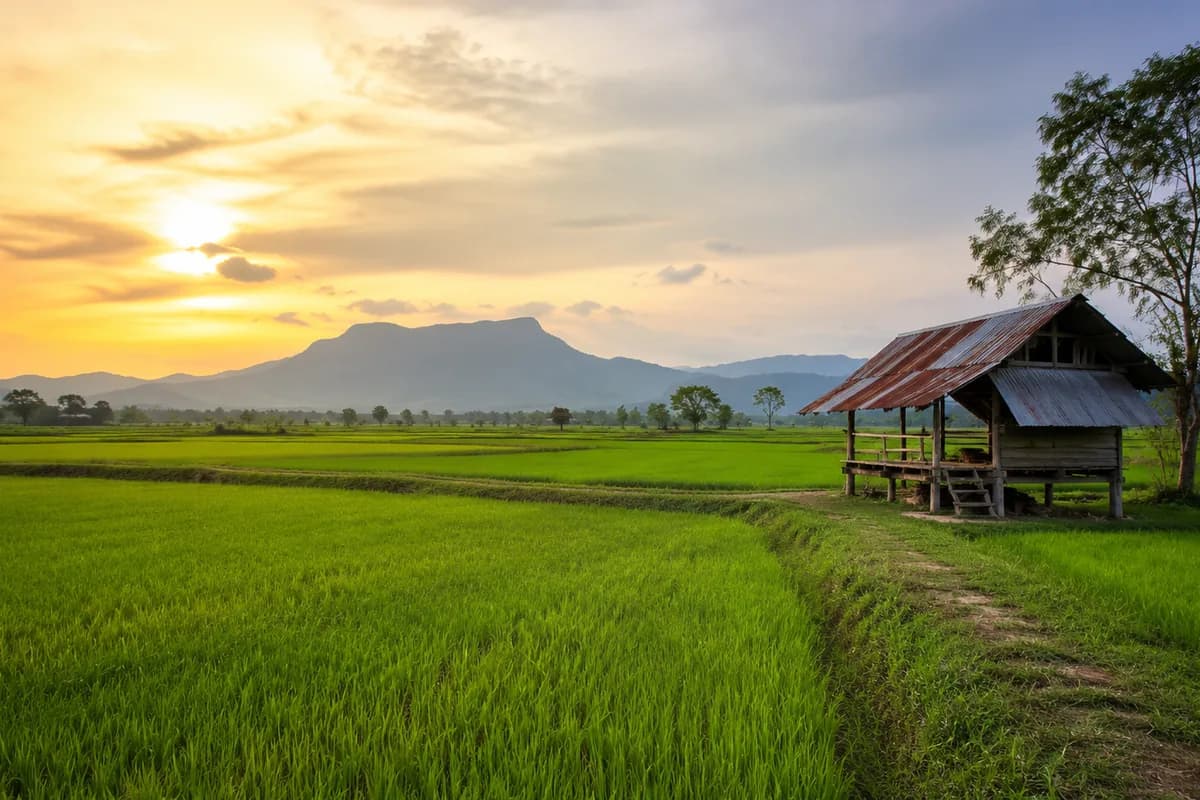
Isaan comedians and performers are also enormously popular nationally, and the regional accent itself often becomes part of the humour — which has a genuinely complicated side. Regional jokes can be affectionate, but they can also carry older class prejudice; for much of modern Thai history, Isaan was associated in the national imagination with poverty and rural life, and migrants in Bangkok have faced real prejudice tied to accent or origin. Those attitudes haven't disappeared entirely, but Isaan identity has also become increasingly visible and a source of open pride, particularly among younger people, driven by music, food, fashion and social media. The northeast's historic poverty is real too, and infrastructure has improved enormously — roads, universities, hospitals, airports — even as economic gaps with wealthier parts of the country persist. It's worth keeping in mind before romanticising the countryside: a beautiful rice field can also represent hard physical work and uncertain income.
Cities Worth Knowing
Khon Kaen is one of Isaan's most modern cities, a regional hub for education, medicine and business with a large student population thanks to Khon Kaen University — an easy entry point for travellers who want northeastern city life without leaving modern comforts behind.
Udon Thani grew significantly during the Cold War era and has long-standing connections with foreign visitors; today it's a busy commercial centre and a useful gateway toward Nong Khai and Laos. The surrounding province also holds Ban Chiang, one of Southeast Asia's most important prehistoric archaeological sites, known for early evidence of settlement, pottery and metallurgy — a reminder that Isaan's history stretches back far further than the kingdoms usually taught in basic Thai history.
Korat (Nakhon Ratchasima) sits at the gateway between central Thailand and the northeast, blending influences from both, and is one of Thailand's largest urban centres outside Bangkok. Its most important local symbol, Thao Suranari (Ya Mo), is celebrated in local tradition for her role in resisting a 19th-century Lao military campaign, and her monument remains a major site of civic pride.
Buriram pairs spectacular Khmer-era ruins — including Phanom Rung, a sanctuary built on an extinct volcano and linked to Hindu religious tradition — with a very different, very modern identity as one of Thailand's major football and motorsport centres, home to Buriram United and the Chang International Circuit. Ancient temples, rice fields, a modern stadium and international racing crowds within the same province is a genuinely striking combination.
Ubon Ratchathani, famous for its Candle Festival around the start of Buddhist Lent, offers access to dramatic Mekong landscapes near the Laos border. Loei, mountainous and surprisingly cool in winter, is home to the Phi Ta Khon ghost festival in Dan Sai. And Nong Khai, sitting directly on the Mekong opposite Laos, is often treated purely as a stop en route to Vientiane — but its riverfront atmosphere, temples and markets deserve more attention on their own terms.
The Mekong, the Naga and Village Life
Along the river, naga imagery — a serpent-like supernatural being with deep roots across South and Southeast Asian religious tradition — appears everywhere, guarding temple staircases and shaping local legend. One of the region's most famous mysteries plays out at the end of Buddhist Lent in Nong Khai province, when glowing balls are reported rising from the Mekong: believers connect them to the naga, sceptics propose natural or human explanations, and the debate itself has become part of the annual event, drawing thousands to the riverbank.
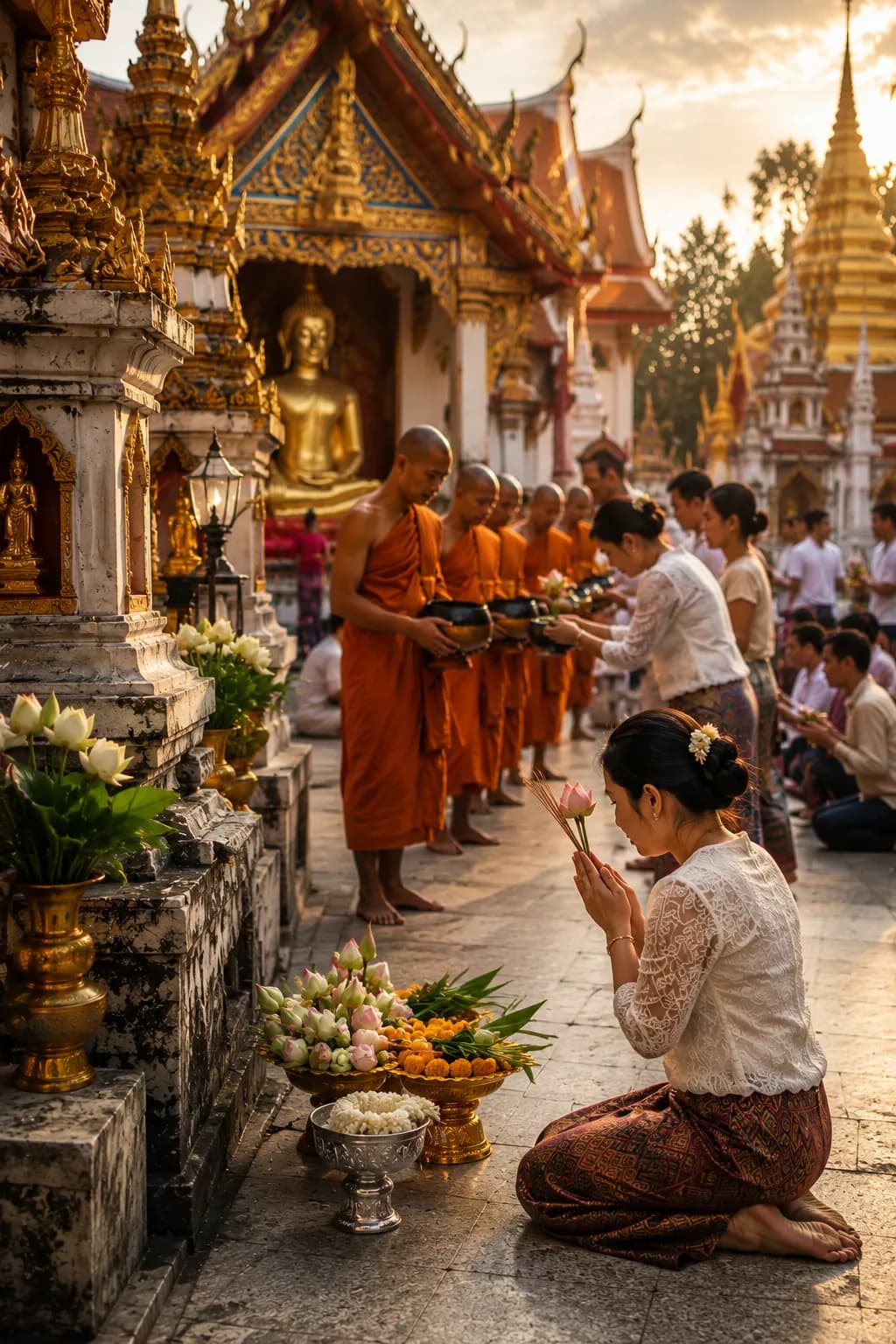
Buddhism and older spirit traditions sit especially close together in Isaan spirituality — village guardian spirits, ancestor beliefs and Buddhist merit-making rarely feel like competing systems, and a family may move between a temple visit and a spirit ceremony within the same cultural world. Village temples remain genuine community centres, hosting funerals, festivals, meetings and everyday social life rather than functioning purely as places of worship. Rural funerals in particular can become major community events, with neighbours helping, food prepared, and relatives returning from distant cities — a visible reminder of how strong local social networks remain, even for people who've lived in Bangkok for years.
It's worth resisting the urge to romanticise village life itself. The peaceful image — rice fields, family homes, neighbours who know each other — is real, but so are long working days, economic pressure and limited local employment. It isn't a lifestyle retreat; it's simply life for the people who live there.
Isaan also has a visible population of long-term foreign residents, many with Thai partners or families, which has produced small pockets of international influence in otherwise rural towns — money sent or invested from abroad supporting local families, housing and businesses. International relationships between foreign men and Isaan women in particular have generated stereotypes both inside and outside Thailand; the reality behind them is more varied than any single narrative, shaped by different families, motivations and economic circumstances in each case.
Visiting Isaan
International tourism here is far smaller than in Bangkok, Chiang Mai or the southern islands, which cuts both ways: fewer crowds, more local atmosphere and generally lower prices, set against less English, fewer international-standard tourism services outside the major cities, and greater distances between destinations. Isaan is enormous — plan it more like a road trip than a compact island hop. Major cities connect by bus, train and domestic flight, with a realistic first route running Korat to Khon Kaen to Udon Thani, adding Nong Khai if time allows; trying to "see Isaan" in two days simply doesn't work. Driving gives real flexibility on generally good major roads, though distances stay substantial and rural night driving carries its own hazards. The train, slower than flying, has its own appeal: watching urban Bangkok gradually give way to fields and plateau landscapes gives the journey into Isaan a sense of geography that flying skips entirely.
The climate is strongly seasonal — a genuinely brutal hot season, a rainy season that turns the countryside green, and generally more comfortable cooler months — and the landscape itself transforms through the farming calendar, from dry fields to bright green paddies to golden harvest scenes.
Nightlife in major Isaan cities exists, it just doesn't look like Bangkok or Pattaya's tourist-facing scene: live-music venues, Thai pubs, beer gardens, night markets and university nightlife, with a noticeably more local audience even where foreign-oriented venues exist. Football is genuinely significant here too — Buriram United's stadium culture reveals as much about contemporary Isaan as any temple does about its past — and large modern universities, Khon Kaen's especially, have brought cafés, apartment developments and youth culture that don't fit old, purely agricultural stereotypes of the region. Isaan has also played a significant role in modern Thai politics, shaped by long-running debates over regional inequality, development and representation between Bangkok and the provinces; the details are genuinely complex and sometimes contentious, and the point worth taking as a traveller is simply that the northeast, given its population, is central to national political life rather than peripheral to it.
Why Go
If you want turquoise water, go south. If you want a dense list of internationally famous sights, Bangkok and Chiang Mai are easier. Isaan offers something different: space, Mekong sunsets, Khmer ruins, regional food, village festivals, football, markets, music and a slower pace — plus the sense that most people around you are there because they actually live there. The biggest mistake is turning it into another checklist of temple, photo, lunch, bus, next city. The region rewards a slower approach: sit in a café, go to a market, watch a football match, eat somewhere with no English menu, spend an evening by the Mekong, take the slow train, talk to people.
For many travellers, visiting Isaan changes how the rest of Thailand reads afterward. Suddenly the accent of a food vendor in Bangkok makes sense, sticky rice's ubiquity has context, mor lam playing in a taxi means something, and the crowds heading northeast at Songkran stop being an abstraction. Thailand stops looking like a collection of separate destinations and starts looking like one connected society — which is, in the end, the whole point of adding Isaan to your map of the country.