A Calendar Built From Many Traditions
Thailand's festival calendar is crowded, and it is crowded for good reason. Some celebrations mark Buddhist holy days. Others grow out of older agricultural or spirit traditions that predate the Buddhist calendar entirely. Some reflect Chinese heritage brought by generations of migration, and a few have simply grown, almost by accident, into massive national spectacles that now draw travellers from around the world.
The result is a country where a quiet candlelit temple procession, a city-wide water fight, a parade of masked spirits and a strict vegetarian street festival can all sit on the same annual calendar. For visitors, festivals are one of the fastest ways to see how religion, family, community and regional identity fit together in Thailand — often within the same afternoon.
Songkran: More Than a Water Fight
Songkran is Thailand's most famous festival, and to most first-time visitors it means exactly one thing: water, in enormous quantities. For several days each April, streets across Bangkok, Chiang Mai, Pattaya and Phuket turn into open-air water battles, with buckets, hoses and water guns appearing on almost every corner.
That chaos is only the modern, visible layer. Songkran is the traditional Thai New Year, and its older customs are built around cleansing, renewal and respect. Buddha images are gently washed with scented water, and younger family members pour water over the hands of parents, grandparents and elders while asking for their blessing. Families travel home, visit temples and make merit. A grandmother receiving water respectfully over her hands and a backpacker being ambushed by a bucket of ice water ten minutes later are experiencing two very different sides of the same festival — and both belong to Songkran.
The festival centres on 13 April, though celebrations run longer in many places and the atmosphere shifts dramatically by destination: Bangkok's Silom and Khao San Road become enormous party zones, Chiang Mai's old city hosts its own famous version, and Pattaya traditionally keeps its water celebrations going later than most other destinations. Smaller towns tend to feel far more family- and temple-oriented. In 2023, UNESCO added Songkran in Thailand to its Representative List of the Intangible Cultural Heritage of Humanity, recognising it specifically as a period of family reunion, respect for elders and ancestors, merit-making and symbolic cleansing — worth remembering the moment someone empties a bucket of ice water down your back.
If you're heading into a major water-fight zone, assume you will get soaked, no exceptions. Seal your phone, passport, cash and camera in a waterproof pouch, wear shoes that can handle a soaking, and never ride a motorbike while participating — traffic accidents rise sharply during the holiday. Not everyone wants to play: monks, elderly people, babies, people working, and anyone carrying obviously sensitive equipment shouldn't be treated as targets, and throwing water directly into someone's face at close range crosses the line from fun to unpleasant fast.
Loy Krathong and Yi Peng Are Not the Same Festival
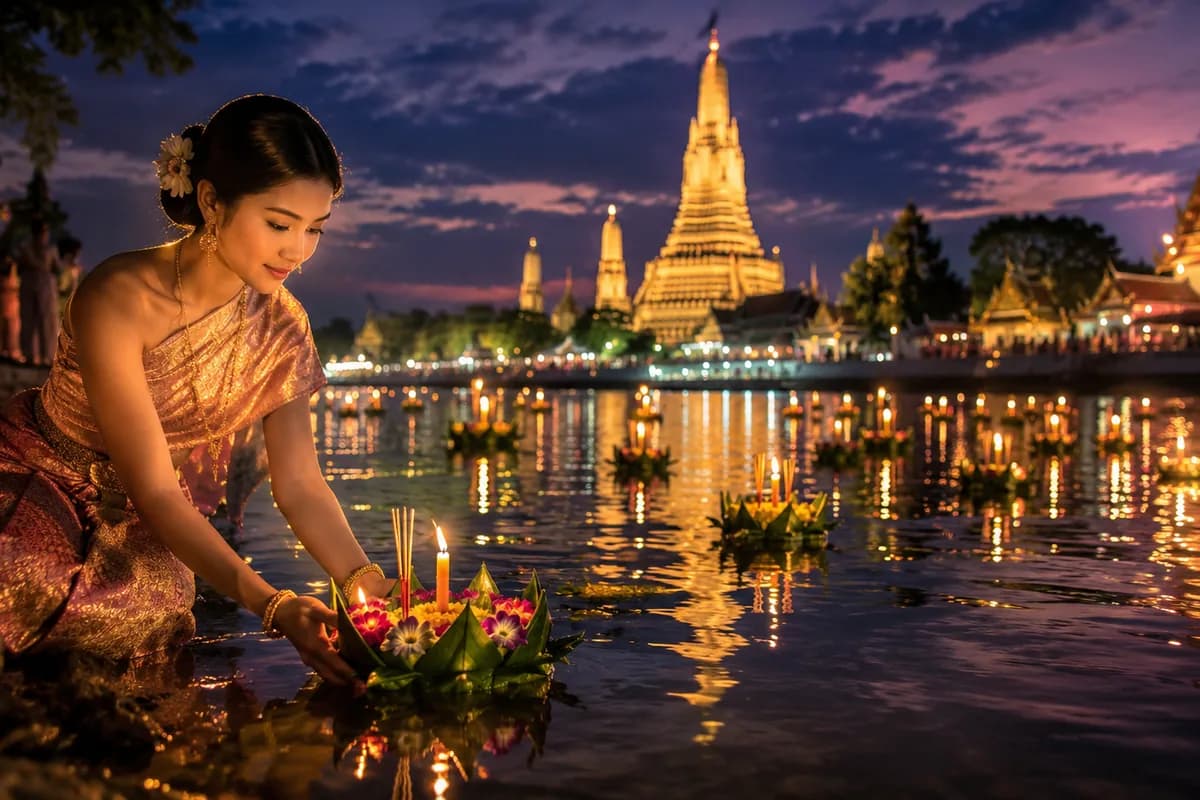
If Songkran is loud and chaotic, Loy Krathong feels almost like its opposite. Held on the full moon of the twelfth lunar month, usually in November, it involves releasing small decorated floats — krathong — onto rivers, canals and ponds. Traditional krathong are made from banana leaves, flowers, candles and incense, and the sight of thousands of glowing floats drifting across dark water makes it one of Thailand's most visually striking celebrations.
The meanings attached to the ritual vary from person to person: some see it as an expression of gratitude to water, others use it to symbolically release bad luck or difficulty, and many simply make a wish for the future. As with much of Thai tradition, there isn't one single official explanation everyone agrees on. Modern Loy Krathong has also raised environmental questions, since millions of floats can turn into waste; choosing a biodegradable krathong made from natural materials is now the standard expectation for anyone participating.
Confusion online is common because photographs of glowing lanterns rising into the sky are frequently mislabelled "Loy Krathong." That lantern tradition is actually Yi Peng, a Lanna festival strongly associated with northern Thailand and Chiang Mai in particular, which overlaps with Loy Krathong in timing but has different cultural roots. Its signature image is the khom loi, paper lanterns lifted by hot air, and hundreds or thousands rising together can be spectacular — though lantern releases are increasingly regulated because of fire and aviation risk, so stick to organised, permitted events rather than improvising your own. The simplest shortcut: Loy Krathong floats on water, Yi Peng rises into the sky, and in Chiang Mai you may well experience both within the same week.
The Buddhist Calendar: Quiet, But Significant
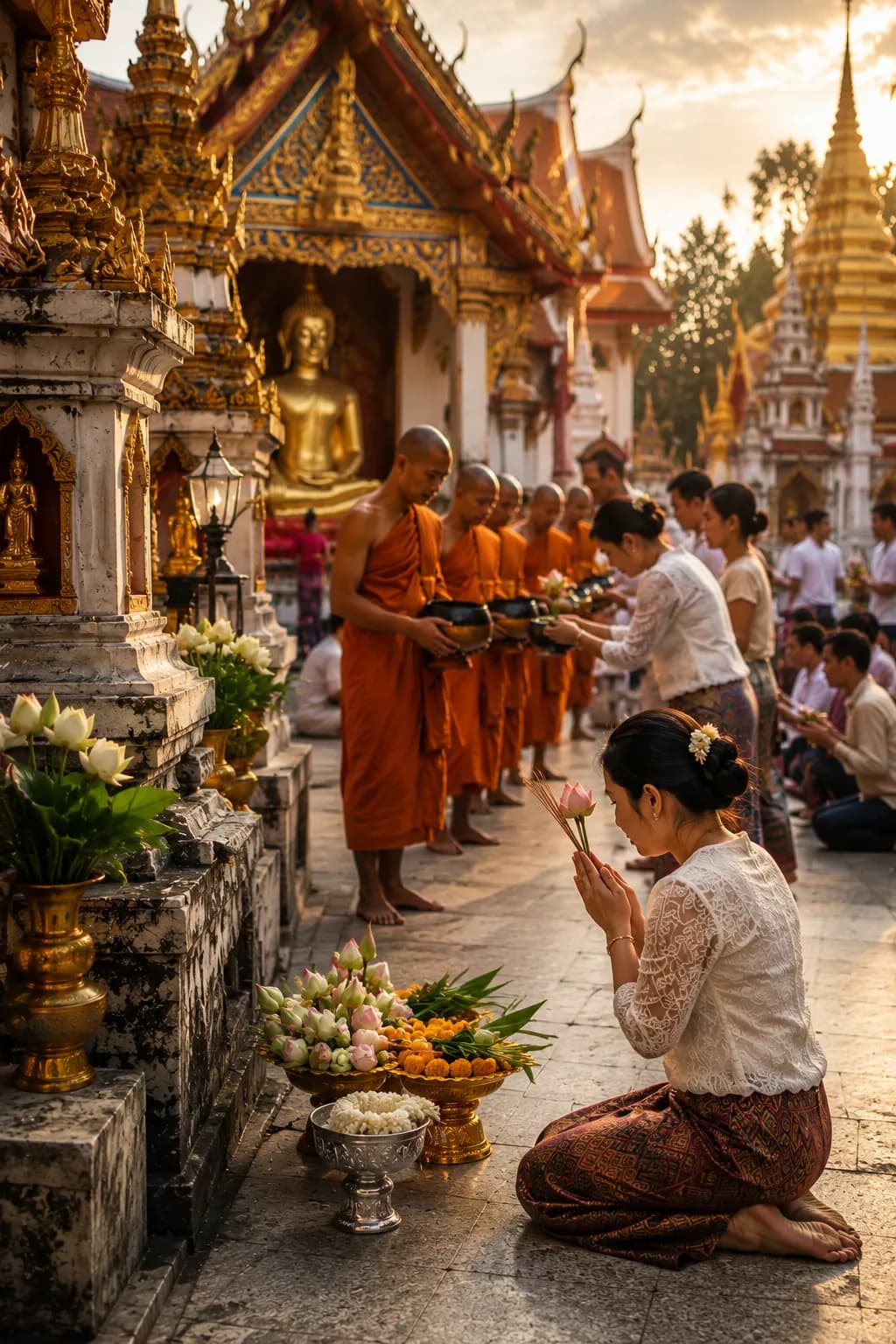
Not every major Thai festival looks like a party. Makha Bucha, Visakha Bucha and Asalha Bucha are among Thailand's most important Buddhist holy days, commemorating events tied to the Buddha's life and teachings. On these days, many Thai Buddhists visit temples, make merit and listen to sermons, and evenings often bring candlelit processions called wian thian, where participants walk clockwise around a sacred building carrying flowers, incense and candles — a quiet, genuinely beautiful scene.
Asalha Bucha leads directly into Khao Phansa, the beginning of the Buddhist rains retreat, when monks traditionally remain based at their monastery for roughly three lunar months rather than travelling. Lay Buddhists mark the period with merit-making and donations, and some make personal commitments such as avoiding alcohol. One of its most spectacular expressions is the Candle Festival in Ubon Ratchathani, where enormous carved wax sculptures — some depicting Buddhist stories, others mythical creatures — are paraded through the city, having grown from a simple practice of donating candles into one of Isaan's most impressive regional events. The retreat later ends with Ok Phansa, often marked locally with boat races, and the following Kathina period, when communities offer robes and necessities to monks in ceremonies that can be both formally religious and genuinely festive at once.
Travellers should also know that alcohol sales can be restricted on major Buddhist holy days, and bars or entertainment venues may adjust their hours. If nightlife matters to your trip, it's worth checking the Buddhist calendar before locking in your dates.
Festivals That Look Nothing Like Each Other
A handful of Thai festivals defy any single description. Phi Ta Khon, held in Dan Sai in Loei province, sees participants wearing huge, imaginative masks and joining lively processions that can look like a Thai Halloween — but it isn't one. The festival forms part of the larger Bun Luang merit-making event and is connected to stories of Prince Vessantara, a previous life of the Buddha in Buddhist tradition; according to popular explanation, the celebration marking his return was so joyful that spirits joined in, and the masks represent those ghostly guests. It's one of the clearest examples of how Buddhism and older local spirit beliefs sit comfortably side by side in Thai culture. Because its timing is set locally as part of the Bun Luang cycle, always check the officially announced dates before booking travel around it.
The Phuket Vegetarian Festival, tied to the island's Chinese community and the Nine Emperor Gods Festival, runs for roughly nine days of strict vegetarian eating and ritual purification, with white clothing and yellow-flagged food stalls appearing across the island. Its processions are also known for something far more intense: some spirit mediums pierce their cheeks or bodies as part of a living religious tradition, not a staged tourist spectacle. If you attend, keep your distance from the ritual itself, don't obstruct processions, and be ready for noise, smoke and genuinely graphic imagery.
Chinese New Year, meanwhile, transforms Bangkok's Yaowarat district with red decorations, lion and dragon dances and packed temples — a vivid reminder of how deeply Chinese heritage runs through Thai society, even though it isn't a Thai national New Year in the way Songkran is.
The Festivals Nobody Photographs
Beyond the famous names, Thailand's calendar is filled with local and provincial celebrations that rarely make it into travel features: rocket festivals, boat races, temple fairs and agricultural events that exist primarily for the community rather than for visitors. Bun Bang Fai, the rocket festival held in parts of Isaan and especially associated with Yasothon, sends homemade rockets skyward as part of rain-making traditions tied to the start of the growing season — another example of older agricultural and spirit beliefs coexisting easily with mainstream Buddhism. Chonburi's traditional buffalo racing and longboat races held around the end of Buddhist Lent offer very different windows into provincial Thailand, one rooted in the historic role of buffalo in rice farming, the other combining sport, religious observance and local markets.
And then there are temple fairs, which need no national fame at all. A temple compound can fill overnight with food stalls, games, music, temporary rides and performances — proof that Thai temples function as community spaces as much as religious ones, not isolated monuments cut off from everyday life.
Practical Notes for Travellers
Religion and entertainment aren't kept strictly separate in Thailand the way they often are in Western settings, and that's worth internalising before you arrive: a merit-making ceremony followed by live music, or a religious procession that becomes visually spectacular, doesn't make the spiritual side any less genuine.
A few practicalities matter more than they might seem to. Many festivals follow lunar rather than Gregorian dates, so don't plan travel around a date mentioned in an old blog post — check the current year's official dates instead. Major festivals, and Songkran above all, also draw enormous numbers of domestic travellers heading home to see family, which means higher accommodation prices, sold-out transport and serious road congestion; book ahead if your trip overlaps with one. And while festivals are some of the most photogenic moments in Thailand, take extra care around religious ceremonies, funerals, spirit-medium rituals and private family events — a respectful distance is very different from pushing a camera into someone's face during an intensely personal moment.
Most Thai festivals, when open to the public, genuinely welcome participation. Join the water fight, float a biodegradable krathong, watch a candle procession, try the vegetarian festival food, wander a temple fair. You don't need to observe from the outside just because you're a visitor — you just need to recognise when you're invited to join in and when quiet observation is the more appropriate response. Taken together, Thailand's festivals aren't a random scattering of events; they tell the story of the country itself, from Songkran's blend of family and renewal to Yi Peng's northern identity, Bun Bang Fai's agricultural roots and the Vegetarian Festival's Chinese heritage — and sometimes the best festival is simply the one you stumble across, unannounced, on a street corner you weren't expecting.