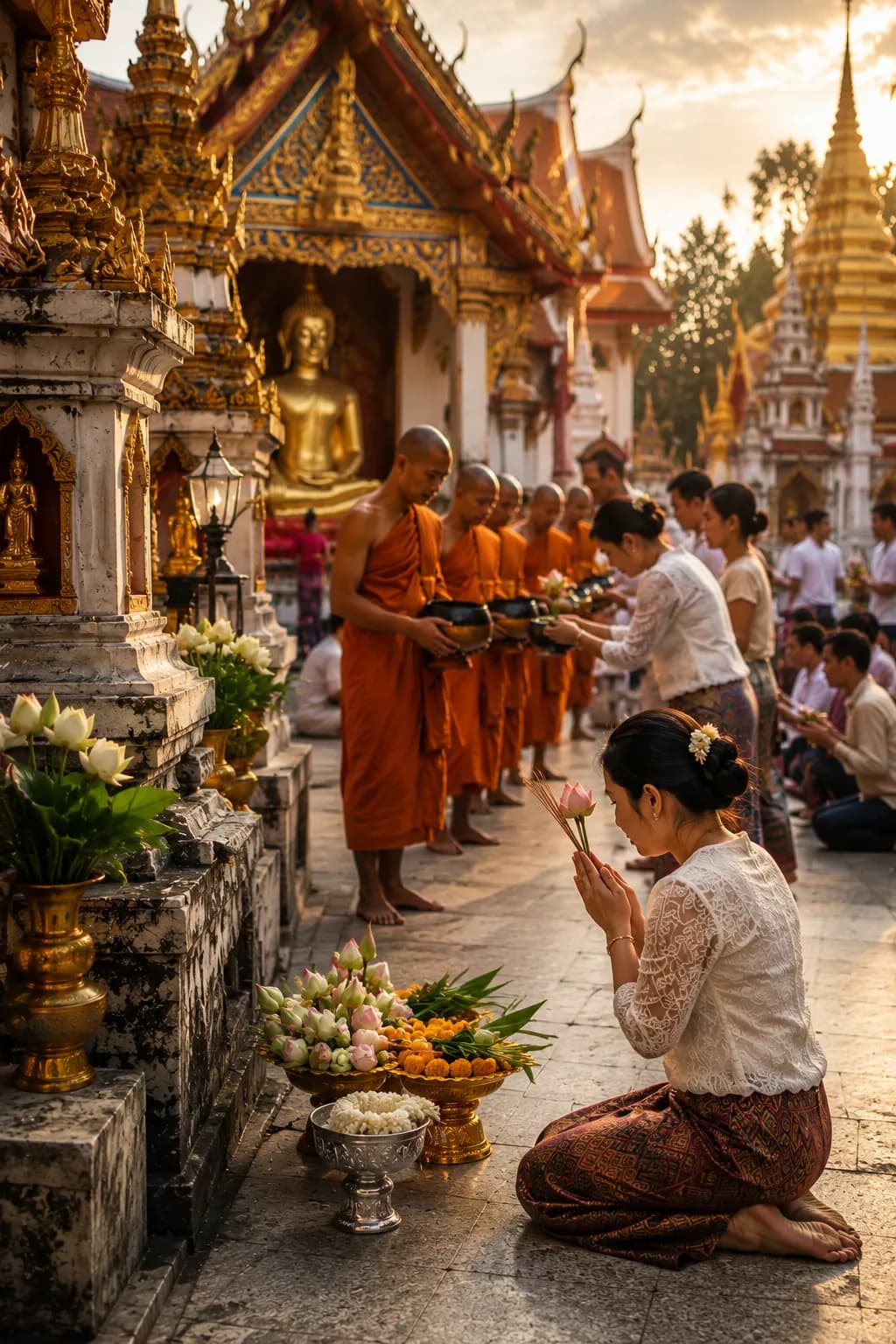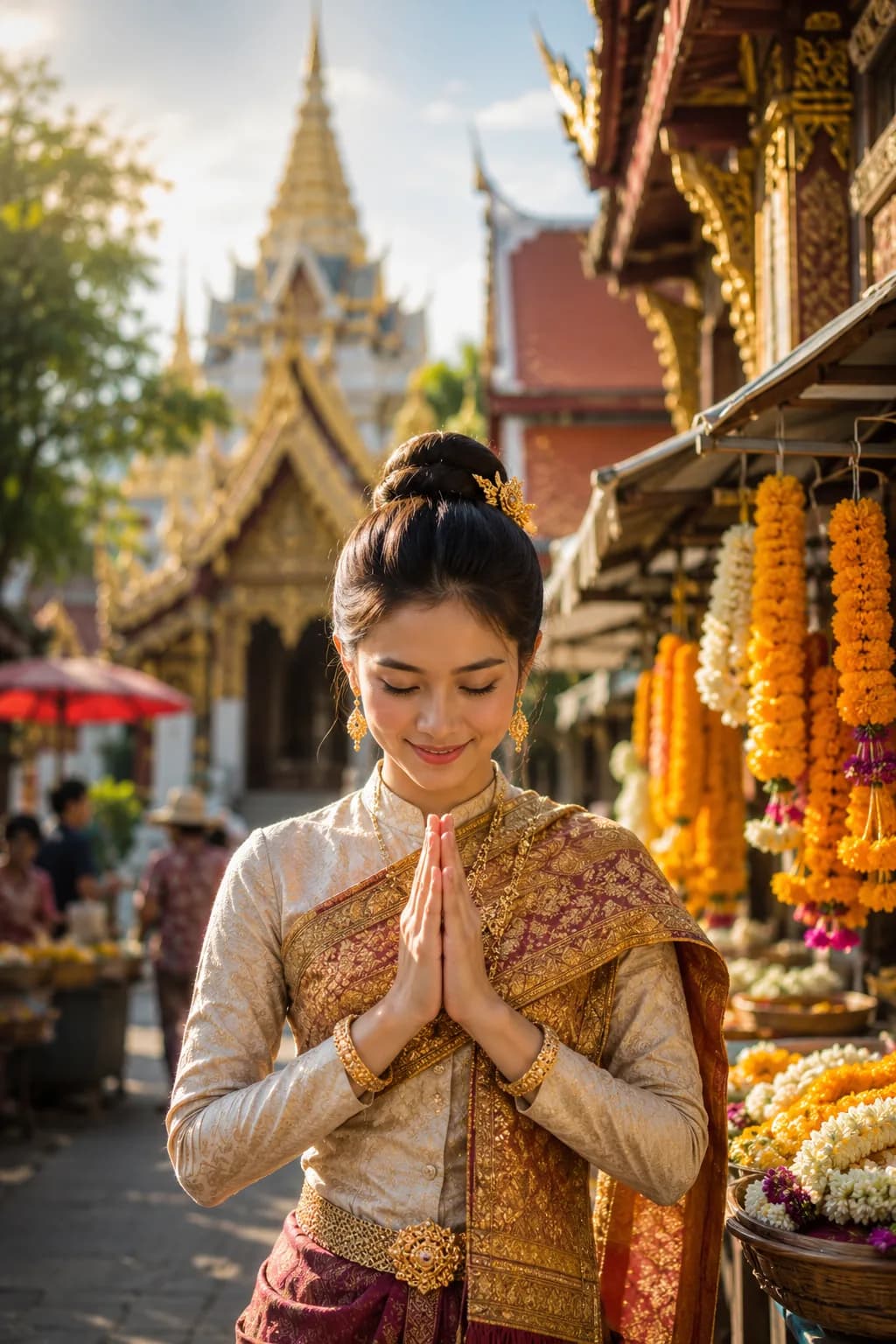
Thai temple etiquette is easier than the internet sometimes makes it sound. A long list of mystical rules is unnecessary before walking into a wat. Most mistakes disappear once you remember one thing: you are visiting a working religious place as well as a tourist attraction. Dress reasonably. Follow signs. Remove shoes where everyone else does. Keep your voice down. Treat Buddha images with respect. That gets you a long way. The details below help with the rest.
A Wat Is a Working Religious Place
Thailand’s famous temples can feel like major attractions. Wat Pho, Wat Arun and countless other sites receive large numbers of visitors. Tickets, tour groups and photography can make the experience feel almost museum-like. Yet monks still live and practise there. Local people still pray and make merit. Ceremonies continue around the tourism. That double identity explains most etiquette. You are allowed to look around and enjoy the architecture. You are sharing the space with people who regard it as sacred. Dress rules vary between temples.
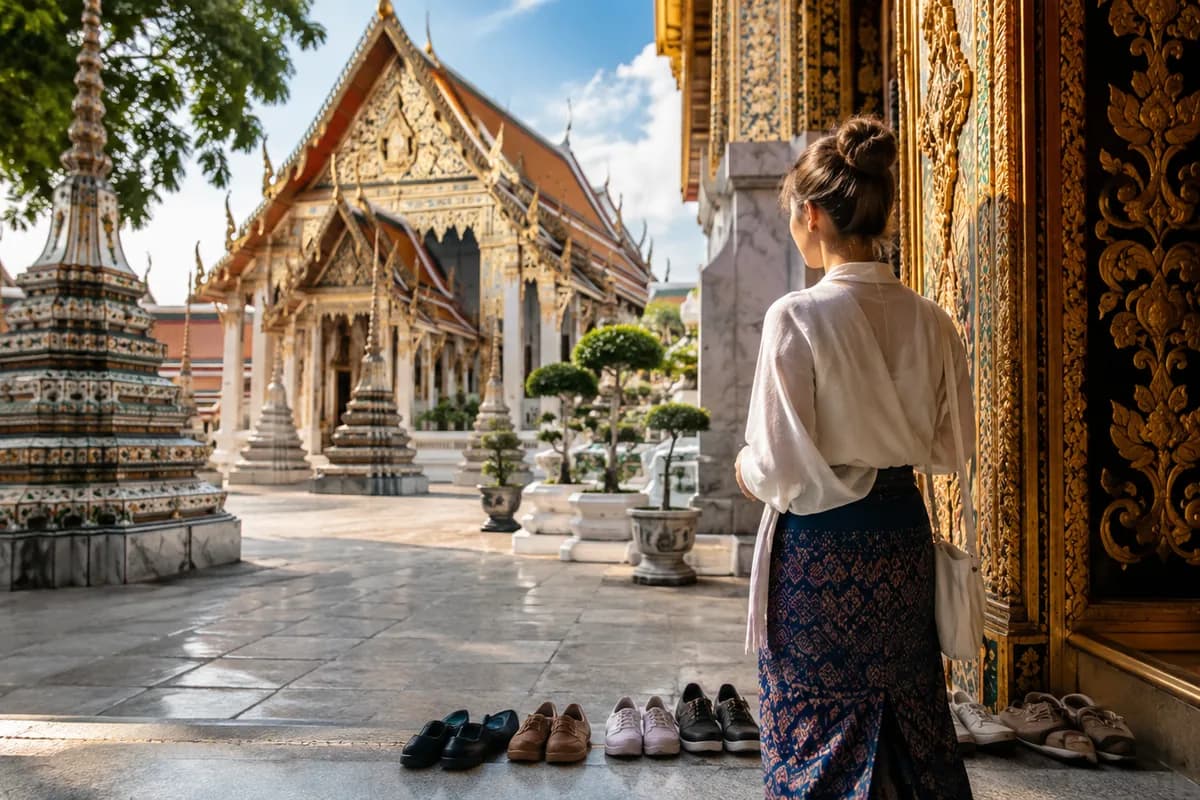
Major royal temples and heavily visited sacred sites may enforce stricter standards than a small neighbourhood wat. A useful conservative baseline is to keep shoulders and knees covered. That means avoiding very short shorts, revealing tops or clothing that would feel obviously inappropriate in a religious setting. Respectful clothing does not require dressing like a monk. Lightweight trousers, a longer skirt or dress and a normal shirt are usually enough. When a temple has specific rules, follow them rather than relying on generic travel advice.
Shoes
Removing shoes is one of the most obvious temple customs. You normally take them off before entering certain sacred buildings, particularly halls containing important Buddha images or ordination spaces. Look for shoe racks, piles of footwear or signs. Not every outdoor area of a wat requires bare feet. Entering the temple grounds alone is not a reason to remove your shoes. Follow the local pattern. This is easier than trying to identify every building by architectural name.
If fifty pairs of shoes are outside the door, Thailand has already given you the answer. Older Thai etiquette guides often advise against stepping directly on raised thresholds when entering sacred buildings. Where a doorway has a clear raised sill, stepping over it rather than standing on it is a respectful habit. There is no reason to become anxious about every centimetre of temple flooring. The larger principle is care. Move through sacred spaces deliberately rather than barging inside while looking at your phone.
Feet and Buddha Images
Feet are culturally regarded as the lowest part of the body in Thailand. That becomes especially important in religious settings. When sitting on the floor, avoid pointing the soles of your feet directly toward a Buddha image or monk. Thai visitors often sit with their legs folded to one side or kneel in a position that keeps feet behind them. Foreigners are not expected to achieve perfect Thai posture immediately.
A reasonable effort not to stretch your legs straight toward the altar is enough. The head has traditionally been treated as the highest and most respected part of the body. You should not touch a monk’s head. You should also avoid casual behaviour around sacred images that treats them as ordinary objects. The general Thai cultural rule about not touching strangers on the head applies far beyond temples anyway. Religious spaces make the symbolism more obvious.
Buddha Images Are Sacred
A Buddha image is not merely decoration. Even a statue that looks artistically beautiful or historically interesting carries religious meaning. Do not climb on Buddha images. Do not sit on their bases unless the site clearly provides an appropriate public seating area unrelated to the sacred structure. Avoid comedy poses or photographs that use the Buddha as a prop. This is one of those areas where intent matters less than awareness.
A picture that feels harmless to a visitor can look deeply disrespectful to somebody who regards the image as sacred. Photography rules vary enormously. Many Thai temples allow photographs in large areas. Some prohibit photography inside particular halls. Certain sacred objects or ceremonies may have restrictions. Look for signs. If there is no sign and you are unsure, watch what local visitors are doing or ask. Flash photography can be especially disruptive inside quiet spaces. Permission to take photographs is not an invitation to turn every moment into a photoshoot.
People at Prayer
Do not stand directly between somebody and a Buddha image while they are praying if you can avoid it. Give people space. This sounds obvious, but popular temples become crowded and visitors sometimes walk straight across worshippers because they are focused on architecture or their phone camera. A few seconds of patience is enough. The person in front of you may be having a religious moment rather than waiting for your group to finish taking selfies.
Monks generally receive considerable respect in Thai society. A simple wai or polite manner is enough for most interactions. Seeing other visitors bow does not create an obligation to copy the gesture. Monks are used to foreigners who do not know every custom. Speak respectfully and follow their lead. If a monk wants to practise English with you, the conversation can be completely ordinary. The robe marks a religious status. It does not remove the person’s sense of humour.
Women and Monks
Women should avoid direct physical contact with monks. If an object needs to be passed, local methods allow it to be placed down or transferred without touching. Sometimes a monk uses a cloth or another arrangement. Practices can vary. The important thing is not to panic. If you are unsure, place the object somewhere appropriate and let the monk indicate what to do. This is a monastic discipline rule rather than a statement that women are socially inferior or impure.
When a ceremony is taking place, local people normally make the seating pattern obvious. Monks are often seated on raised platforms or at the front. Laypeople sit lower. Do not choose a raised monastic platform because it looks like a convenient bench. If you sit on the floor, keep your posture respectful and your feet away from sacred images. During chanting, you are generally welcome to sit quietly even if you do not know the words. Nobody expects a tourist to pretend to be Buddhist.
Bowing
Thai Buddhists may perform three bows before a Buddha image, traditionally associated with respect for the Buddha, Dhamma and Sangha. Visitors sometimes wonder whether they are required to copy the practice. You are not. If bowing has religious meaning for you and you understand what you are doing, that is one matter. If not, quiet respectful behaviour is sufficient. Watching without performing is not disrespectful. A temple visit does not require religious theatre.
Flowers, incense and candles are common offerings at Thai temples. Different temples organise them in different ways. If you choose to participate, follow the local setup. Do not assume every table of objects is a commercial souvenir display. Some offerings are intended for ritual use. Donation boxes are also common. Donating is optional unless a site has a clearly stated admission charge. Merit-making has no universal price.
Monks on Public Transport
Temple etiquette extends into ordinary life when monks are present. Public transport may provide designated seating for monks. Give those seats the same respect you would give other clearly reserved spaces. Women in particular may notice that seating arrangements are designed to avoid unnecessary physical contact. Again, the context is monastic discipline rather than everyday social hierarchy. Ordinary awareness is usually enough. Thai temples are not universally silent adult-only spaces.
Local children may be present. Temple fairs can be lively. Dogs sleep in courtyards. Vendors appear around some complexes. Do not confuse “religious” with “silent museum.” The appropriate level of formality depends on the space. Inside a sacred hall during chanting, quiet behaviour matters. Outside during a community festival, the atmosphere can be completely different. Follow the room rather than applying one rule to the entire wat.
Cremation Areas and Funerals
Many Thai temples include crematoria and host funerals. A visitor exploring a large complex can occasionally find themselves close to an active funeral without initially realising it. If that happens, give the family privacy. Do not photograph mourners without permission. There is nothing forbidden about being near a funeral area, but it is a private human event taking place inside a public religious complex.
Basic decency matters more than specialised etiquette. Historic stupas, sacred platforms and temple structures can look irresistible to photographers. If an area is closed, roped off or obviously sacred, do not climb it. This should not require a Buddhism lesson. Thailand’s historic religious sites are vulnerable to physical damage, and sacred architecture is not playground equipment. A better photograph is not worth becoming the tourist everyone remembers for the wrong reason.
When Rules Differ
Temple etiquette is full of local variation. A dress standard enforced at one famous Bangkok temple may be relaxed at another wat. Photography rules differ. Certain shrines have unique customs. Absolute internet rules therefore become misleading very quickly. Local signs and instructions always beat a generic article. The purpose of etiquette is respect, not passing an exam. Observe what respectful local visitors are doing. Not every Thai visitor follows perfect etiquette either, but the overall pattern usually tells you where shoes go, where people sit and how the space works.
Move slowly enough to notice. If you make an innocent mistake, correct it and move on. Thai temples receive millions of visitors and generally do not expect foreigners to arrive as experts in Buddhist ritual. Respect is visible long before technical knowledge is. Cover up reasonably, take off your shoes where required, keep your feet away from Buddha images and monks, follow photo rules and remember that people around you may be practising their religion. That is temple etiquette in Thailand. Most of the rest is detail.