There was Buddhism in the territory of modern Thailand long before there was a country called Thailand. That single fact is the best place to begin. The religious history of the region is older, more diverse and less national than modern maps suggest. Mon-speaking cultures, Khmer empires, maritime networks, Sri Lankan Buddhist lineages and emerging Thai kingdoms all contributed to the religious world that later became Thai Buddhism. Theravada eventually became dominant. It did not arrive on one clear date and instantly replace everything that came before. The story is one of layers, reform and repeated reinvention.
Before Thailand
Modern national borders are poor guides to ancient religious history. The territory that is now Thailand contained different peoples, kingdoms and cultural zones. Buddhist ideas arrived through regional exchange connected with South Asia and other parts of Southeast Asia. Archaeological evidence shows Buddhist cultures in central Thailand many centuries before the rise of major Thai-speaking kingdoms. Other religious traditions were also present. Mahayana Buddhism and Hindu-Brahmanic influences appeared at different times and places. The early religious map was plural.
The label Dvaravati is commonly used for a network of Mon-speaking cultures and settlements that flourished in central Thailand during the first millennium CE. Buddhism played an important role. Archaeological sites preserve Buddhist sculpture, stupas and inscriptions. The exact political structure of Dvaravati remains debated, so it is better to think in terms of a cultural world than one neat centralised kingdom. What matters for the history of Thai Buddhism is continuity. Buddhist practice in central Thailand did not begin with Sukhothai. It already had deep regional roots.
Khmer Influence
Parts of present-day Thailand also came under strong Khmer cultural and political influence. Khmer religious architecture and art spread through the region. Hindu traditions and forms of Buddhism associated with the Khmer world left major monuments. The Northeast contains some of the clearest examples. This matters because modern Thailand inherited sacred landscapes created before Thai political dominance. Later Theravada communities reused, reinterpreted or lived alongside older monuments. Religion changed without wiping the land clean.
Theravada Buddhism developed strong historical connections with Sri Lanka. Monastic lineages and textual traditions moved across maritime and mainland networks. Southeast Asian rulers sought legitimate ordination lineages and religious prestige through those connections. The exact history is complicated, but the broader point is important. Thai Theravada was never isolated. It belonged to a transnational Buddhist world linking Sri Lanka and mainland Southeast Asia. Modern national labels came much later.
Sukhothai
The Sukhothai kingdom occupies a special place in traditional narratives of Thai history. Theravada Buddhism received strong royal patronage. Connections with Sri Lankan-oriented monastic traditions became important. Sukhothai also produced some of Thailand’s most celebrated Buddhist art. The graceful walking Buddha is especially associated with the period. Later nationalist histories sometimes idealised Sukhothai as the pure beginning of Thai civilisation. Modern scholarship is more cautious. Still, the kingdom was unquestionably important in the development of Thai Buddhist institutions and imagery.
Thai rulers patronised Buddhism as a public institution, not merely as a private faith. Royal authority became closely connected with support for the Sangha. Kings built temples, sponsored texts and presented themselves as protectors of Buddhism. At the same time, court ritual also drew on Brahmanic traditions. This combination shaped Thai kingship for centuries. A ruler could be a patron of Theravada Buddhism and participate in ceremonies with non-Buddhist historical roots. That layered religious structure later became a lasting feature of Thai public culture.
Ayutthaya
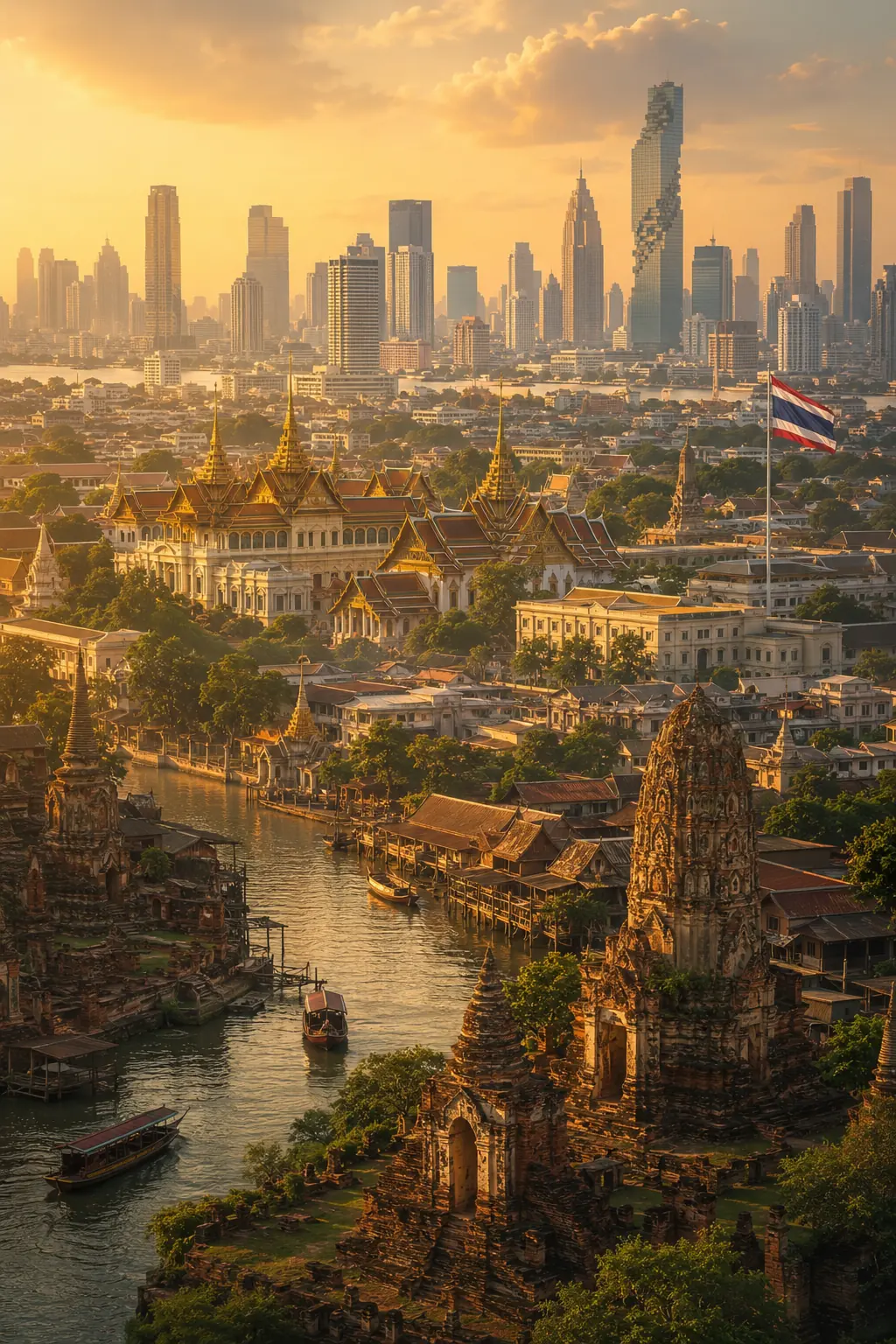
The Ayutthaya kingdom became one of Southeast Asia’s major powers. Buddhism flourished through royal and popular patronage. Temples dominated the urban landscape. Monastic education and ritual became deeply embedded in society. Ayutthaya also interacted with an international world of traders, diplomats and religious communities. The kingdom was not culturally sealed. Its Buddhism developed inside a cosmopolitan state. Ruins visible today can make Ayutthaya look like a dead civilisation.
For centuries, those temples were full of monks and ordinary religious life. Ayutthaya fell to Burmese forces in 1767. The destruction devastated the capital and disrupted political and religious institutions. Temples were damaged. Communities scattered. Yet Thai Buddhism did not end. Monks, texts and religious traditions survived in other places. New political centres emerged. The event is therefore better understood as a severe rupture than a complete religious reset. Buddhist institutions had to be restored inside a new political order.
Thonburi and Early Bangkok
After Ayutthaya’s fall, King Taksin established a new centre at Thonburi. The later Chakri dynasty moved the capital across the river to Bangkok. Early Bangkok rulers invested heavily in restoring temples and re-establishing Buddhist institutions. Texts were collected and revised. Monastic discipline received royal attention. Major temples were built or renovated. The new capital therefore became a religious reconstruction project as well as a political one. Bangkok’s famous wats are monuments to that process.
King Rama I, founder of the Chakri dynasty, sponsored major efforts to stabilise Buddhism after the disruptions of the eighteenth century. Royal patronage helped rebuild monastic institutions. Temple restoration became part of legitimising the new dynasty. This relationship between monarchy and Buddhism remained central to the Rattanakosin period. The king was not a monk. He was expected to protect and support the religion. That ideal shaped both public ceremony and institutional policy.
Prince Mongkut
One of the most important figures in nineteenth-century Thai Buddhism was Prince Mongkut. Before becoming King Rama IV, Mongkut spent many years as a monk. He became concerned with monastic discipline, textual accuracy and what he regarded as practices that had drifted from proper Theravada standards. His reform movement developed into Dhammayuttika Nikaya. The movement remained smaller than Maha Nikaya but became highly influential.
It represented a new kind of Buddhist reform: disciplined, text-conscious and increasingly engaged with modern scholarship. Dhammayuttika monks emphasised careful observance of monastic rules and reform of ritual practice. The movement also participated in a broader nineteenth-century transformation of Siam. The state was modernising. Foreign pressure increased. Administrative systems became more centralised. Buddhist reform belonged to that same historical environment. Religion was not resisting modernity from outside. It was being reorganised inside it.
Centralising the Sangha
During the late nineteenth and early twentieth centuries, the Thai state increasingly centralised administration. The Sangha became part of that process. Monastic authority was organised through hierarchical structures extending from national leadership into provinces and local temples. This created greater institutional uniformity. It also reduced some of the autonomy of regional religious traditions. Modern Thai Buddhism therefore reflects both ancient monastic discipline and comparatively recent state administration. The orange robe is old.
The bureaucracy behind it is much newer. Monastic education also changed. Pali study and formal examinations became important features of institutional Buddhism. Modern Buddhist universities later developed. Monks could pursue structured academic education in addition to traditional temple learning. This created influential scholar-monks and new forms of engagement with modern society. Thai Buddhism was also building institutions for a modernising society. It was building educational institutions capable of operating inside a modern nation-state.
The Forest Revival
At roughly the same time that centralised monastic institutions were expanding, another movement was developing in the Northeast. The Thai Forest Tradition emphasised meditation, strict discipline and ascetic practice. Ajahn Sao and Ajahn Mun became central figures. Their followers created lineages of highly respected meditation teachers. This movement is sometimes described as a reaction against overly institutional or ceremonial Buddhism. That contains some truth. It was also part of the larger modern transformation of Thai religion. Reform happened from several directions at once.
In the twentieth century, Ajahn Chah became one of Thailand’s most influential Buddhist teachers. His forest lineage attracted foreign disciples. Those disciples later established monasteries abroad. Thai Buddhism therefore became an international religious export in a new way. Meditation centres and forest monasteries connected Thailand with Europe, North America and Australia. A tradition once associated with remote Isaan forests entered a global Buddhist network. History had come full circle. Buddhism had reached Thailand through international connections. Thai Buddhism now travelled outward again.
Modern Buddhist Movements
Twentieth-century Thailand produced many forms of Buddhist renewal. Meditation movements expanded. Lay Buddhist organisations developed. Some monks engaged with education and social issues. Others emphasised strict traditionalism. New temples became enormous institutions. Media transformed how teachings circulated. There has never been one single modern Thai Buddhist response to social change. The religion contains reformers, conservatives, meditators, scholars and popular devotional movements at the same time.
Modern Thai nationalism often linked the monarchy, nation and Buddhism. The formula became culturally powerful. Yet Thailand has never been religiously uniform. Muslim communities are especially important in the South. Christian, Sikh, Hindu and other traditions have long histories in the country. Buddhism’s privileged cultural position therefore exists alongside religious diversity. Understanding that balance is essential. Calling Thailand Buddhist is accurate. Calling every Thai person Buddhist is not.
Buddhism Today
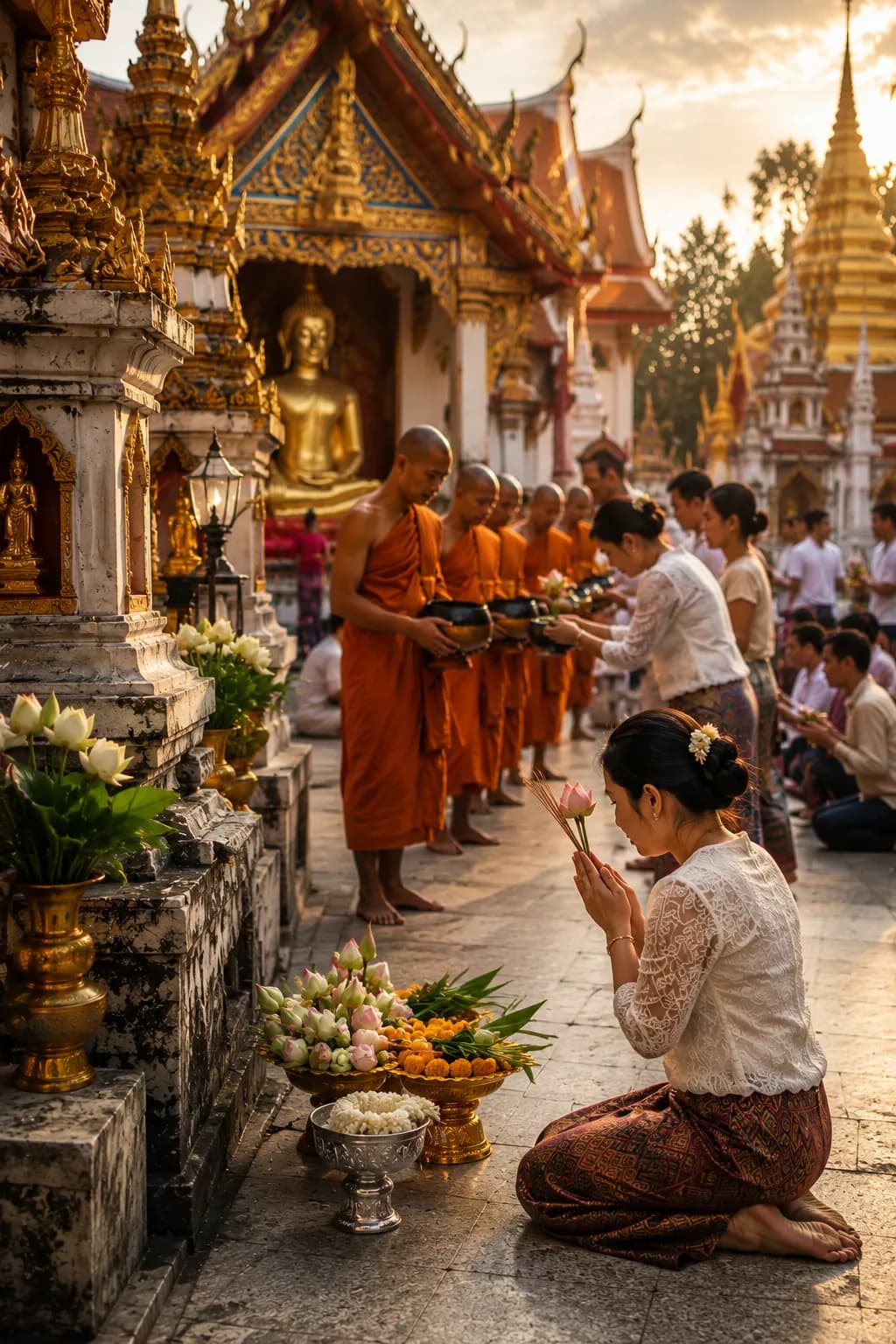
Modern Thai Buddhism contains ancient texts, royal temples, smartphone donations, forest monasteries and international meditation centres. Monks study Pali and use social media. Families make merit in ways recognisable to their grandparents while living radically different economic lives. Institutions face public criticism and reform debates. Women challenge traditional limits on ordination. Young people negotiate religion differently from older generations. Nothing about this suggests Buddhism is disappearing. It suggests Buddhism is alive.
The history of Buddhism in Thailand does not have one clean starting point. Buddhist cultures existed before Thai kingdoms. Theravada lineages developed through international networks. Sukhothai and Ayutthaya gave Buddhism new political and artistic forms. Bangkok rulers rebuilt and reformed institutions. Modern Sangha administration centralised monastic life. Forest teachers renewed meditation practice. Each layer changed what came before without completely erasing it. That is the history travellers encounter today. Every Thai temple contains more than one century. Sometimes it contains more than one civilisation.