Thailand can look deceptively simple from the outside. Bangkok is modern, the islands feel built for holidays, the temples seem timeless, and the country never carried the obvious colonial scars found elsewhere in Southeast Asia. But the Thailand you see today is the result of centuries of shifting kingdoms, wars, diplomacy, migration, religion and political change.
The easiest way to understand it isn't as one unbroken kingdom slowly modernising. It's a series of layers, built one on top of the other.
Before Thailand
People lived in this region long before anything resembling a Thai state existed. One of the most important archaeological sites is Ban Chiang, in the northeast, one of Southeast Asia's most significant prehistoric settlements, with evidence of early agriculture and metalworking. Over the following centuries, different peoples, languages and political centres rose across the region. Khmer influence was especially strong in the northeast and central plains, while Mon communities and other cultures shaped large parts of the country too. The idea of a single country called Thailand came much, much later.
Sukhothai and the Early Kingdoms
Sukhothai, founded in the 13th century, is often presented as the first major Thai kingdom, and its place in Thai national memory is enormous. The period is associated with the emergence of Thai political identity, the spread of Theravada Buddhism and, by tradition, the creation of the Thai script under King Ramkhamhaeng.
Early Southeast Asian kingdoms didn't work quite like modern countries with fixed borders. Power radiated outward from important cities, and local rulers could owe allegiance to a larger kingdom while keeping considerable independence of their own. Sukhothai eventually faded as a kingdom to the south grew more powerful: Ayutthaya.
Ayutthaya, a Great International City
Founded around 1350, Ayutthaya became the second major Siamese capital and, over more than four centuries, one of Southeast Asia's great political and commercial centres. Its position was ideal — rivers linked it to the interior, while trading networks connected Siam to China, India, Persia, Japan and eventually Europe. Portuguese traders arrived early in the 16th century, followed over time by the Dutch, British and French.
That's worth remembering when you walk among Ayutthaya's ruins today. The broken temples can make the old capital feel remote and mysterious, but Ayutthaya was once anything but isolated — a cosmopolitan city of international trade and diplomacy, with an elaborate royal court, Buddhism at the centre of public life, and foreign communities living around its edges.
Then, in 1767, everything changed. After years of war between Siam and Burma, Burmese forces captured and destroyed the city. Ayutthaya never regained its former role, and the surviving monasteries, prang towers and ruins still hint at the scale of what was lost.
But the Siamese state didn't disappear with it. A military leader named Taksin reunified much of the territory remarkably quickly and established a new capital at Thonburi, on the western bank of the Chao Phraya River. His reign was short but hugely important — without the recovery under Taksin, the political history that followed might look very different.
Bangkok Begins
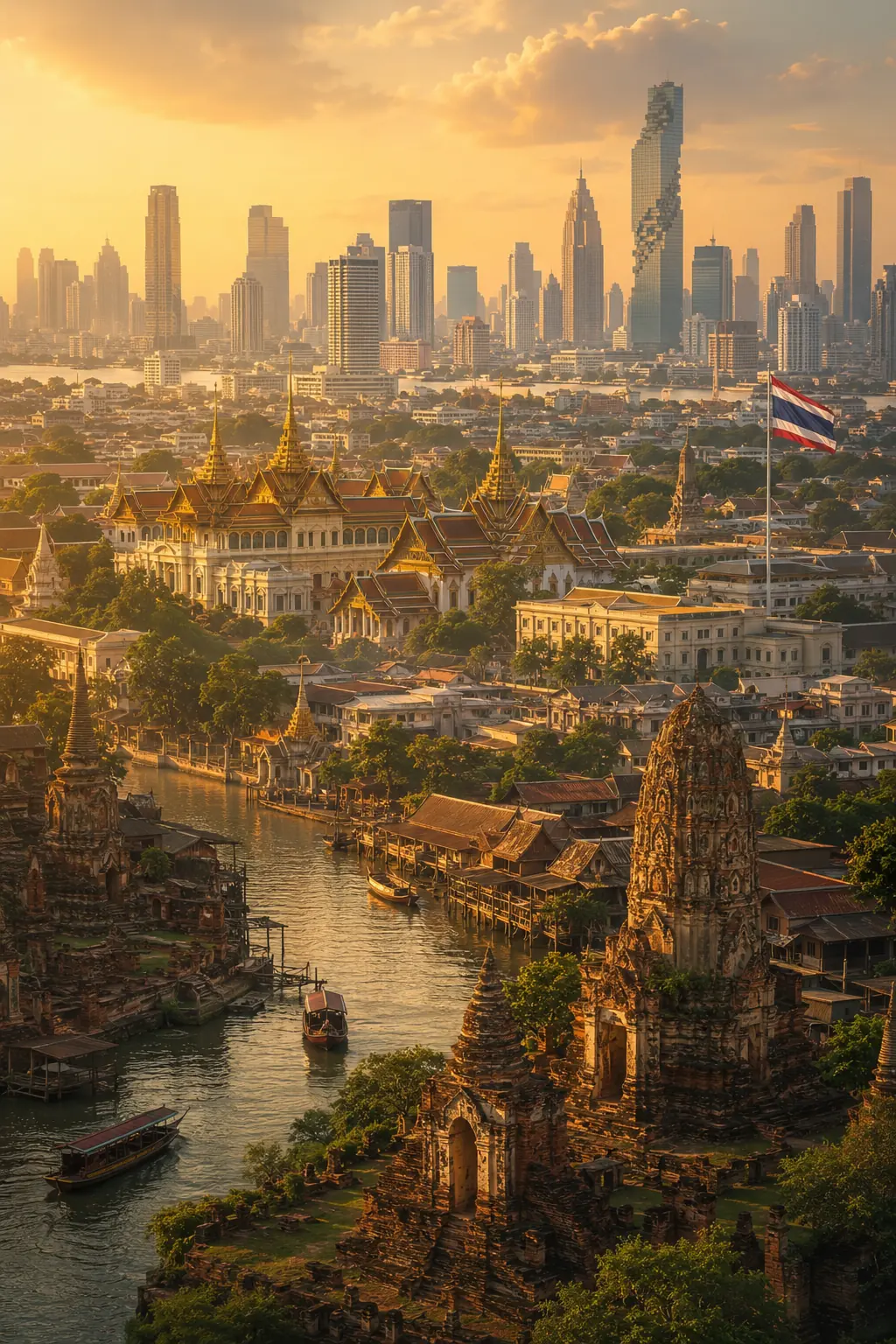
In 1782, the Chakri dynasty was established and the capital moved across the river to its eastern bank. That new capital became Bangkok. The city grew up around the royal palace, temples, canals and the river, and its new rulers deliberately preserved and rebuilt much of the political and cultural tradition associated with Ayutthaya. The Grand Palace, Wat Phra Kaew and the old Rattanakosin district still reflect this period. The dynasty founded in 1782 remains Thailand's royal dynasty today, and Bangkok grew from a riverside royal capital into one of Asia's largest cities.
Siam Meets the Colonial Powers
The 19th century transformed Southeast Asia. Britain expanded through Burma and Malaya, France established colonial rule across Indochina, and European empires increasingly surrounded Siam. Yet Siam was never formally colonised by a European power — a fact that remains a real source of national pride.
But saying simply that Thailand "was never colonised" hides part of the story. Siam survived partly because its rulers proved exceptionally skilled at diplomacy and adaptation, modernising the bureaucracy, military, education and infrastructure while negotiating with competing European powers. Territory was still lost along the way: areas that had once fallen under Siamese influence became part of British or French colonial possessions, in what are now Laos, Cambodia and Malaysia. Siam retained its political independence, but it did so in a world heavily shaped by colonial pressure, and its leaders understood the danger and changed the country accordingly.
From Siam to Modern Thailand
Through the late 19th and early 20th centuries, the Siamese state became increasingly centralised. Old systems of semi-independent regional rule gradually gave way to a modern administration run from Bangkok, tied together by railways, roads, government ministries and modern schools. The transformation wasn't simply about copying Europe — it was about survival. A stronger, recognisably modern state was much harder for colonial powers to dismiss as territory waiting to be absorbed.
The Revolution of 1932
Until 1932, Siam was an absolute monarchy. That year, a group known as the People's Party carried out a largely bloodless revolution and forced a fundamental change in the political system: Thailand became a constitutional monarchy. The monarchy remained, but political authority was now formally structured through constitutions, governments and representative institutions.
That didn't produce stable parliamentary democracy overnight — far from it. The decades that followed brought periods of elected government, military rule, constitutional change, protest and repeated coups. That tension between elected politics, military power, monarchy, bureaucracy and popular movements remains one of the central themes of modern Thai political history.
When Siam Became Thailand
The country's international name changed from Siam to Thailand in 1939. It briefly reverted to Siam after World War II before Thailand became the permanent official name again in 1949. "Thailand" is commonly interpreted as the Land of the Thai or, more loosely, the Land of the Free. The older name never disappeared completely — you still see it everywhere in modern Bangkok, in Siam Square, Siam Paragon and countless businesses that keep the historic name alive.
Thailand and World War II
Thailand's wartime history is complicated. Japanese forces entered the country in December 1941, and after brief fighting, the Thai government allowed Japanese troops to pass through and later formally allied itself with Japan. At the same time, the Free Thai movement opposed Japanese influence and maintained contacts with the Allies. That complexity helped Thailand avoid the kind of post-war occupation or punishment that might otherwise have followed. Afterward, Thailand increasingly aligned itself with the United States — a relationship that would have enormous consequences.
The Cold War Changes Thailand
Thailand became an important American ally during the Cold War, particularly through the Vietnam War years. American military personnel and aircraft operated from bases in the country while infrastructure expanded rapidly. Roads improved. Cities grew. Money flowed into areas that had previously been comparatively isolated.
Tourism changed too. Places such as Pattaya developed partly through the presence of American servicemen on rest and recreation leave, and Bangkok's entertainment districts became increasingly connected to international visitors. Modern Thai tourism didn't begin with the Vietnam War, but that period accelerated its growth dramatically, and within a few decades Thailand had become one of the world's major tourism destinations.
From Farms to Megacities
For much of its history, Thailand was overwhelmingly agricultural, with rice farming dominating huge areas of the country and village life shaping the experience of most Thais. That changed rapidly in the second half of the 20th century, as industrialisation, manufacturing, exports and tourism transformed the economy and millions of people moved toward Bangkok and other urban centres. Bangkok became enormous. Factories spread through surrounding provinces. Tourism reshaped islands and coastal communities. A country once overwhelmingly rural became deeply connected to global manufacturing, trade and travel.
Those older rural ties never really vanished, though. Someone working in Bangkok may still consider a village in Isaan or the north to be "home", and family networks frequently stretch between city and countryside — one reason modern Thailand can feel like several different countries existing at once.
Thailand Today
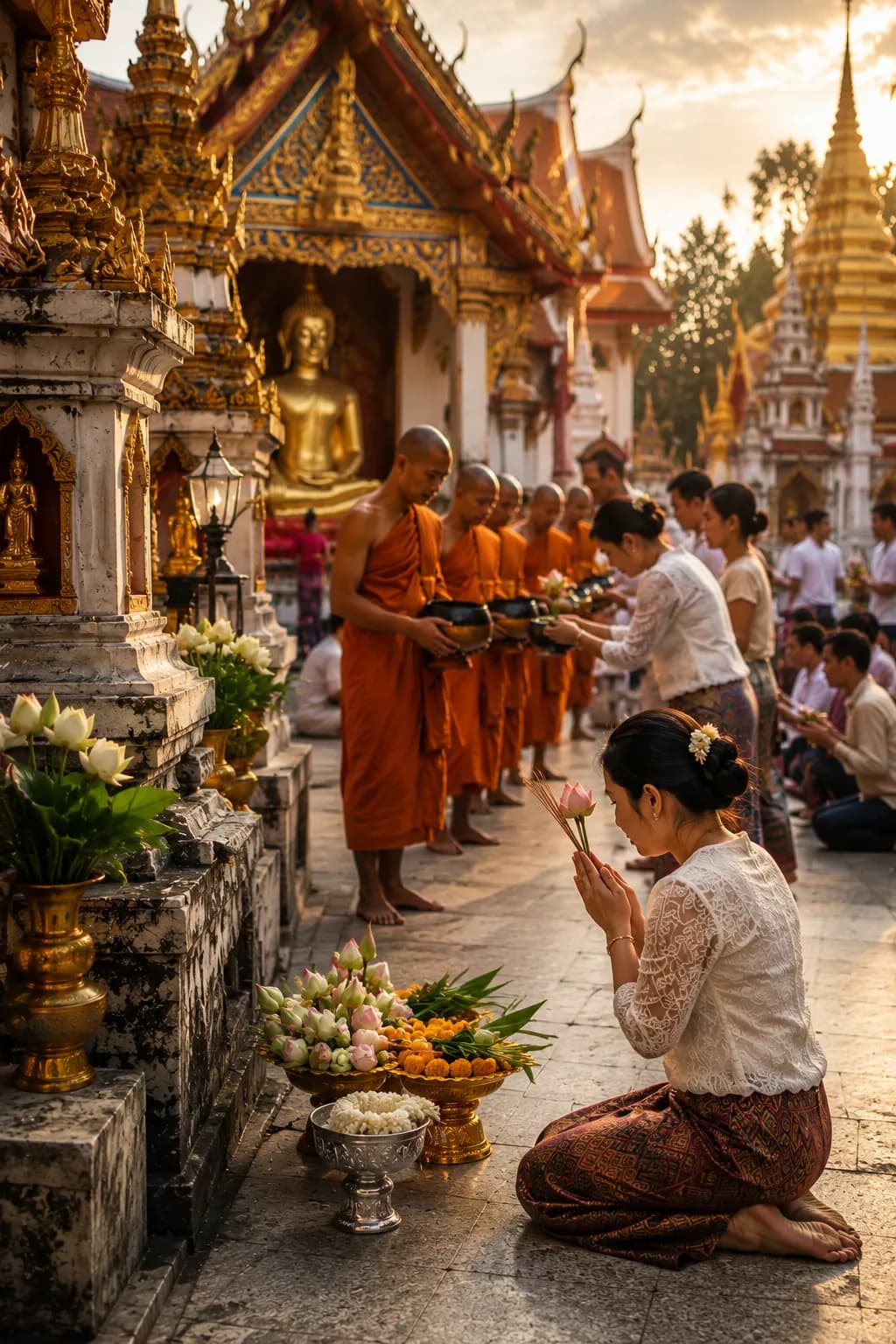
Walk through Bangkok and the different historical layers are everywhere. A monk carrying a smartphone walks past a skyscraper. A spirit house stands outside a luxury hotel. A food-delivery rider waits beneath a centuries-old temple wall. A shopping mall named Siam sits a few kilometres from the royal heart of Rattanakosin. None of this is particularly contradictory in Thailand — the country has repeatedly absorbed new influences without fully discarding what came before.
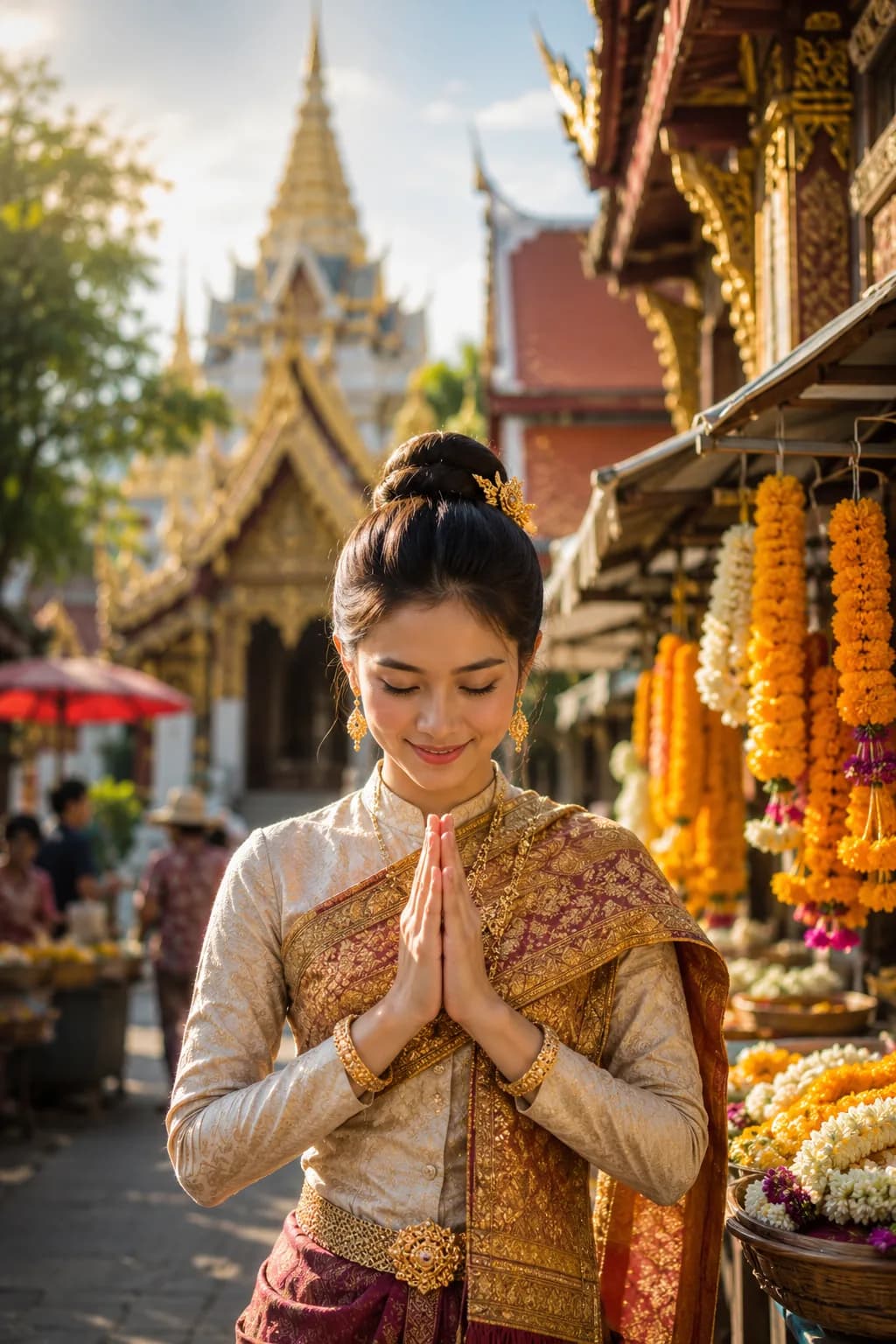
Buddhism remains deeply visible. The monarchy remains a powerful national institution. Regional identities remain strong. Modern consumer culture is everywhere, and young Thais live online as intensely as young people almost anywhere else, while traditions involving family, hierarchy, religion and social obligation continue to matter.
Thailand's history isn't simply the story of an ancient kingdom becoming modern. It's a story of adaptation. Kingdoms fell and were rebuilt. The capital moved. Colonial powers arrived at the borders but never formally took control. Absolute monarchy gave way to constitutional government. An agricultural society industrialised. Tourism transformed entire regions. And through all of it, Thailand kept absorbing change and turning it into something recognisably its own.
That's one of the most useful things to understand before travelling here — because the temples, food, nightlife, language and customs you encounter today didn't appear separately. They're all parts of the same much longer story.