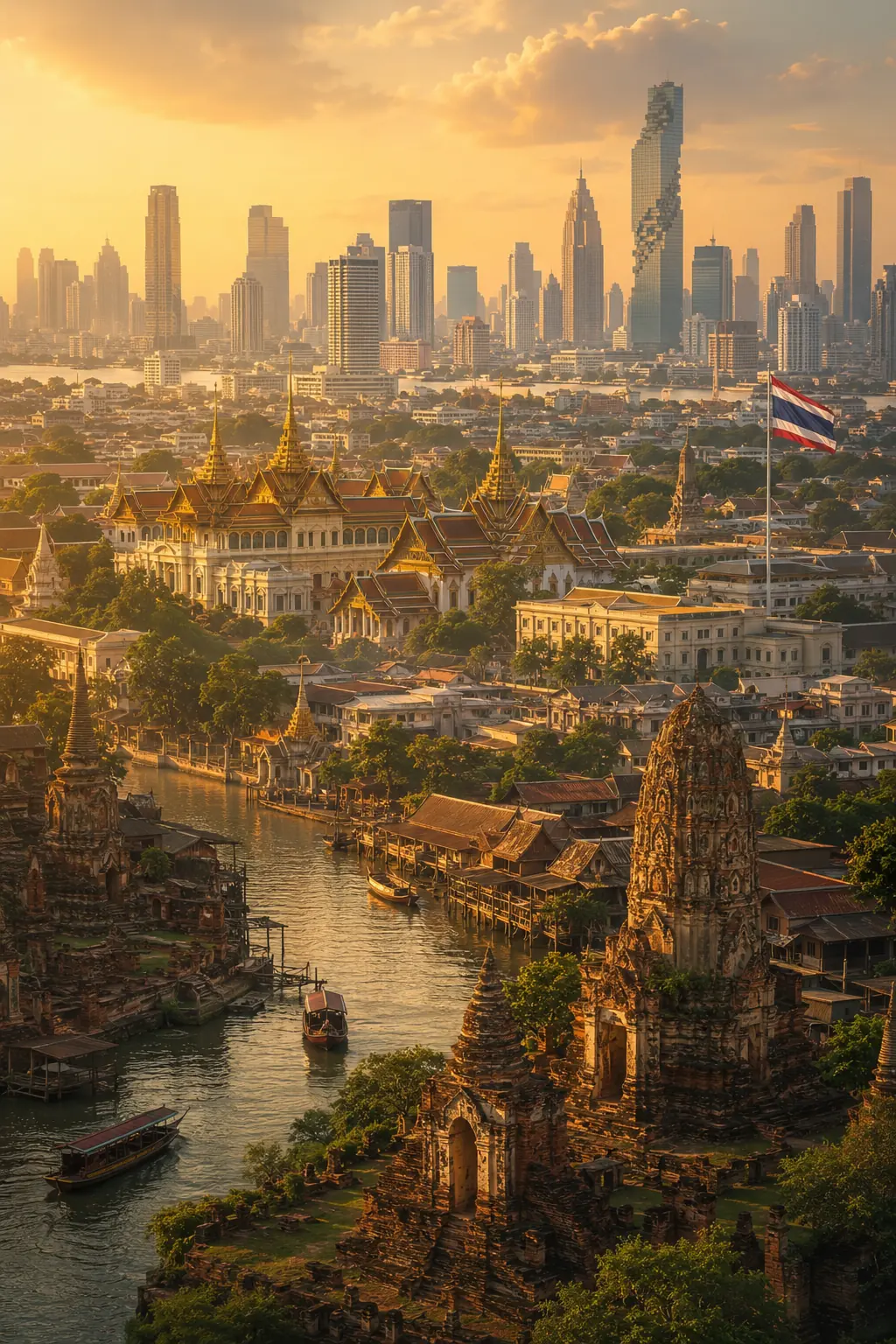
From a quiet fishing community on the Gulf of Thailand to one of Thailand's best-known resort cities, Pattaya has spent more than half a century reinventing itself — and it still isn't finished.
For millions of visitors, Pattaya is instantly recognisable.
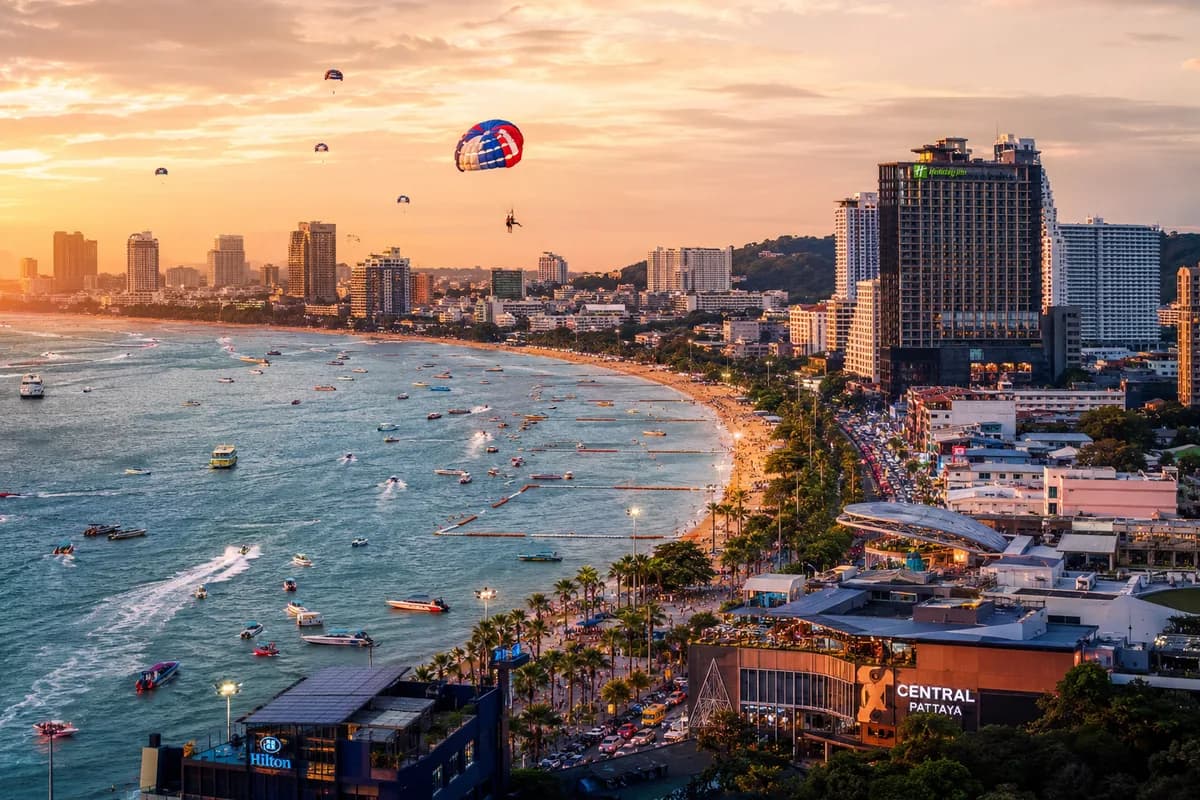
There is the long sweep of the bay, Beach Road running beside the Gulf of Thailand, boats heading out towards Koh Larn, hotels and condominium towers behind the shoreline, restaurants from almost every corner of the world, and a city that seems to operate on its own rhythm from morning until long after sunset.
It can feel as though Pattaya was always destined to become a resort. It was not.
Long before the hotels, shopping centres and international visitors, this stretch of the Chon Buri coastline was home to small communities where fishing mattered far more than tourism. Even the name Pattaya reaches back into a story much older than the modern city.
In little more than half a century, that quiet coastal settlement became one of Thailand's best-known destinations. And perhaps the most interesting thing about Pattaya is not simply how much it has changed. It is how often.
Before Pattaya Was Pattaya
To begin Pattaya's story, it helps to travel back well beyond the age of tourism — all the way to the final months of the Ayutthaya Kingdom.
Pattaya's own historical accounts connect the area with Phraya Tak, the military commander who would later become King Taksin the Great. In early 1767, as Ayutthaya faced the Burmese armies that would soon capture the capital, Phraya Tak led several hundred men eastwards, passing through Chon Buri towards Chanthaburi as he gathered forces to continue the struggle.
According to the tradition preserved in Pattaya's local history, a leader named Nai Klom initially prepared to confront Phraya Tak's force. Instead, he was struck by the discipline of the approaching army and joined it without a battle.
The place became associated with the name Thap Phraya — roughly, "the army of the Phraya." Local accounts connect this old name with the later development of the word Pattaya, while another explanation links the name to phatthaya, the south-westerly wind that marks the start of the rainy season.
The exact evolution of place names is rarely perfectly tidy, but it gives modern Pattaya an unexpectedly deep historical opening.
A Quiet Bay on the Gulf
The Pattaya most travellers recognise today would have been almost impossible to imagine in the first half of the twentieth century.
The settlements around Pattaya and neighbouring Naklua were closely tied to the sea. Fishing boats, simple houses and coastal communities occupied an attractive bay within reach of Bangkok — not yet an international resort, simply a small fishing community, as Pattaya's own historical material describes it.
Its geography, however, gave it enormous potential. Pattaya lies only around 150 kilometres southeast of Bangkok, and its bay offered a natural seaside escape as improving roads gradually made the Eastern Seaboard more accessible from the capital — an advantage that only grew, since Pattaya could be reached directly by road rather than by island flight or ferry.
But another group of visitors helped accelerate the transformation dramatically.
When R&R Arrived
The best-known turning point in Pattaya's modern history came around the beginning of the 1960s.
American military personnel stationed in Thailand began travelling to Pattaya for R&R — rest and recreation during the era surrounding the Vietnam War. One particularly persistent Pattaya story places a group of American servicemen from Korat on the beach in the early 1960s, arriving for a week of leave. Over the decades, the episode has acquired an almost legendary status as the moment Pattaya tourism began.
No single visit created a city. What matters is what followed.
A new kind of visitor had appeared, and local businesses responded. Accommodation expanded, restaurants and bars opened, and transport services grew. Homes and small guesthouses began serving travellers who had money to spend and wanted somewhere by the sea.
The pattern repeated: more visitors created more businesses, and more businesses made Pattaya attractive to still more visitors. The fishing community had discovered tourism.
A Resort Begins to Take Shape
The remarkable thing about Pattaya's development is not simply that it grew. It is how quickly it grew.
Thailand itself was becoming increasingly connected to international tourism. Air travel was expanding, Bangkok was growing rapidly, and travellers from Europe, Asia and elsewhere were discovering the country's beaches. Pattaya was exceptionally well positioned to benefit: close to Bangkok, requiring neither an island flight nor a ferry, and offering a broad bay, nearby islands and a growing selection of hotels and restaurants.
Unlike a resort created from scratch, Pattaya was gradually becoming a genuine city at the same time. Older beachfront buildings gave way to larger hotels and commercial development, roads filled with traffic, restaurants multiplied, and Beach Road became the public face of the resort. The horizon began to rise — a place once dominated by fishing boats was developing an urban skyline.
Thailand Discovered Pattaya Too
It is easy to tell Pattaya's history entirely through foreign visitors, but that leaves out an important part of the story.
Pattaya also became one of Bangkok's great seaside escapes. For residents of the capital, the appeal was obvious: a proper beach destination that could be reached by road without taking a flight. Thai families, groups of friends, businesses and weekend travellers became part of the city's visitor economy alongside international tourists — and that remains true today.
The Tourism Authority of Thailand presents Pattaya as a year-round destination with beaches, islands, water sports, golf, restaurants, attractions and accommodation across a remarkably broad range. Pattaya did not simply become somewhere foreigners travelled to. It became a resort city used by Thailand itself.
From Resort to City
By the 1970s, Pattaya had grown beyond the administrative structure inherited from its earlier coastal-community days, and Thailand responded with an unusual status. The Pattaya City Administration Act of 1978 established Pattaya as a special local government organisation, separate from the standard provincial system used elsewhere in the country. Pattaya's own official account explains that rapid tourism growth had made the previous system inadequate for a destination developing at such speed. A new Act followed in 1999 and remains the foundation of the modern administration.
That change says something important about what Pattaya had become. It was no longer simply a beach with hotels. It was a city, with permanent urban life expanding behind the resort frontage: homes, schools, businesses, shopping, transport and public services serving a population far larger than the visitor economy alone might suggest.
More Than One Pattaya
Modern Pattaya becomes easier to understand once you stop thinking of it as one continuous resort. There are several Pattayas sitting beside one another.
Naklua and Wong Amat combine older communities with some of the city's newer beachfront development. Central Pattaya contains the famous bay, Beach Road, major hotels, shopping centres and much of the city's highest-energy visitor infrastructure. Move towards Pratumnak Hill and the character changes again, perched between the main bay and Jomtien. Then comes Jomtien itself, with its own long beachfront, restaurants, hotels, condominiums and residential life. Offshore lies Koh Larn, close enough for an easy day trip yet different enough to feel like another destination entirely.
This variety helps explain Pattaya's longevity. A destination built around only one type of visitor can struggle as tastes change. Pattaya has repeatedly added another layer.
A City of Reinvention
Nightlife is undeniably part of Pattaya's international identity, just as beaches and resorts are. But modern Pattaya is considerably broader than any single reputation.
Golf has developed into a major reason to visit the surrounding region, water sports fill the bay, and restaurants reflect an unusually international resident and visitor population. Nearby attractions range from temples and gardens to water parks and large entertainment complexes.
The city also attracts conferences, sporting events and major tourism gatherings. In 2026, Pattaya hosted Thailand Travel Mart Plus, one of the Tourism Authority of Thailand's flagship industry events, as the country continued promoting tourism built around experiences ranging from gastronomy and wellness to sport, culture and events — a fitting choice, since few Thai destinations demonstrate adaptation quite so visibly.
Pattaya Today
Pattaya's scale today is part of what makes the city so unusual.
It remains unmistakably a resort, yet it also functions as a permanent international city. Some visitors stay for a weekend; others stay for months. Some come for beaches, some for golf, some for food, some for nightlife, some for retirement, and some simply for the combination of convenience and energy that is difficult to reproduce elsewhere.
The city's location still matters just as much as it did during its early rise. Bangkok remains close, U-Tapao International Airport lies to the southeast, motorways connect Pattaya to the capital and the wider Eastern Seaboard, and Koh Larn sits just offshore. The surrounding Chon Buri region has become one of Thailand's most important tourism and economic areas.
Pattaya is no longer simply a destination at the end of the road from Bangkok. It sits inside a much larger region.
Pattaya and the Eastern Seaboard
That wider setting is becoming increasingly important. Pattaya lies within Thailand's Eastern Economic Corridor, covering Chon Buri, Rayong and Chachoengsao — a vision that combines tourism with aviation, logistics, ports, industry, technology and new infrastructure.
Accessibility has always been central to Pattaya's success, and long-term regional planning aims to strengthen the links between Bangkok, Chon Buri, Pattaya, Rayong and U-Tapao. Some of those ideas remain future plans rather than current realities. Among them is a proposed high-speed railway that would eventually link Don Mueang, Suvarnabhumi and U-Tapao, with a station serving Pattaya — still working its way through planning, contractual and approval stages, and best understood today as part of the Eastern Seaboard's longer-term transport vision rather than an imminent new way of travelling to Pattaya.
For the city's story, that is enough. The important point is not the railway itself. It is that Pattaya continues to sit at the centre of plans to make Thailand's eastern region more closely connected.
U-Tapao and the Eastern Future
U-Tapao International Airport is another part of that long-term picture.
Located southeast of Pattaya in Rayong province, U-Tapao already serves the region today. Thailand's wider plans for the airport and an associated Eastern Aviation City envisage a much larger role in the future, with additional passenger capacity built out in stages under a long-term concession model. Several major elements of that vision remain at planning or pre-construction stages, and the final shape and timetable will depend on how those plans progress.
For Pattaya, U-Tapao already matters simply because it adds another piece to the city's geographic advantage: Bangkok to the northwest, the industrial and economic centres of the Eastern Seaboard to the east, an international airport to the southeast, and Pattaya sitting between them beside the Gulf. It is a very different setting from the quiet fishing community that once occupied the bay.
Pattaya Tomorrow
It is tempting to think of Pattaya's transformation as something that already happened — a fishing village became a resort, the resort became a city, and that is the end of the story.
Pattaya has rarely worked that way. The city's skyline continues to evolve. Its visitor markets continue to broaden. Thai domestic tourism remains important alongside international travel, and golf, events, restaurants, islands, beaches, shopping and residential development all provide different reasons to spend time here.
The future may well bring new infrastructure and stronger regional links. But Pattaya's next chapter is unlikely to depend on one airport, one railway or one large project. Its history suggests something simpler: the city changes because people keep finding new reasons to come.
From Fishing Boats to a Global Resort
Perhaps that is why Pattaya's story is more interesting than its reputation. The city has never really stood still.
A place connected in local tradition with the eighteenth-century journey of Phraya Tak later became a fishing community on the Gulf of Thailand. The fishing community discovered visitors. The visitors encouraged a resort. The resort grew into a city. The city became an international destination with beaches, islands, hotels, restaurants, golf, entertainment and residents from around the world.
Fishing boats still cross Pattaya Bay today, and behind them rises a skyline that would have been almost unimaginable to the communities that once lived primarily from the sea. The contrast is dramatic, but perhaps even more remarkable is that the old and the new still exist in the same place.
Boats still leave for the islands. Thai families still arrive from Bangkok for weekends by the sea. International visitors still discover Pattaya for the first time. And another generation of hotels, restaurants, neighbourhoods and attractions keeps adding to the city.
Pattaya's great story is not simply how a fishing village became a global resort. It is how, time after time, the city has found another Pattaya waiting inside the old one.