Get into a taxi in Thailand and look toward the rear-view mirror. You may see flowers. Jasmine, marigolds and roses. A small woven garland hanging gently as the car moves through traffic. Sometimes it is fresh, sometimes partly dried. Sometimes accompanied by: A Buddha image. An amulet, sacred thread, yantra markings and A small religious object. For many visitors, the immediate question is: Why are there flowers in the car? The short answer: They are often there for blessing, respect, good fortune and protection. But as usual in Thailand, the full story is richer.
The Garland Is Not a Car Accessory First
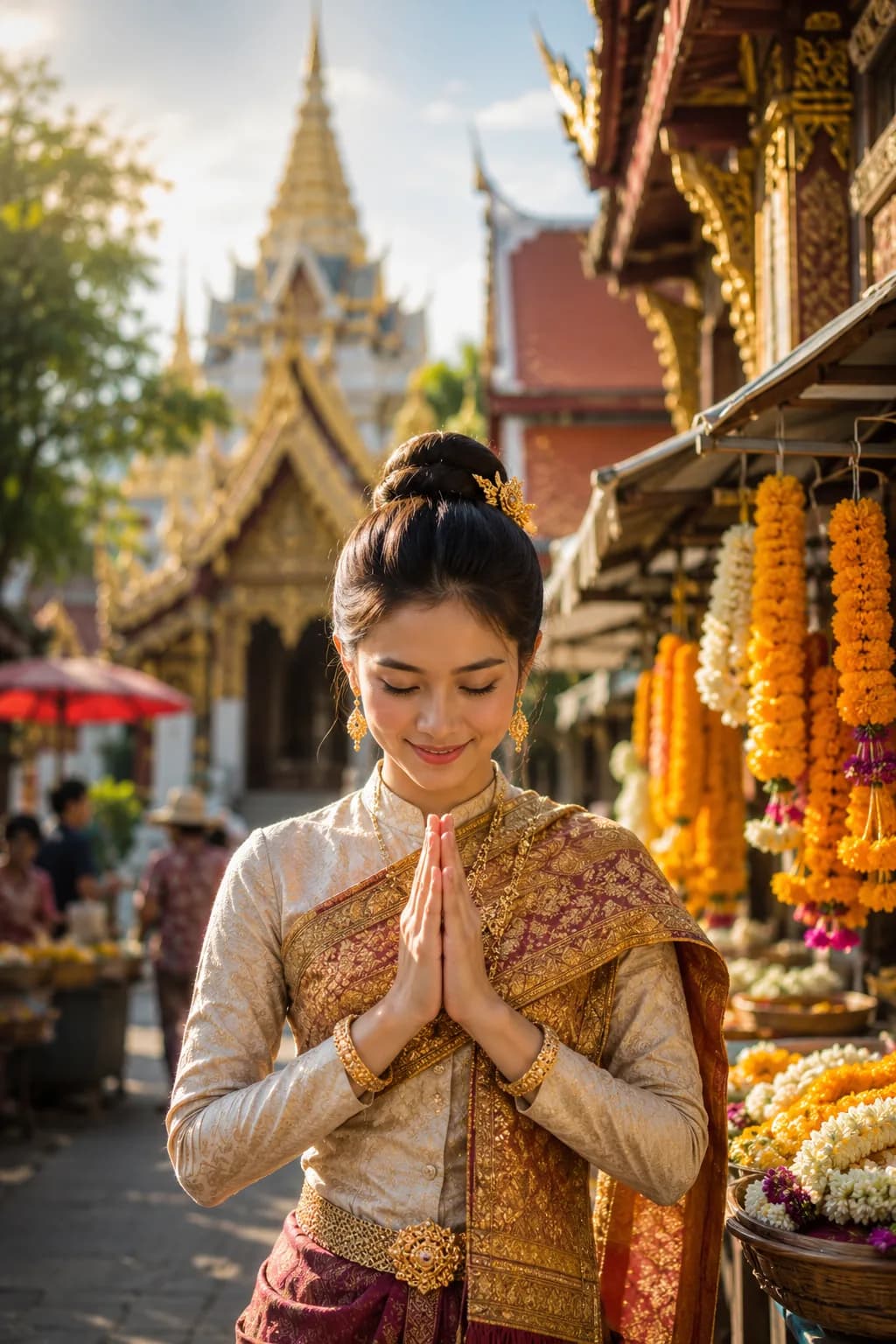
Traditional Thai floral garlands are commonly called: Phuang malai. พวงมาลัย They are used in many contexts to express: Respect, Love, Gratitude, Auspiciousness, Religious devotion and Good wishes. When placed in a vehicle, they can become part of a broader practice of asking for safe travel and spiritual protection. That distinction matters. Phuang malai did not originate as something designed to hang from rear-view mirrors. Garlands have long had wider ceremonial, religious and social roles in Thailand. They can be: Offered at shrines. Presented to elders. Used at weddings. Placed before religious images. Given as signs of respect. Used during important ceremonies. The car is simply one modern place where an older floral tradition found a new role. Thailand Foundation notes that floral decoration is deeply integrated into Thai cultural practice, including garlands and other forms used at important ceremonies.
The Tourism Authority of Thailand also identifies phuang malai as a traditional floral garland used to express love and respect, including during Songkran. The vehicle garland belongs to this much larger cultural vocabulary of flowers. Flowers are: Beautiful. Fragrant, temporary, living and suitable for offering. Their impermanence also fits naturally into Buddhist cultural environments, even when a specific garland practice is not itself a purely Buddhist ritual. Jasmine is one of the most familiar flowers used in Thai garlands. Small white buds, strong fragrance and elegant appearance. Jasmine in Thai: Dok mali. ดอกมะลิ “Mali” is also the word you already know from: Khao Hom Mali. Thai jasmine rice. Thailand4U has now prevented one extremely unlikely misunderstanding. Jasmine is strongly associated in modern Thai culture with affection and respect. It is famously connected with Mother's Day traditions as well.
Its fragrance and white colour make it especially suitable for garland work. Bright yellow or orange marigolds are also common in religious offerings and garlands. They are visually striking and relatively durable. Rose petals or flowers can appear in more elaborate garlands. Different designs use different combinations.
White Champa / Champaca
Other fragrant flowers can also be used depending on design, season and availability. Traditional phuang malai can require significant craft skill. Flowers are carefully threaded and arranged. Patterns can be highly intricate. Tiny flowers, precise symmetry, fragile material and one mistake and gravity participates. Not every car garland is an elaborate ceremonial masterpiece. Small practical garlands are sold widely near: Markets. Intersections, shrines, roadsides and temple areas. Drivers can buy them easily. In some places, vendors may approach stopped vehicles with garlands for sale. The product fits the customer perfectly: Driver. Vehicle, moment of purchase, immediate hanging place and not a temple. But potentially a place containing: Blessed objects, garlands, sacred markings, images and protective symbols. The vehicle may become surrounded by layers of auspicious meaning. Because driving is dangerous. That answer is almost too obvious. Traffic, rain, motorcycles, trucks, long journeys, night driving, mechanical failure and human mistakes.
A vehicle exposes people to uncertainty. Before dangerous journeys, cultures worldwide have used: Prayer. Blessings, medals, saints, talismans, religious symbols and protective charms. Thailand is no exception. It makes invisible hope physically visible. That is a much better way to understand the garland than: “Thai drivers think flowers stop accidents.” Important distinction. A garland does not replace: Seat belt. Helmet, tyres, brakes, safe speed, sober driving, insurance and road awareness. A driver may: Bless the car. Hang a garland, wear seat belt and service brakes. All four can exist together. Some Thai vehicle owners take a new car or motorcycle to a monk for blessing. The exact ritual varies by monk, temple and family tradition. Blessed water may be sprinkled on the vehicle. Monks may chant protective or auspicious verses. Some vehicles display sacred inscriptions or geometric markings.
These may be applied by a monk or ritual specialist depending on the tradition. Yantra designs are sacred geometric or written forms used in several Thai religious and magical traditions. They can appear: On cloth. As tattoos, on buildings and inside vehicles.
The Ceiling Above the Driver
In taxis or vans, visitors sometimes notice markings drawn on the interior roof. These are not decorative graffiti. They may be sacred protective inscriptions. The driver may regard them seriously. White sacred thread may also be tied inside a vehicle or around certain components following blessing rituals. Drivers may carry Buddhist amulets or other protective objects. Again: Different systems overlap, Thailand does not require everything spiritual to fit into one category. Not in a simple doctrinal sense. Flowers are important Buddhist offerings. Monks may bless vehicles. Buddha images can be present. But car-garland practice also intersects with: Auspicious custom. Folk belief, guardian spirits, brahmanic influence and personal habit. The safest explanation is layered rather than exclusive. One says: For Buddha. Another: For protection. Another: For luck. Another: My mother gives me one. Another: I always do it. Culture works like that.
A driver may not have a detailed explanation. The practice simply feels right. A new vehicle can be a major purchase. For many families: Years of saving. Loan. Work tool. Status, freedom and family transport. That makes the beginning of ownership emotionally significant. Some buyers care about choosing a favourable day or time to receive a new car. Astrology or birth information may influence the choice. Vehicle colour can also enter auspicious thinking for some people. Licence-plate numbers may be chosen or valued for perceived auspiciousness. Then the car may be blessed. Then flowers added, hopefully also purchased, lucky date, lucky number, blessing, garland, insurance and dashcam. Modernity has layers. For a family, taking the new car to a temple may feel like giving the vehicle an auspicious beginning. Especially if it earns income. The car is workplace. Motorcycle is workplace. Vehicle supports family income, same, safe vehicle, safe driver, income continues and family benefits. That is why tourists notice garlands especially often in taxis. The driver spends all day on the road. The vehicle is both livelihood and risk environment.
The Garland May BE Replaced Regularly
Fresh flowers do not last forever. That is part of their nature. A partly dried garland does not automatically mean neglect. It may simply have been hanging for several days. A new offering may be added at meaningful times or when the old one fades. Sacred or offered objects may be disposed of more respectfully than ordinary rubbish depending on personal belief. Practices vary. Why hang it there? Practical reasons: Visible, convenient, central and easy to attach. The garland can also sit close to other protective objects near the driver's field of view. Anything hanging from a mirror should not obstruct the driver's vision. Modern road-safety logic still applies, dashboard, interior hook, near a religious image and placement varies. Garlands are not limited to cars. You may see them on: Motorcycles. Tuk-tuks, trucks, buses, boats and other vehicles. Thailand's relationship between travel, water and blessing is old.
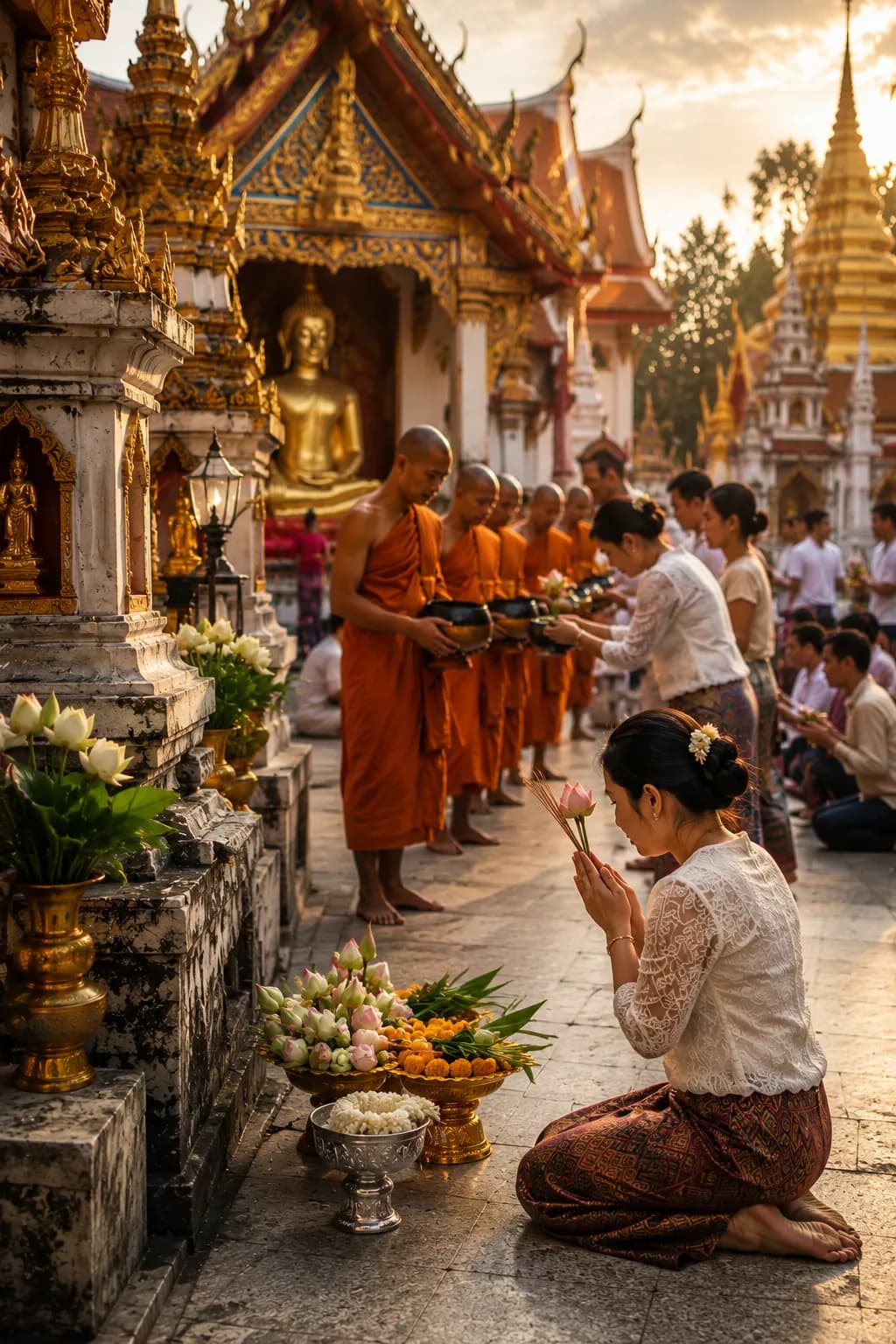
Boats can carry sacred or auspicious decoration too. Flowers and coloured cloth may appear around parts of boats. Specific practices vary and may involve local beliefs about protection and vessel spirits. Commercial aviation uses modern engineering and formal safety systems. But crews and companies may still participate in religious blessing ceremonies for new aircraft or facilities. It relocates it. A driver who puts a garland in the car may also make offerings at a spirit house. Same person. Different sacred relationship. Some drivers may stop or wai at a shrine before beginning work or a long trip. People pray there for many forms of good fortune. But Erawan is a shrine to Phra Phrom, not an ordinary car-protection shrine. The same floral form can travel between: Temple, shrine, car, wedding, parent and ceremony. That versatility makes phuang malai culturally powerful. To Buddha: Offering. To elder: Respect.
To driver/vehicle: Blessing. To performer: Appreciation in some contexts. Meaning comes from recipient and occasion. During traditional Songkran observances, floral garlands may be given to elders as expressions of love and respect. This is a good reminder: A phuang malai is not fundamentally about cars.
The Flower Language Is Broader Than Religion
Jasmine is strongly associated with Mother's Day in Thailand because of its symbolism of maternal love and purity. Garlands may be presented to mothers. Love, respect, gratitude, blessing and auspiciousness. All can be expressed through flowers. Flowers at: Wedding, funeral, temple, birthday, hospital and vehicle. Humans give flowers to important moments. The intricate Thai form is distinct. Phuang can refer to a bunch, cluster or linked form in several Thai compounds. Malai refers to garland. The exact linguistic history is less important for a visitor than recognising the phrase. Say it when you see one. Now the object has a name. You may see multiple styles. Simple jasmine loops, yellow marigold garlands, mixed-flower designs, prices depend on: Size, flower, craftsmanship, location, season and they change. Before the garland reaches the taxi mirror: Flowers grown. Harvested, transported, wholesale market, garland maker, street seller and driver.
Bangkok's famous flower-market district has historically been a major centre for flower trade. Garland makers and vendors depend on wholesale flower networks like these. Flowers move overnight and before dawn. Our previous night-market article suddenly connects. Timing matters. Often highly skilled, fast hands. Fine needle work. Pattern memory. The craft may be learned within families or through formal training. It can be paid work. Do not look only at the flowers. Look at the stitching. A complex garland can involve: Loops, chains, floral discs, tassels, layered patterns, fresh flowers carry: Fragrance, life, impermanence, offering value, but artificial garlands also exist, practical, long-lasting and decorative. But it does not necessarily carry the same ritual value as fresh flowers in every context. Humanity is resourceful. Buddhist teaching places importance on impermanence: Anicca. Flowers are a natural symbol because they are beautiful and temporary. But be careful. Not every Thai garland is consciously intended as a meditation on anicca. Do not over-philosophise everything. Flowers are common offerings before Buddha images. They express reverence. Their fading can also remind practitioners of impermanence.
The Garland in the Car May Sit Beside a Buddha Image
This visually links travel protection with Buddhist reverence. Different drivers may favour different images, temples or revered monks. Thai amulets can be associated with: Protection, confidence, blessing, revered monks, temple traditions, one amulet from father's temple, one garland from wife, one sacred marking from monk and one lucky number. You cannot decode it from appearance alone. You may get a fascinating story. “Which one prevents crashes?” That reduces belief to a cartoon. “Is that for good luck?” Better. Yes. For safe driving, from temple, my mother gave it and driver's English permitting. Visitors sometimes notice multiple Buddha images on taxi dashboards. Treat them respectfully. Obvious. This is poor safety behaviour and can also be culturally disrespectful if sacred objects are nearby. Feet = symbolically low. Sacred image = high respect. Keep them apart. Do not turn the driver's sacred objects into comedy props. Another obvious travel principle.
Visitors may try to decode every garland colour. Be careful. Flowers may be chosen because of: Availability. Price, beauty, fragrance, ritual preference and personal preference. Culture does not operate like universal traffic signs. Marigolds commonly appear in offerings and auspicious contexts. Their golden colour and durability make them popular. But exact symbolic explanations vary. Common associations exist. Yet again: Meaning depends on occasion. Yellow = X. White = Y. Red = Z. Life is messier. The act itself can matter. Stop, offer, pray, hang garland, begin drive and ritual creates a psychological transition. Humans use rituals to mark beginnings. Ceremony, blessing, blessing and prayer. A driver who believes the vehicle is blessed may feel calmer. Calmness can be valuable. But again, this is not evidence that the garland physically prevents collisions. Cultural truth: People use garlands for auspiciousness and protection. Scientific claim: Flowers reduce crash probability. No.
Some outsiders call car garlands superstition. That can be unnecessarily dismissive. Better terms: Auspicious practice, protective belief, religious custom, vehicle blessing tradition and excellent general travel principle. No. Some do strongly. Some follow family habit. Some enjoy the fragrance. Some do it occasionally. Some not at all.
The Car Without a Garland Is Still Thai
Important. Could still have flowers. Modern Thailand again. Tradition adapts faster than futurists expect. Smartphone mounted, QR payment, garland, no contradiction and same possibility. Technology and sacred practice have shared dashboards for decades. Another crossover. Driver may care about: Vehicle plate. Date, blessing and garland. Different auspicious systems reinforce one another: if culturally valued, garland above, amulet beside, seat belt on and complete system. Vehicle-blessing rituals can make monks highly visible outside the temple. A monk may visit or the owner may bring the vehicle to temple grounds. One of Thailand's most striking visual combinations. Protective thread can be tied in various places. Exact local practice differs. Do not imitate randomly. Sacred paste or powder may be applied during blessings. The owner may leave it visible for a long time. You may accidentally erase something sacred.
A rental vehicle may contain garlands or sacred objects depending on owner or company. Treat them as part of the vehicle. Fresh jasmine also smells pleasant. Practical beauty and spiritual meaning can coexist. Excellent side effect, jasmine + artificial pine tree, globalisation and garland vending provides small-scale income. Customers include: Drivers, commuters, temple visitors, shrine worshippers, people buying gifts, traffic creates stationary customers and vendors move between them. Same city, another layer. Working among vehicles is dangerous. The picturesque roadside garland seller is also doing difficult road-exposed labour. Traditional crafts often have that imbalance. Continuous demand, religion, ceremonies, family traditions, tourism and beauty. Thai society already has many. Flowers also play major roles around funerals. The emotional meaning differs completely from a car blessing. Again different, celebration, respect, mourning, protection and devotion. Traditional and modern entertainment contexts may use garlands as gifts or tokens of appreciation.
This has its own histories and should not be confused automatically with religious offering. This is perhaps the closest connection to the vehicle use. Offerings seek: Blessing, fulfilled wish, gratitude and protection. Spirit house: Relationship with land/place. Car garland: Relationship with travel, blessing, sacred protection. Different situation.
The Driver Leaves the Property
The protection goes with them. Amulet, garland, thread, image, they travel, saint Christopher medal, rosary, hamsa, prayer card, lucky charm and phuang malai. Cultures create different versions of the same need. A Thai garland has its own cultural history. But cross-cultural comparison helps remove the “exotic” label. Lucky object, religious symbol, family photo, favourite charm and people personalise dangerous machines everywhere. Thai religious and auspicious objects are often more publicly visible. One ten-minute ride can show: Wai. Buddha image, Garland, Lucky number, Thai script, Motorbike taxis outside, 7-Eleven on corner, Bangkok condensed, Seeing garland and Taking photo. Inventing explanation: “Thai people worship their cars.” Respectful curiosity first. But that is not car worship. Better wording. Because traditions often adapt to new objects. When cars became important, existing blessing practices found a new target. It moved from human/sacred relationships into transportation. People choose lucky phone numbers.
Ancient-style auspiciousness enters new technology, safety, luck, control and hope. Will it be safe? Will it work? Will I afford it? Will my family be protected? Because flowers already have recognised cultural meaning. Beauty, offering, respect and blessing. A passing driver understands the visual language. Everyone knows what kind of thing this is. A person may wai toward sacred objects associated with the vehicle. The exact target of reverence may be the Buddha image, blessed object or spiritual meaning rather than the flowers themselves. They are offering/symbol, not necessarily object of worship. Sometimes, not always. Again, context, ritual and intention matter. The owner creates the religious context. Candle in shop: Product. Candle offered at shrine: Religious act. Same material, different context and of course. They are widely sold. Yes. But do it respectfully if you are using it as a cultural or religious object. No. But avoid using sacred practice purely as a joke. Yes, depending on context. Garlands can express respect and affection. Different designs may suit different situations. Context remains undefeated.
The Songkran Gift
A garland for an elder can be a beautiful respectful gesture when used appropriately. Could you buy a small garland for a driver? Possibly. But ordinary tipping or thanks is simpler. Do not manufacture a ceremony the driver did not ask for. Safety comes first. A driver should not have decorations that materially obstruct visibility. As a passenger, if the ride feels unsafe for any reason, you are allowed to choose another vehicle. Recurring Thailand4U principle. Thailand has historically faced serious road-safety challenges, especially involving motorcycles. That broader context helps explain why protective vehicle rituals can feel emotionally meaningful. But again: Belief is not a substitute for road-safety measures. When journeys feel uncertain, protection rituals gain importance. Bus, van, truck, taxi and many hours on road. The symbolic desire for protection is easy to understand. The blessing is not only for driver.
Safe return matters to everyone. Mother buys flowers, partner hangs them, driver begins trip and not only religion. Jasmine in a taxi may remind someone of: Temple. Mother, home, festival and new car. Culture is sensory. Because it solves several cultural needs at once: Beautiful object. Religious offering, gift, sign of respect, auspicious symbol and portable blessing. Thai designers increasingly reinterpret traditional garland forms in: Fashion, jewellery, art, branding and contemporary craft. But the recognisable form remains. Traditional crafts such as phuang malai can become visual symbols of Thailand internationally. Tourism campaigns and cultural exhibitions use them because the form is distinctive. Beautiful objects attract aesthetic attention. But their social and ritual meaning should not disappear. It has jobs to do. Because vehicles are places where people seek safety, luck and auspiciousness. Phuang malai already carries strong Thai associations with respect, blessing, offering and good wishes.
Putting one in a car allows an older floral tradition to accompany a modern journey. It may sit beside Buddhist images, blessed thread, amulets or sacred markings. For one driver it is strong religious belief. For another, family tradition. For another, habit. For another, simply something that feels right before driving.
The Bigger Lesson
Flowers in Thai cars are commonly phuang malai — traditional floral garlands. They are used far beyond vehicles and can represent respect, gratitude, blessing and good fortune. In cars they are often associated with safe travel and protection. The practice overlaps with Buddhist offerings, vehicle blessings, auspicious customs and broader Thai folk belief. It is not a scientific safety device. It is a cultural and spiritual one. A car is modern technology. A garland is traditional craft. Put them together and you get something very Thai: The new does not necessarily replace the old. The old simply finds somewhere new to hang. Look at the mirror. If there is a small jasmine garland moving gently above the dashboard, you now know it is doing much more than making the car smell nice.