The short answer
Sightseeing in Thailand is not difficult, but it rewards a little preparation. A temple visit may require covered shoulders and knees. A national park can have a seasonal closure even when the nearby town is sunny. A boat trip that looks perfect online can be cancelled because the sea is unsafe. A historical park may have several ticket zones rather than one entrance. And an attraction that is normally open can close temporarily for a ceremony, official event or safety reason.
The best approach is simple: decide what kind of day you want, check the current official status of anything that can close, understand what is included in the price, dress for the places you plan to enter, and leave enough flexibility for weather and local conditions.
| If you want to... | Start with... |
|---|---|
| Visit temples in a city | Go independently unless you want historical context from a guide |
| Explore a large historical park | Independent visit by bicycle, local transport or guide depending on scale |
| Visit a national park | Check the park's current opening status, access rules and weather first |
| Do an island-hopping day | Use an established boat/tour operator and check exactly what the package includes |
| Reach a difficult viewpoint or trail | Check access, footwear, daylight and current weather before leaving |
| See wildlife | Prefer observation and conservation-focused experiences over forced interaction |
| Fit many distant sights into one day | A private or small-group tour may be worth the extra cost |
| Spend a relaxed day with no timetable | Pick one area and combine nearby sights rather than crossing a city repeatedly |
1. Sightseeing in Thailand is more varied than it first appears
Thailand's attractions range from active Buddhist temples and royal sites to archaeological ruins, national parks, beaches, islands, museums, markets, waterfalls, caves, viewpoints, wildlife areas and purpose-built attractions. They do not all operate like conventional tourist sights.
A wat may be both a visitor attraction and a working religious space. A national park may contain roads, campsites, waterfalls, trails and marine areas with different access conditions. A historical park may cover several kilometres and include separate monument zones. A beach may be freely accessible while the nearby marine park requires an admission fee. A night market may be busiest only on particular evenings. A viewpoint may technically be open while heavy rain makes the access road or trail a poor idea.
This is why the useful question is not only 'What should I see?' It is also 'How does this particular place work today?'
2. Temples: visit them as sacred places first, attractions second
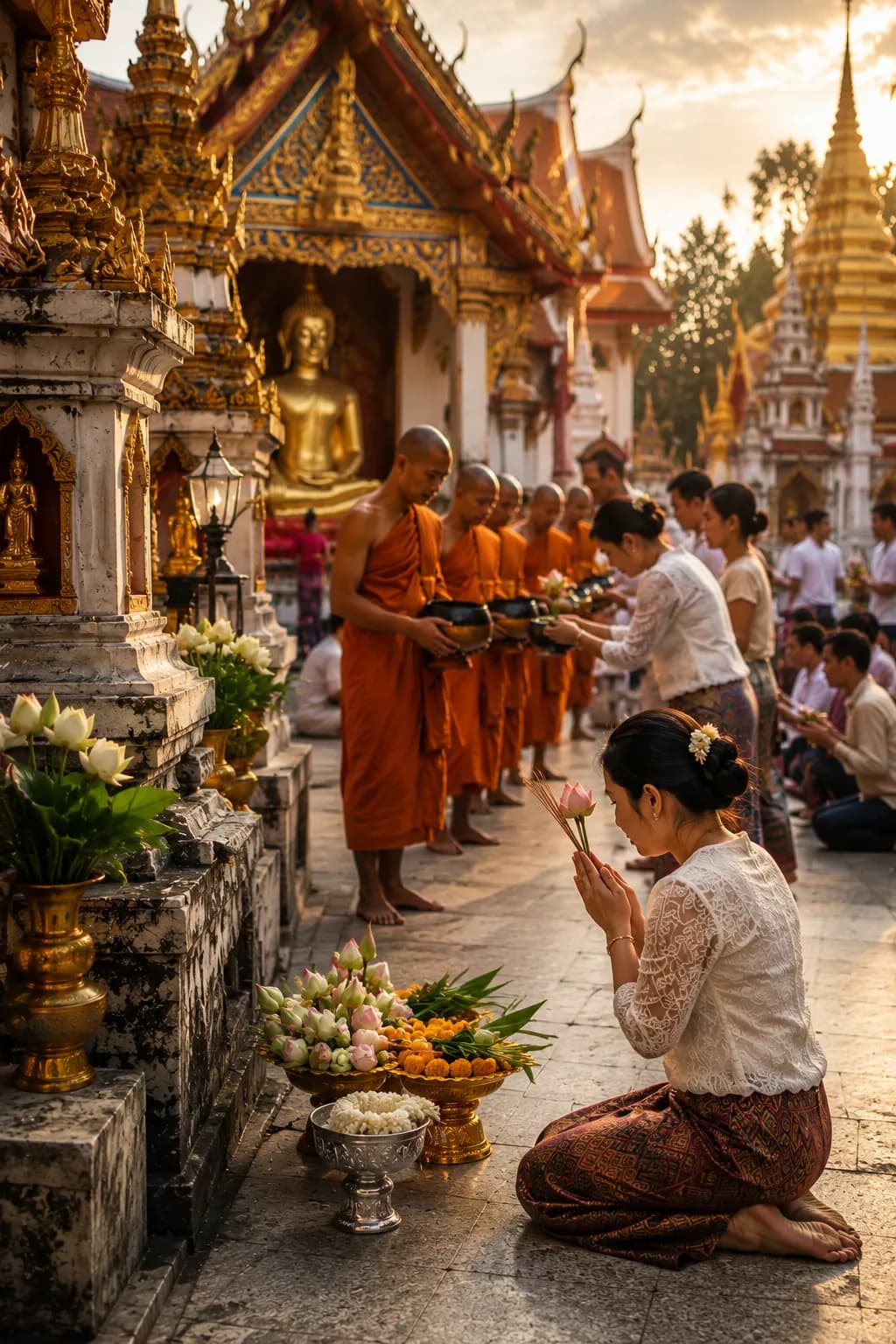
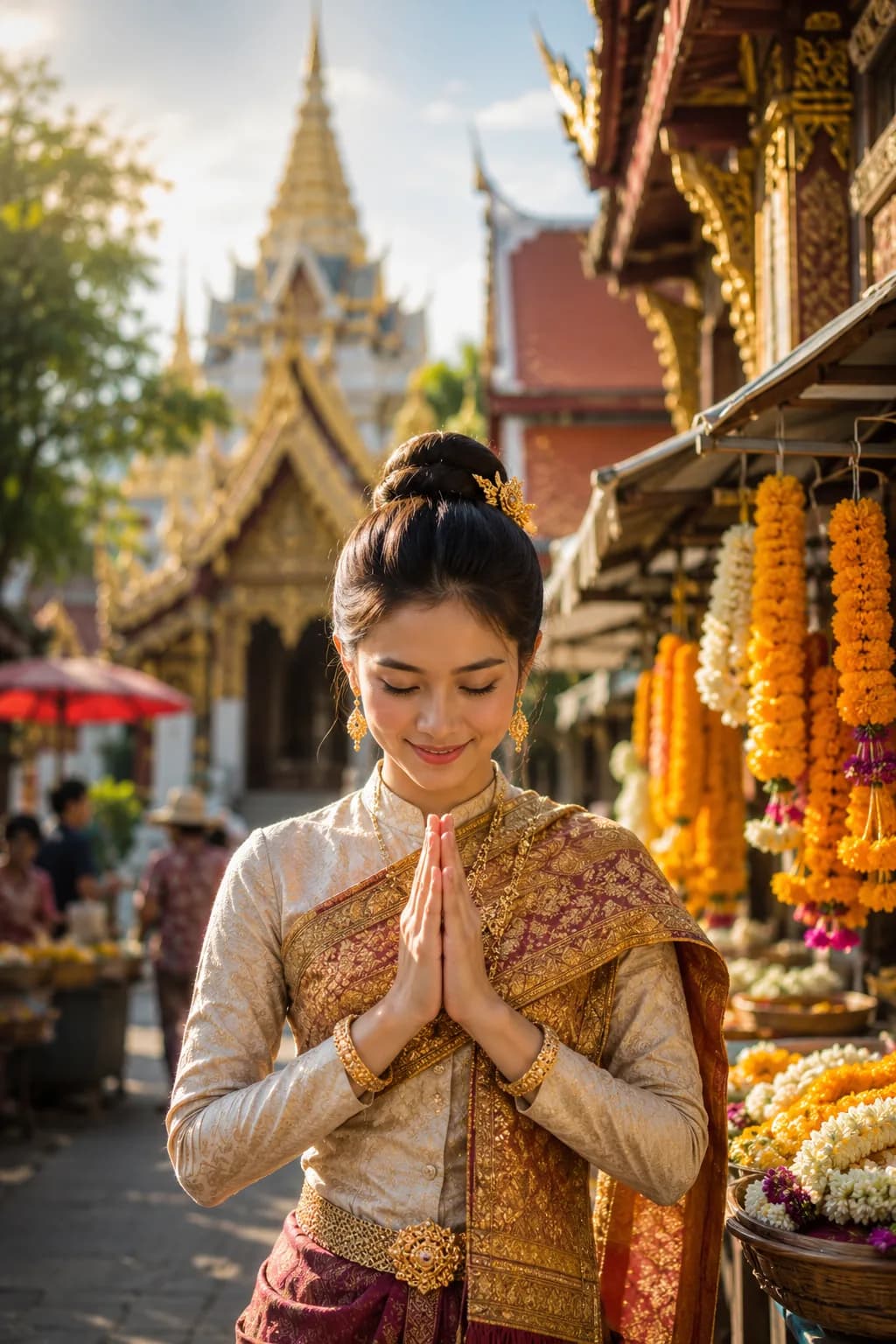
Thailand's temples are among the country's great travel experiences, from famous complexes in Bangkok and Chiang Mai to small neighbourhood wats that may never appear in an international guidebook. Visitors are generally welcome, but these are active religious places rather than museum sets.
The safest default is modest clothing. Cover shoulders and knees, avoid beachwear and very revealing clothing, and be prepared for stricter rules at major royal or sacred sites. The Grand Palace in Bangkok, for example, publishes a detailed dress code and can refuse entry for clothing that does not meet it. Do not assume a scarf thrown over unsuitable clothing will always solve the problem.
Shoes are normally removed before entering the principal indoor temple space. Look for shoe racks or rows of footwear and follow what the building requires. Do not assume you must remove shoes for every outdoor courtyard or every structure in a large temple complex.
Inside, keep your voice down. If you sit facing a Buddha image, keep your feet pointed away rather than towards it. Do not climb on, touch or pose disrespectfully with Buddha images. Photography is often allowed in parts of temple complexes, but not everywhere; signs and staff instructions take priority over what another visitor is doing.
Monks should be treated respectfully. One particularly important point for visitors is that women should not touch monks or their robes. If something needs to be handed to a monk, follow the local arrangement rather than initiating physical contact.
Do you need a guide for temples?
Usually not for basic access. Famous temples normally have signs, maps or visitor information, and many travellers are perfectly happy exploring independently. A guide becomes valuable when the history, iconography, architecture and religious meaning matter to you. Without context, several temples in one day can blur into 'another beautiful building'; with a good guide, details that would otherwise be invisible start to make sense.
A sensible compromise is to take one strong guided temple or heritage tour early in the trip, then explore independently afterwards.
3. Royal sites and major sacred attractions can have stricter rules
Do not assume that the dress code or opening pattern at a neighbourhood temple automatically applies to the Grand Palace, royal residences or other high-profile sites. Major royal attractions may apply stricter clothing rules, security procedures and photography restrictions.
They can also close temporarily for official ceremonies. This is not theoretical: the Grand Palace and the Temple of the Emerald Buddha had an official temporary closure in June 2026 for royal funeral ceremonies. The lesson for travellers is not to memorise closure dates. It is to check the attraction's own official information before making a special journey.
If a stranger outside a major sight tells you it is closed and immediately proposes a cheap tuk-tuk tour, shopping stop or alternative attraction, verify the closure yourself at the official entrance or official website. Genuine closures happen; unsolicited alternatives are a different matter.
4. Historical parks and ruins: plan for scale, heat and separate zones
Ayutthaya, Sukhothai, Si Satchanalai, Kamphaeng Phet and other heritage areas are very different from visiting one compact museum. Some sites cover large areas with temples and ruins separated by roads, lawns, moats or countryside.
Before going, check whether admission is sold per monument, per zone or through a combined arrangement. Do not assume one ticket covers everything. Opening hours can also differ between individual monuments and special evening programmes.
Historical parks can be excellent by bicycle because the terrain is often relatively flat and the pace suits photography. A tuk-tuk, local driver or private guide is better when the monuments are spread out, the weather is very hot, mobility is limited or you want detailed explanation. Walking everything simply because it is 'a park' can turn an enjoyable day into an endurance test.
The morning and late afternoon are usually more comfortable than the hottest part of the day. Bring water, sun protection and shoes that cope with uneven steps and old surfaces. Ruins are not playgrounds: do not climb on structures unless access is clearly allowed.
5. National parks: check the park, not just the weather app
Thailand's national parks include mountain forests, waterfalls, caves, islands, coral areas and wildlife habitats. They are among the country's greatest attractions, but they require more current planning than a city museum.
The Department of National Parks publishes annual closure schedules, and individual parks or attractions inside them can also close temporarily because of heavy rain, flash-flood risk, rough seas, trail conditions, conservation work or seasonal recovery. In 2026, for example, Similan Islands National Park closed its tourism season from mid-May for ecosystem recovery, while other parks temporarily closed specific waterfalls or trails because of dangerous water conditions.
That means a generic statement such as 'this park is open all year' is not enough for a specific day. Check the current official park notice, especially during the rainy season or before travelling a long distance for one waterfall, trail or island.
Entrance fees
Many Thai national parks charge admission, and visitor categories can have different rates. Current examples published for 2026 show separate Thai and foreign visitor prices at several parks. Rates vary by park and sometimes by zone or special attraction, so do not treat one fee found online as a national standard.
There can also be separate charges for vehicles, camping, boats, guides or particular activities. Ask what the quoted price includes before comparing a self-drive day with an organised tour.
Guides and rangers
Some short marked trails can be walked independently. Other routes require or strongly benefit from a local guide, ranger or authorised community guide. If the park tells you a guide is required, that is not an optional upsell. Remote trails can involve river crossings, changing weather, wildlife, navigation and restricted access that are not obvious from a map screenshot.
Waterfalls and wet-season conditions
A waterfall can look more impressive during wet periods while becoming more dangerous at exactly the same time. Strong currents, flash floods, slippery rock and sudden upstream rain are real reasons for temporary closures. Never treat a barrier or ranger instruction as something to step around for a better photograph.
6. Viewpoints, hikes and caves: the last kilometre matters most
A viewpoint can be only a few kilometres from your hotel and still require a steep climb, rough road or exposed trail. Before leaving, check the final access rather than only the distance on the map.
Ask four questions: Can a normal car reach it? How much walking is involved? Is the route exposed to rain or heat? Will you return before dark?
For sunrise viewpoints, arrange transport the night before. For sunset, remember that the difficult part may be walking down after the light has gone. A phone torch is useful backup, but it should not be the plan for an unfamiliar mountain trail.
Wear shoes for the terrain rather than for the photograph. Flip-flops are fine for many beaches and poor choices for wet stone steps, jungle paths and steep viewpoints. Carry water even for short hikes; Thailand's heat and humidity can make a distance that looks trivial on a map feel very different in practice.
Caves deserve extra caution. Access can be affected by rain, water level and local safety decisions. Never enter a cave route that has been closed or attempt an undeveloped cave alone simply because a map pin exists.
7. Islands, beaches and marine parks: separate the beach from the boat trip
A beach day and an island-hopping tour are not the same product. Many beaches can be visited independently by road, local boat or scheduled ferry. Island-hopping tours add transport between multiple stops, snorkelling, lunch and other inclusions, but they also add a timetable and dependence on sea conditions.
Before booking, check the actual boat type. A speedboat is faster and often reaches more places, but the ride can be rougher. A larger ferry or excursion boat may be more comfortable but slower. A traditional long-tail boat can be ideal for short local journeys and private coastal exploration, but it is a very different experience from a high-speed transfer.
If motion sickness is a concern, do not book based only on the prettiest itinerary. Ask about travel time on open water and boat type, and take appropriate precautions before departure.
Marine park fees
Some island and snorkelling trips enter national or marine park areas where an admission fee applies. Sometimes the fee is included in the package; sometimes it is collected separately. This should be clear before you pay. A cheap tour that excludes park fees, pier transfer and lunch may not be cheaper once everything is added.
Safety on boats
Wear the life jacket provided and take crew instructions seriously. Thai marine-safety guidance requires strong attention to life jackets and passenger limits, and official tourism guidance specifically advises travellers to use life jackets on sea and river trips.
If weather deteriorates, a cancelled boat is frustrating but preferable to an operator treating unsafe conditions as a timetable problem. Avoid any operator that makes safety sound optional.
8. Snorkelling and diving: the rules became stricter in 2025
Thailand introduced nationwide measures in 2025 to protect coral reefs during diving and snorkelling activities. For organised diving, operators are required to provide certified supervision. For snorkelling near coral reefs, life vests are required under the measures unless the participant holds a recognised freediving qualification.
The practical point for ordinary travellers is straightforward: do not complain when a legitimate operator insists on a life vest or restricts what you can do around coral. Those rules are part of marine protection and safety, not simply company policy.
Never stand on coral, collect marine life or treat reef animals as props. If a tour promotes touching, chasing or handling wildlife as the main attraction, that is a reason to choose another operator.
9. Wildlife activities: observation is usually the better experience
Thailand offers wildlife experiences ranging from national-park safaris and birdwatching to elephant centres, rescue projects and commercial animal attractions. The quality and welfare standards vary enormously.
A strong default is to favour experiences built around observing natural behaviour rather than forcing animals to perform, pose or constantly interact with visitors. Tourism Authority of Thailand guidance on eco-conscious wildlife tourism encourages elephant experiences that focus on natural behaviours without coercion.
For elephants, ask what the activity actually involves rather than relying on words such as 'sanctuary', 'ethical' or 'rescue' in the name. Those words are marketing terms unless the operation backs them up with practice. Observation, feeding under controlled conditions and learning about care can be meaningful; forced tricks, unnatural performances and high-volume handling should make you question the experience.
Wild animals in national parks are different again. Never feed them. Do not move closer because another tourist does. A macaque, elephant or other animal that appears calm is still a wild animal and can react quickly.
10. Markets can be sightseeing too - but know what kind you are visiting
Thailand's markets are not one category. A morning fresh market, weekend craft market, floating market and tourist night market can all be worthwhile for completely different reasons.
Go to local fresh markets early if you want to see daily food culture. Go to night markets for eating, browsing and atmosphere rather than a quiet shopping experience. Floating and railway markets can be visually memorable but often attract heavy visitor numbers, so timing matters more than the marketing photograph suggests.
Do not measure a market only by how 'authentic' someone on social media says it is. A market can be popular with tourists and still be enjoyable. The useful questions are whether the goods, food and atmosphere interest you, how far you are travelling to reach it, and whether it is actually operating on the day you plan to go.
11. Museums, shows and cultural attractions
Museums and performance venues are often the easiest attractions to plan because they have defined entrances, timetables and tickets. Even here, however, Monday or weekday closures, special events and last-entry times can matter.
For museums, check the final admission time rather than only the closing time. Arriving twenty minutes before a building closes may technically be possible and practically pointless.
For shows, decide whether the ticket includes transport, dinner or only the performance. Confirm the venue location before paying; Bangkok, Phuket and Pattaya can all turn a seemingly short transfer into a significant journey at busy times.
If language matters, check whether a show is visual, multilingual or dependent on spoken explanation. A traditional dance or spectacle may work perfectly without Thai; a small theatre production may not.
12. Day trips: DIY, group tour or private driver?
There is no universally best format. The cheapest independent trip can become inefficient if four transfers are required. The most expensive private tour can be unnecessary when a direct train stops beside the attraction.
| Choose... | When it usually makes sense |
|---|---|
| DIY | Easy transport, one or two main sights, you value flexibility |
| Group tour | Complicated logistics, boat trips, first visit, you want a fixed price and timetable |
| Small-group tour | You want more flexibility without paying for a fully private day |
| Private guide/driver | Several spread-out sights, family/group travel, mobility needs, photography stops, limited time |
A private driver and a licensed guide are not the same service. A driver gets you between places. A guide interprets the destination, handles visitor flow and explains history or culture. Some tours include both roles; others do not. Check before assuming.
13. How to book activities without buying the wrong thing
You can book directly with an attraction or operator, through a hotel, at a local travel agency or through an online marketplace. Each route has advantages.
Direct booking often gives the clearest communication with the operator. Hotel desks are convenient and can be useful when pickup logistics matter. Local agents can compare several operators quickly. Online platforms make reviews, cancellation rules and price comparison easy.
What matters more than the channel is what you verify before paying.
- Confirm the exact activity and date.
- Check pickup area and pickup time.
- Check what is included: admission, national-park fee, meals, equipment, guide, boat, hotel transfer and insurance where applicable.
- Check group size and vehicle or boat type if they matter to you.
- Read the cancellation and weather policy.
- Keep the booking confirmation and operator contact details.
- For tour companies, especially larger or expensive packages, use Thailand's Department of Tourism licence-check system if you want to verify registration status.
Thailand's Department of Tourism specifically advises travellers to check the licence status of tour companies before buying. A legitimate company should be able to provide its business name and licence details without turning the question into a mystery.
14. Opening hours in Thailand: treat them as current information, not permanent facts
Opening times shown online are useful, but they should not be treated as immortal facts. Religious ceremonies, royal functions, public holidays, maintenance, weather, conservation closures and private events can all change access.
Use this hierarchy when a sight matters enough that a closure would spoil the day: official attraction or government source first; current operator notice second; mapping platforms and recent visitor reports as supporting information.
The more effort required to reach the attraction, the more important that verification becomes. You do not need to phone every small museum. You should check before driving three hours to a waterfall in heavy rain or flying to an island for a marine park that has a seasonal closure.
Also distinguish closing time from last ticket sale or last entry. Large attractions may stop admitting visitors before the gates finally close.
15. Dress for the whole day, not only the first stop
A classic mistake is dressing for a boat, market or hot-weather walk and then deciding spontaneously to enter a temple or royal site. If sightseeing is likely to include sacred places, carry or wear clothing that gives you the option.
Lightweight trousers or a long skirt, a sleeved top and easy-to-remove shoes work well for many mixed sightseeing days. A scarf can be useful for sun and modesty, but it is not a guaranteed substitute where a site enforces a specific dress code.
For national parks and hikes, priorities change: grip, rain protection, insect protection, water and sun protection matter more than temple-ready clothing. If a day combines both, keep a change or covering layer in the vehicle or bag.
16. Tourist traps: recognise the pattern, not just one famous scam
Most sightseeing in Thailand is straightforward. The problems worth recognising are usually simple sales patterns rather than elaborate criminal operations.
Be cautious when someone you did not approach tells you a major attraction is closed and immediately has a replacement tour ready. Be cautious with extremely cheap tuk-tuk sightseeing offers that depend on visiting shops. Australian government travel advice specifically warns that apparently friendly taxi or tuk-tuk drivers offering cheap tours may take visitors to commission-paying shops where they can be overcharged or sold poor-value goods.
Also watch for:
- a 'special price today only' with no clear ticket source;
- a tour that cannot explain whether entrance or park fees are included;
- an operator that refuses to identify the boat, pickup point or company;
- an itinerary full of compulsory shopping stops that were not obvious when booking;
- a guide who pressures you to buy gems, suits, souvenirs or other unrelated products;
- anyone asking you to ignore an official closure, safety barrier or ranger instruction.
The best defence is usually not confrontation. Verify information, decline politely, and book through a channel you trust. Tourist Police 1155 is available if a situation becomes more serious.
17. Seasonality: 'rainy season' does not answer the whole question
Thailand does not have one identical weather pattern across the entire country. The Andaman coast, Gulf islands, north and central regions can behave differently at the same time of year. That matters for sightseeing because weather affects activities differently.
Rain can make waterfalls spectacular and trails slippery. Cloud can ruin a sunrise viewpoint while making a hot temple day much more comfortable. Rough sea conditions can cancel a speedboat trip while city sightseeing continues normally. Northern haze and burning-season conditions can reduce mountain views and air quality even when there is no rain.
Plan around the activity, not simply the season name. For a marine day, check sea and wind conditions. For a mountain viewpoint, check visibility and rain. For a national park, check official closures. For temples and museums, weather may matter mainly for comfort and transport.
18. What should you book in advance?
Book early when capacity is genuinely limited or when the activity is central to the trip. Examples include popular overnight national-park accommodation, small-group specialist tours, certain diving trips, private guides in peak periods, limited-seat shows, long-distance transfers tied to an excursion and high-demand holiday dates.
You usually do not need to pre-book every temple, market or ordinary city attraction weeks ahead. Overbooking removes one of Thailand's great travel advantages: the ability to change plans when weather, energy or a better idea appears.
A good balance is to lock the hard-to-replace experiences and leave ordinary sightseeing flexible.
19. Which kind of sightseeing day suits which trip?
| Your situation | A good approach |
|---|---|
| First day in Bangkok | One major temple/royal area plus nearby river or neighbourhood sights |
| Two-week first Thailand trip | Mix famous sights with slower local days rather than tours every morning |
| Family with children | Fewer transfers, shorter heat exposure, private transport when it simplifies the day |
| Solo traveller | DIY urban sightseeing plus selected group activities for remote or marine trips |
| Photography-focused trip | Early starts, sunset planning and private transport where timing matters |
| History-focused trip | Licensed guide for at least one major heritage area |
| Beach holiday | Keep boat days weather-flexible and do not book every sea day back-to-back |
| Nature trip | Build around park access and seasonal conditions rather than fixed city-style schedules |
20. Common sightseeing mistakes
The biggest mistakes are rarely dramatic. They are the small decisions that waste half a day.
Trying to see too much is number one. Bangkok traffic, ferry timetables, heat and large attraction complexes make map distances deceptive. Another common mistake is arriving at a temple in beachwear, assuming every national park is open year-round, or booking the cheapest island tour without checking fees and boat type.
Travellers also lose time by trusting an old opening time, going to the wrong pier, assuming a driver is a guide, waiting until the morning of a sunrise trip to arrange transport, or treating every social-media 'hidden gem' as if it will be empty.
A good sightseeing plan is not the one with the most pins. It is the one that leaves you enough time to enjoy the places you reached.
21. Before you leave the hotel: the two-minute check
Before a sightseeing day, check the following:
- Is the attraction open today, and is there a special closure or last-entry time?
- Do I need covered shoulders/knees or other specific clothing?
- Is there an entrance, national-park or marine fee not included in my booking?
- Do I know the exact pier, gate, meeting point or pickup area?
- Is today's weather appropriate for the activity, not just the city generally?
- Do I need cash, water, insect repellent, sun protection or better shoes?
- Is the return transport obvious, especially after sunset or from a remote site?
- Have I saved the booking confirmation and destination in my phone?