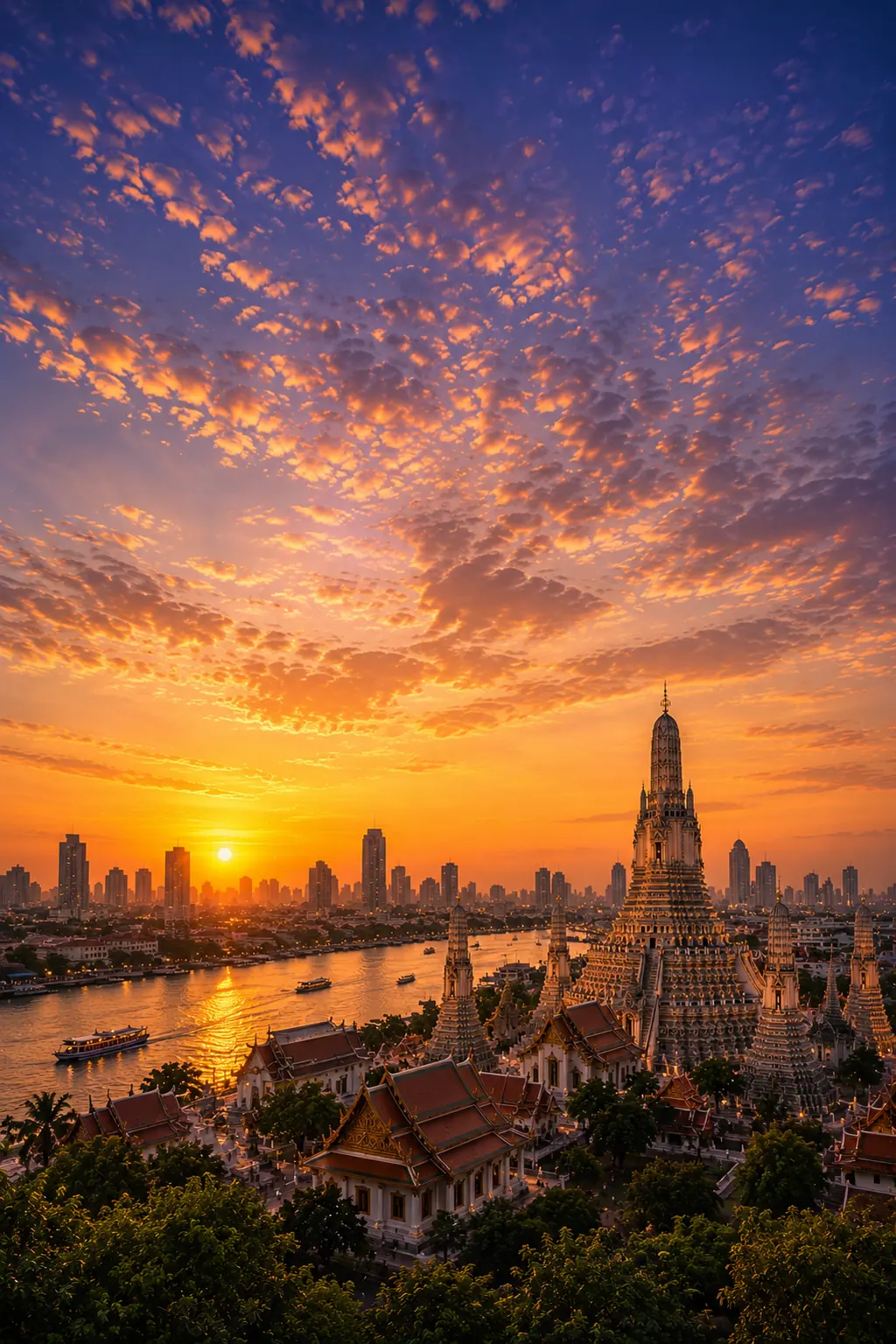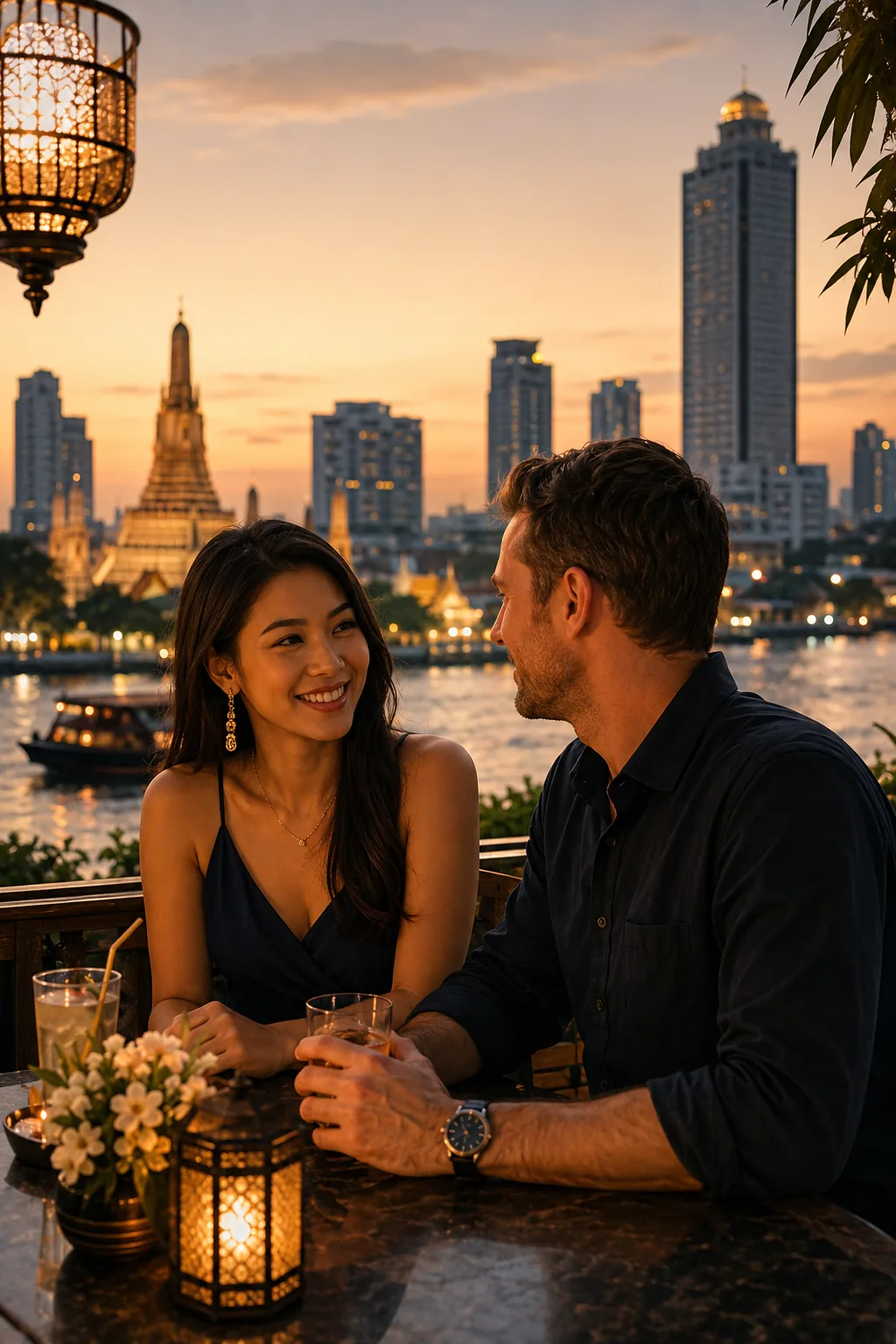
Bangkok has plenty of places associated with dating.
There are rooftop bars, nightclubs, coffee shops, dating apps and an endless stream of restaurants designed for two.
Then there is Benjakitti Park.
At first glance, it is simply one of Bangkok’s best green spaces: runners circling the lake, people walking after work, cyclists, fitness groups and friends taking photos against the skyline.
But in recent years, the park has picked up another reputation.
If you are single, wear black.
At least, that is what the internet says.
The idea has become one of Bangkok’s more unusual social trends — a playful dress code suggesting that someone wearing black at Benjakitti might be single and open to meeting someone.
There is just one problem.
It is not quite a rule.
And that is exactly what makes the story interesting.
The “black means single” idea
The basic version is wonderfully simple.
Go to Benjakitti Park wearing black.
Spot someone else wearing black.
Perhaps they are single too.
Perhaps you say hello.
It sounds almost too neat to be real, and anyone arriving in Bangkok expecting every person in a black running shirt to be advertising their relationship status is going to misunderstand what is happening.
Black sportswear is common. Most people in the park are there to exercise, relax or spend time with friends.
There is no official dating dress code, no section of the park reserved for singles and certainly no rule imposed by Bangkok authorities.
But the black-shirt idea is more than a completely invented tourist myth.
It has circulated widely enough among Thai social-media users and Bangkok’s fitness community to become a recognisable joke, conversation starter and, in some situations, an actual social signal.
That distinction matters.
When a joke starts becoming real
Urban trends often work in strange ways.
Someone makes a joke.
Other people repeat it.
Social media turns it into a meme.
Then people begin behaving according to the meme — and suddenly the thing that may once have been exaggerated starts becoming partly true.
Benjakitti’s black-shirt trend appears to fit that pattern remarkably well.
Thai-language lifestyle content has discussed the idea of singles wearing black at the park, while social-media creators have filmed themselves testing whether black-clad runners really are single.
By 2026, the concept had become familiar enough to appear in visitor discussions and reviews of the park.
More importantly, organised social events at Benjakitti have taken the colour code beyond internet humour.
At least one singles-oriented fitness event held at the park deliberately instructed single participants to wear black while people in relationships wore white.
At that point, “black means single” was no longer merely something people joked about online.
Someone had actually turned it into the rules of a real-world event.
Why Benjakitti?
The trend probably would not have worked nearly as well in just any Bangkok park.
Benjakitti has become one of the city’s most social outdoor spaces.
It sits in Khlong Toei, beside the Asok–Sukhumvit part of central Bangkok and close to Queen Sirikit National Convention Centre. It is easy to reach from parts of the city where large numbers of young professionals, expatriates and visitors spend their time.
The park combines several environments at once.
There is the older lake area, long popular with runners and walkers.
Then there is Benjakitti Forest Park, created from land once associated with the Tobacco Authority of Thailand, with wetlands, elevated walkways and broad open spaces that feel surprisingly removed from the traffic only minutes away.
Around sunset, the atmosphere changes again.
The heat begins to ease. Office workers arrive. Running groups gather. People walk dogs, exercise, meet friends or simply wander around.
Bangkok’s skyline lights up around the park.
It is social without being a bar.
That may be the most important part of the whole phenomenon.
Run clubs are becoming social clubs
Benjakitti’s singles reputation is part of something much larger than one colour of T-shirt.
Bangkok has developed an increasingly visible community around running clubs, outdoor workouts and group fitness.
For many participants, the exercise itself is only part of the attraction.
Running groups create something dating apps often struggle to reproduce: repeated, low-pressure human contact.
You already have a reason to be there.
You already share an activity.
Nobody needs to open with a perfect line.
A conversation can start with the route, shoes, pace, weather or the simple misery of running in Bangkok humidity.
And if nothing romantic happens, you still went for a run.
That makes the entire interaction fundamentally different from sitting across from a stranger on a formal first date.
Some Bangkok running communities openly describe the social and community side of running as part of their appeal. Fitness events at Benjakitti also routinely include time specifically for participants to socialise after exercising.
That environment makes the park fertile ground for something like the black-shirt idea.
The colour does not create the social scene.
The social scene makes the colour code possible.
Is Benjakitti really replacing dating apps?
Probably not.
But the joke contains a little truth.
Dating-app fatigue is hardly unique to Bangkok. Swiping can turn people into profiles, and conversations often disappear before two people ever meet.
A park works in the opposite direction.
You see the person first.
You see how they behave around other people.
There is no carefully selected profile photo and no biography designed to maximise matches.
Someone can simply smile and say hello.
That may help explain why the Benjakitti story has spread so effectively.
“Wear black in a park and meet someone” sounds almost deliberately old-fashioned in a city where almost every part of life can be organised through a phone.
It turns dating back into something accidental.
Or at least makes it feel accidental.
So does wearing black actually work?
This is where expectations need to stay realistic.
Wearing black does not magically transform Benjakitti into an outdoor Tinder.
Some people may know the trend.
Some may deliberately participate.
Others may have heard about it and find the whole thing funny.
Plenty will have absolutely no idea what you are talking about.
And many people wearing black will simply have chosen black because it is black.
The better way to understand the colour is as an icebreaker rather than a declaration.
If two people both know the joke, it gives them something to laugh about.
That is enough.
Black does not mean consent
There is also an obvious point worth stating.
A black shirt is not an invitation to ignore normal social boundaries.
Even if someone deliberately dresses according to the trend, it does not mean they want every stranger in the park to approach them.
Body language still matters.
Context still matters.
Being polite still matters.
Someone running hard with headphones in probably wants to run.
Someone exchanging smiles while standing around after a group workout might be much more open to conversation.
The colour might help start a conversation.
It does not replace one.
The Thai sense of humour matters
One of the easiest ways for foreign media to get stories like this wrong is to take them too literally.
A lot of the appeal of the Benjakitti trend lies in the humour surrounding it.
People test the theory.
People joke that they wore black and still went home single.
Creators interview runners to see whether the supposedly secret code actually works.
The trend exists partly because people enjoy talking about whether it exists.
That self-awareness is important.
Benjakitti has not become a giant outdoor singles market where everyone follows an established dress code.
It has become a place where a funny social-media idea overlaps with a genuinely social fitness culture.
That is much more interesting.
When should you go?
If you want to experience Benjakitti at its most lively, the late afternoon and early evening make the most sense.
Bangkok is cooler then, runners begin arriving after work and the park becomes increasingly social as sunset approaches.
The evening skyline is also one of the park’s biggest attractions.
Morning is another major exercise period, especially for anyone who prefers running before Bangkok heats up.
But if your interest includes the social side of the park, the after-work period is generally the more interesting experience.
How to get there
Benjakitti Park sits in central Bangkok's Khlong Toei district, immediately beside the broader Asok–Sukhumvit area.
The most convenient rail access depends on which part of the park you want to reach.
MRT Queen Sirikit National Convention Centre is particularly convenient for Benjakitti Forest Park.
The older lake area can also be reached from the Asok BTS / Sukhumvit MRT area with a walk.
Benjakitti is also connected toward Lumphini Park through Bangkok's elevated Green Bridge route, making it possible to combine the two parks in a longer walk or run.
Should travellers try it?
Absolutely — as long as you treat it as fun rather than a formula.
Wear black if you want.
Go for a run.
Join a fitness group.
Walk around the lake.
Watch Bangkok change from daylight to illuminated skyline.
If you happen to meet someone, excellent.
If you do not, you have still visited one of the city's most interesting modern public spaces.
And if someone jokingly asks whether your black shirt means you are single?
At least now you will understand why.
The bigger story
The black-shirt trend is entertaining because it sounds like one of those strange pieces of local knowledge travellers love discovering.
But underneath it is a more revealing Bangkok story.
A city famous for malls, nightlife and digital convenience has created a social scene around something remarkably simple: people going outside and doing things together.
Running clubs become communities.
Communities create friendships.
Friendships sometimes turn into relationships.
Then social media notices, invents a colour code and amplifies the whole thing.
So, does wearing black at Benjakitti mean you are single?
Sometimes.
Maybe.
And occasionally, deliberately.
Just do not assume everyone else got the memo.