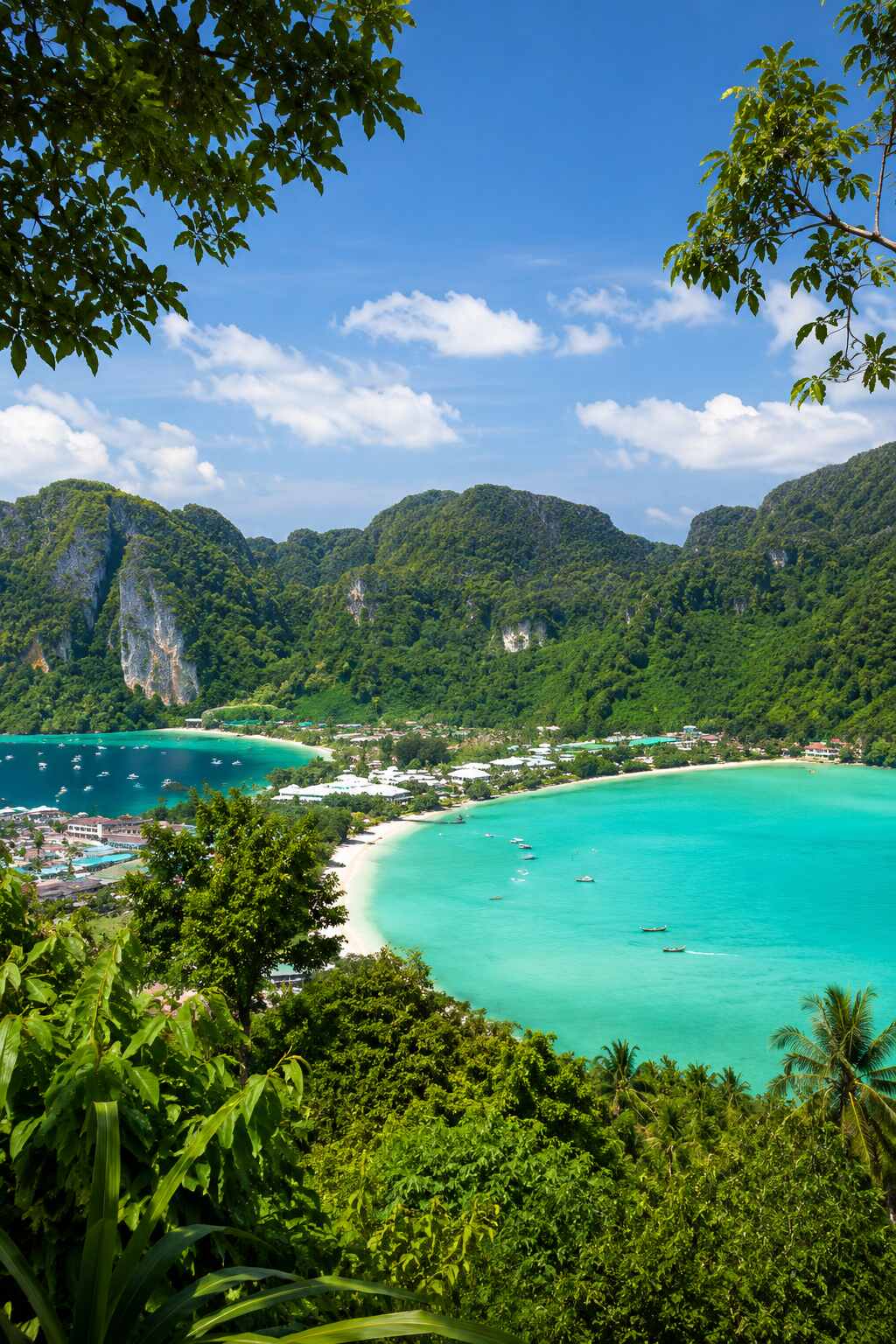
Koh Phi Phi is an archipelago, not a single island.
The destination is an archipelago in the Andaman Sea, with Phi Phi Don as the inhabited centre and Phi Phi Leh as the dramatic, largely undeveloped island that contains Maya Bay and Pileh Lagoon.
That distinction matters because almost everything about a Phi Phi trip depends on whether you mean life on Phi Phi Don or boat-based sightseeing around the wider island group.
PHI PHI DON – THE INHABITED CENTRE
Phi Phi Don is where visitors stay.
Hotels, guesthouses, restaurants, bars, shops, dive centres and Tonsai Pier are concentrated here.
The island has no conventional road network linking the main visitor areas in the way larger Thai islands do.
Walking is the normal way to move around Tonsai Village and nearby beaches, while longtail boats connect more distant bays and resorts.
TONSAI BAY AND TONSAI VILLAGE
Tonsai Bay is the main arrival point for most visitors.
Tonsai Pier is the principal passenger gateway, with ferry and speedboat connections to mainland Krabi, Phuket and other Andaman destinations.
The village behind the pier is the busiest part of Phi Phi Don.
Restaurants, convenience stores, shops, bars, dive businesses and accommodation are packed into a small walkable area.
It is practical, lively and often very busy.
LOH DALUM
Loh Dalum sits on the opposite side of the narrow central isthmus from Tonsai Bay.
The beach is shallow and scenic, while the surrounding area is strongly associated with Phi Phi’s nightlife.
Beach bars, music and late evenings make this side attractive to travellers who want social energy.
It is less suitable for visitors looking for complete quiet.
LONG BEACH
Long Beach offers a noticeably calmer atmosphere than Tonsai and Loh Dalum.
It is still close enough to the central part of Phi Phi Don to feel connected, but the setting is more beach-focused.
Longtail boats are commonly used to reach it, although walking routes can also connect parts of the island depending on conditions and the exact starting point.
For many visitors, Long Beach offers one of the best balances between beach atmosphere and access.
THE EASTERN BAYS
The eastern side of Phi Phi Don feels much more removed from the central village.
Loh Ba Kao and nearby bays are known for resorts, quieter beaches and a slower pace.
This side works well for travellers who want to spend more time at the hotel, beach or sea rather than walking into Tonsai every evening.
Boat transfers become more important.
LAEM TONG
Laem Tong is one of the quieter northern parts of Phi Phi Don.
It is associated with resort stays, beach time and a more secluded atmosphere.
This is a very different Phi Phi experience from the narrow central strip around Tonsai and Loh Dalum.
Visitors staying here should expect to rely heavily on boat transport.
PHI PHI VIEWPOINTS
The viewpoints above the central part of Phi Phi Don are among the island’s classic sights.
They reveal the unusual geography of Tonsai Bay and Loh Dalum Bay sitting on opposite sides of the narrow strip of land below.
The climb can be hot and steep in places.
Early morning or later afternoon is generally more comfortable than the middle of the day.
PHI PHI LEH
Phi Phi Leh is the smaller but visually iconic island south of Phi Phi Don.
There are no normal hotel districts or permanent visitor town here.
The island is part of Hat Noppharat Thara–Mu Ko Phi Phi National Park and is visited by boat.
Maya Bay, Pileh Lagoon, Loh Samah and Viking Cave are among the best-known sights around the island.
MAYA BAY
Maya Bay became internationally famous through the film The Beach.
The setting is extraordinary: pale sand enclosed by high limestone cliffs and clear water.
But Maya Bay is also a protected national-park site.
Access rules, landing arrangements, swimming restrictions and seasonal closures can change with national-park management.
Check current park conditions before planning your trip around a specific type of access.
PILEH LAGOON
Pileh Lagoon is one of the most dramatic boat-access places around Phi Phi Leh.
Steep limestone walls enclose bright turquoise water, creating a completely different experience from the open beaches of Phi Phi Don.
Boat traffic can be heavy during popular hours.
Early departures often give a calmer experience.
BAMBOO ISLAND
Bamboo Island, or Ko Mai Phai, lies north of Phi Phi Don and is part of the wider national-park landscape.
Its appeal is simple: pale sand, clear water and a much flatter island shape than the towering limestone scenery associated with Phi Phi Leh.
It is usually reached by boat and commonly included in longer island trips.
MARINE LIFE, SNORKELLING AND DIVING
The waters around Phi Phi are a major part of the destination.
Snorkelling, diving and boat trips are central activities.
Named dive and snorkelling sites vary in conditions and suitability, and marine life can never be guaranteed.
Use reputable operators, follow local safety instructions and avoid touching coral or feeding wildlife.
NIGHTLIFE
Phi Phi Don has a surprisingly lively nightlife scene for such a small island.
The strongest concentration is around Tonsai Village and Loh Dalum.
Expect beach bars, music, casual pubs and late-night social venues.
The scene can be energetic, especially in the central area.
Travellers staying on quieter beaches can avoid most of it.
SHOPPING
Shopping is compact and practical.
Tonsai Village has beachwear, souvenirs, small boutiques, convenience stores, local shopping and specialty businesses connected with island travel.
Do not expect major malls or large retail districts.
Shopping is part of the village experience rather than a destination in itself.
GETTING AROUND
Phi Phi’s transport model is simple.
Walk through the central village and nearby beaches.
Use longtail boats for more distant beaches and local water transfers.
Use ferries or speedboats for arrival and departure.
There is no normal island-wide network of taxis, tuk-tuks, buses or ride-hailing.
That makes hotel location much more important than on a road-based island.
HOW LONG SHOULD YOU STAY?
A day trip shows the scenery but not the real rhythm of Phi Phi.
Three nights gives you time for the central island, a viewpoint, beach time and one major boat day.
Four or five nights gives you more flexibility for weather, quieter beaches, diving or slower exploration.
Koh Phi Phi makes the most sense when you understand the contrast.
The centre can be loud, social and busy.
Only a short boat ride away, the same destination can feel remote, quiet and completely dominated by limestone cliffs and sea.