Koh Phi Phi looks simple on a map, but it works very differently from Thailand’s larger beach destinations.
There are no normal road-based transport networks across Phi Phi Don, most visitors arrive by boat, and many of the famous sights are on other islands.
For a first visit, hotel location, boat planning and realistic timing matter more than they first appear.
KNOW WHICH ISLAND YOU ARE STAYING ON
You stay on Phi Phi Don.
Phi Phi Leh contains Maya Bay, Pileh Lagoon and other famous sights, but it is not the normal accommodation island.
That distinction clears up a lot of first-time confusion.
Tonsai Village, Loh Dalum, Long Beach, Loh Ba Kao and Laem Tong are all on Phi Phi Don.
ARRIVING BY BOAT
Most visitors arrive by ferry or speedboat.
Tonsai Pier is the principal passenger gateway on Phi Phi Don.
Services connect with Krabi, Phuket and other Andaman destinations, but exact routes and schedules change with operator and season.
Check the actual departure pier before travel.
Do not assume every ticket from “Krabi” or “Phuket” leaves from the same terminal.
CHOOSE YOUR HOTEL LOCATION CAREFULLY
On a road-based island, a remote hotel may mean a taxi ride.
On Phi Phi, it can mean a longtail boat.
This is why location matters so much.
Central accommodation is easiest for restaurants, nightlife, shops and ferries.
Remote beaches offer much more peace but can require boat transfers and extra planning.
Read the hotel’s access instructions before booking.
HOW LONG SHOULD YOU STAY?
A day trip is possible, but it is rushed.
Three nights is a good first stay.
That gives you time for a boat trip, a viewpoint, the central island and some beach time.
Four or five nights gives you more flexibility if weather changes or you want to dive, snorkel or spend time on quieter beaches.
MAYA BAY
Maya Bay is one of Thailand’s most famous natural sights.
It is also one of the places where conservation rules matter most.
National-park management can change landing procedures, swimming access, visitor flow and seasonal opening.
Check current official conditions before travelling.
Do not build the trip around old social-media footage showing access that may no longer be allowed in the same way.
PILEH LAGOON
Pileh Lagoon is often paired with Maya Bay on boat trips.
The scenery is spectacular, but timing matters.
Popular times can be busy with boats.
Earlier departures can provide a calmer experience, although sea conditions and operator schedules always matter.
LONGTAIL OR SPEEDBOAT?
Both have advantages.
Longtail boats suit local trips, smaller groups and a classic island experience.
Speedboats are faster and useful for covering more distance.
The better choice depends on weather, group size, route and comfort.
Do not choose only by price.
VIEWPOINTS
The Phi Phi viewpoints are worth the climb.
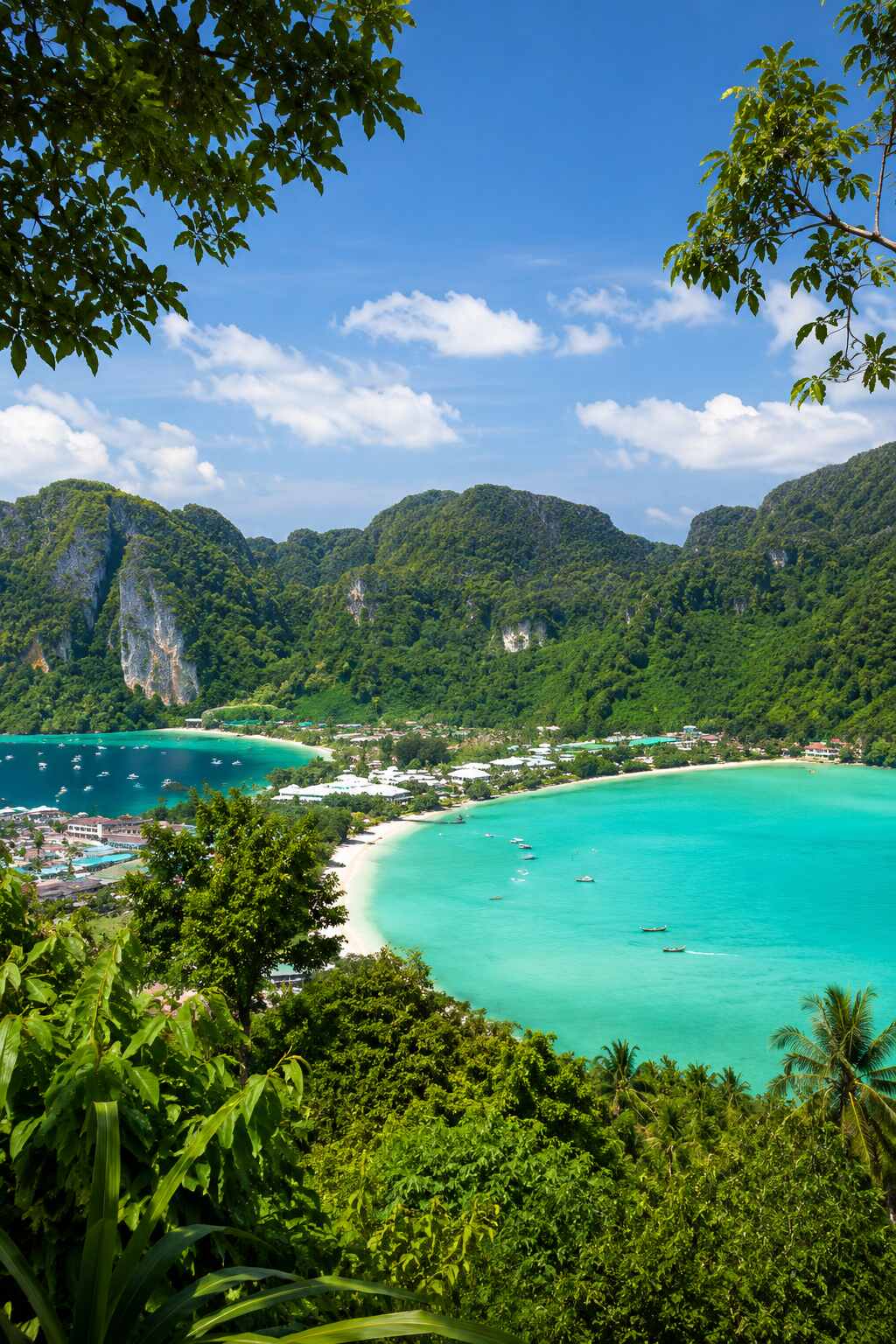
The classic view shows Tonsai Bay and Loh Dalum on opposite sides of the narrow centre of Phi Phi Don.
Take water.
The climb can be tiring in heat and humidity.
Morning or late afternoon is generally more comfortable than midday.
BEACHES
Do not spend the entire trip in Tonsai.
Long Beach, the eastern bays and northern beaches show a much calmer version of Phi Phi Don.
Some are reached most easily by longtail boat.
Beach conditions change with tide, weather and season.
NIGHTLIFE
Phi Phi nightlife is concentrated around the centre.
Loh Dalum is especially lively.
If you want beach bars and social nights, staying nearby makes sense.
If you do not, choose accommodation further away.
The island is small, but nightlife noise can carry.
SNORKELLING AND DIVING
Phi Phi is a major marine destination.
Use reputable operators and follow safety guidance.
Do not touch coral, stand on reefs, feed wildlife or chase marine animals for photos.
Visibility and sea conditions vary.
No operator can guarantee wildlife encounters.
WEATHER AND SEA CONDITIONS
Andaman weather matters.
Boat trips can be delayed, changed or cancelled when conditions are poor.
Low season can bring rougher seas and heavier rain.
Keep some flexibility in the itinerary rather than scheduling every important boat trip for the final morning.
GETTING AROUND PHI PHI DON
Walk in the central areas.
Use longtail boats for remote beaches and bays.
There is no normal taxi, bus, tuk-tuk or ride-hailing system covering the island.
This is part of Phi Phi’s character, but it also means luggage and transfers need more thought.
FIRST-TIME MISTAKES TO AVOID
Do not assume all famous Phi Phi sights are on the island where you sleep.
Do not book a remote resort without understanding the transfer.
Do not expect normal taxis or road transport.
Do not schedule every major boat activity with no weather backup.
Do not treat Maya Bay access rules as permanent.
Do not spend the entire trip in the central village.
Do not approach or feed monkeys or other wildlife.
And do not underestimate how different central Phi Phi can feel from the quieter beaches.
A GOOD FIRST KOH PHI PHI TRIP
A balanced first visit could include:
- arrival through Tonsai Pier;
- central Phi Phi Don and Tonsai Village;
- one viewpoint;
- a full or half-day boat trip;
- Maya Bay under current park rules;
- Pileh Lagoon;
- one quieter beach;
- snorkelling or diving if that interests you;
- a lively evening around Loh Dalum if you want nightlife;
- and enough unscheduled beach time to slow down.
Koh Phi Phi’s reputation is easy to understand once you see the landscape.
But the best trip comes from seeing beyond the single postcard image.
The destination is a mix of social island life, protected marine landscapes, dramatic limestone scenery and quiet beaches — all connected by water.