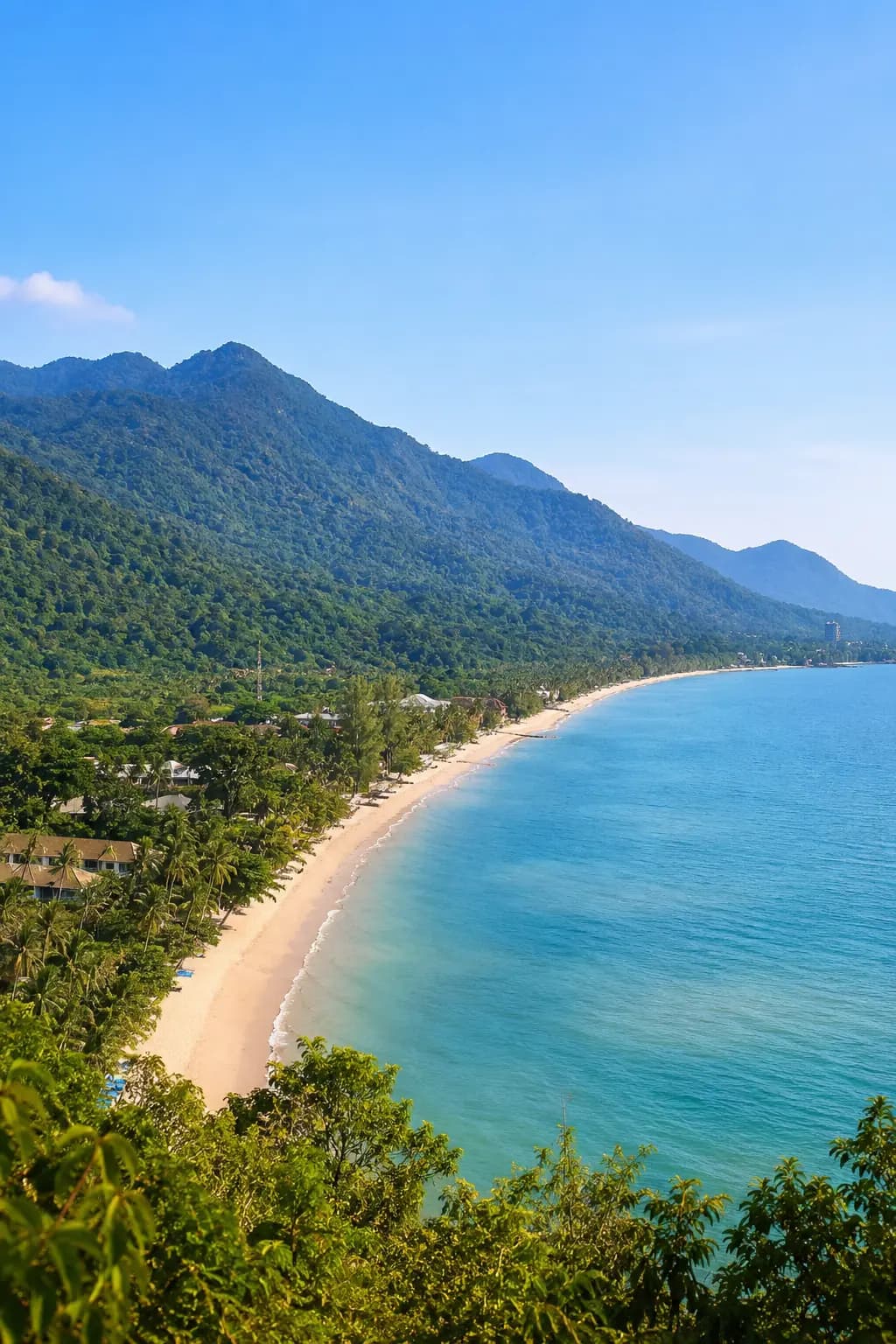
Koh Chang is Thailand’s second-largest island and one of the country’s most mountainous beach destinations.
That scale matters.
The island is not one walkable resort strip. Most visitor infrastructure follows the west coast, while the south and east become quieter, more spread out and more closely tied to fishing communities, nature and marine access.
WHITE SAND BEACH & NORTH
White Sand Beach, or Hat Sai Khao, is Koh Chang’s best-known northern resort strip.
It has hotels, restaurants, shops, beach access and some of the easiest first-time logistics on the island.
Farther north, Klong Son and the ferry-arrival side feel more local and practical.
This area works especially well for short stays and travellers who want to minimise transfer time after arriving from the mainland.
KLONG PRAO & CHAI CHET
Klong Prao and Chai Chet form the central-west resort corridor.
The beach is long, the scenery includes estuary and lagoon sections, and the area gives relatively easy access to Klong Plu Waterfall.
It feels calmer than White Sand Beach while remaining well supplied with hotels and restaurants.
For many visitors, this is Koh Chang’s strongest all-round resort zone.
KAI BAE & LONELY BEACH
Kai Bae and Lonely Beach create the island’s most obvious social contrast.
Kai Bae offers a more balanced beach-resort atmosphere, with cafés, restaurants and one of Koh Chang’s best-known viewpoints.
Lonely Beach is more informal and nightlife-oriented, with a younger traveller scene and casual bars.
Bailan continues south with a quieter feel.
BANG BAO & SOUTH KOH CHANG
Bang Bao is the key southern visitor hub.
Its pier and waterfront are important for seafood, boat trips and island connections.
Klong Kloi and other southern beaches become quieter and more spread out.
Thailand4U’s southern catchment also absorbs selected east-side highlights such as Salak Phet and Salak Khok where they make practical sense, because creating separate public micro-areas would fragment the island.
WATERFALLS
Waterfalls are one of Koh Chang’s defining non-beach attractions.
Klong Plu is the best-known visitor waterfall on the west side.
Than Mayom is another important park waterfall on the eastern side.
Water flow, trail conditions and access vary with season and weather.
Do not assume waterfall conditions from photos taken in a different month.
MU KO CHANG NATIONAL PARK
Much of Koh Chang’s mountain and forest landscape forms part of Mu Ko Chang National Park.
The wider park also includes offshore islands and marine areas.
Park rules, fees, opening conditions and marine access can change.
Check current official information before planning around a specific trail, waterfall or protected island.
VIEWPOINTS
Koh Chang’s steep terrain creates dramatic coastal viewpoints.
Kai Bae Viewpoint is the most famous visitor stop and looks over offshore islands to the west.
Roadside viewpoints are useful, but stopping and parking conditions should be treated carefully.
ROAD TRAVEL
The island’s road network is one of the most important practical realities for first-time visitors.
Distances may look short on a map, but hills, bends, traffic and weather make travel slower.
The west-coast road is particularly winding in places.
Scooters are common, but they are not essential and should never be recommended to inexperienced riders as a default.
SONGTHAEWS AND TAXIS
Shared songthaews and taxis are useful for moving between the main west-coast areas.
Availability can become thinner in remote southern or eastern locations.
Agree the price or understand the fare arrangement before leaving.
For late-night or remote travel, pre-arranging transport can be useful.
BEACHES
Koh Chang’s west coast contains the main visitor beaches.
White Sand is the most developed.
Klong Prao is longer and more resort-oriented.
Kai Bae feels smaller and more social.
Lonely Beach is linked with budget travel and nightlife.
Farther south, beaches become quieter and more remote.
Sea and sand conditions change with weather and season.
DIVING AND SNORKELLING
Koh Chang is an important base for diving and snorkelling in Trat waters.
Trips commonly head towards offshore reefs and islands, including the Koh Rang area when conditions and access allow.
Marine conditions and seasonal weather can affect both comfort and availability.
Choose established operators and verify the current route rather than assuming a specific site is always accessible.
BANG BAO AND BOAT TRIPS
Bang Bao is a key departure point for many marine excursions.
Snorkelling, diving and inter-island connections may operate from the southern pier area depending on season and operator.
Treat published schedules as time-sensitive.
The southwest monsoon can affect smaller-boat travel even when normal vehicle ferries to Koh Chang continue operating.
FOOD
Seafood is central to Koh Chang’s food identity.
Bang Bao is particularly associated with waterfront seafood.
The west-coast resort areas also offer a broad mix of Thai food, local seafood, cafés and international restaurants.
White Sand has the greatest concentration, while quieter southern and eastern areas have fewer choices.
NIGHTLIFE
Koh Chang has nightlife, but it is moderate.
White Sand has bars and live music.
Lonely Beach is the strongest mainstream social nightlife area.
Kai Bae and Klong Prao are more relaxed.
Bang Bao and the south are much quieter.
The island is a better fit for casual nights than for a major clubbing trip.
ARRIVING FROM THE MAINLAND
Koh Chang is reached by vehicle ferry from Trat Province.
Mainland piers sit outside the island’s public area structure.
Trat Airport is also on the mainland, not on Koh Chang itself.
Transfer arrangements, ferry terminals and operating patterns can change, so check current logistics before travel.
WEATHER AND SEASONALITY
Trat and Koh Chang receive substantial monsoon rainfall.
The wetter southwest-monsoon period can affect beaches, waterfalls, road conditions and smaller-boat trips.
At the same time, waterfalls can be stronger and the island extremely green.
Avoid treating one season as simply “good” and another as “bad”.
The right season depends on whether your priority is calm sea, lush nature, fewer visitors or marine activities.
HOW LONG SHOULD YOU STAY?
Three nights gives you a quick resort stay.
Five to seven nights is better for a first visit because it allows time for more than one beach area, a waterfall or viewpoint and one marine or south-island excursion.
A week or more works well for travellers who want to move slowly, dive, explore the east side or split the stay between two areas.
Koh Chang is large enough to reward planning but relaxed enough that the best days often leave room for nothing more ambitious than a beach, a meal and a sunset.