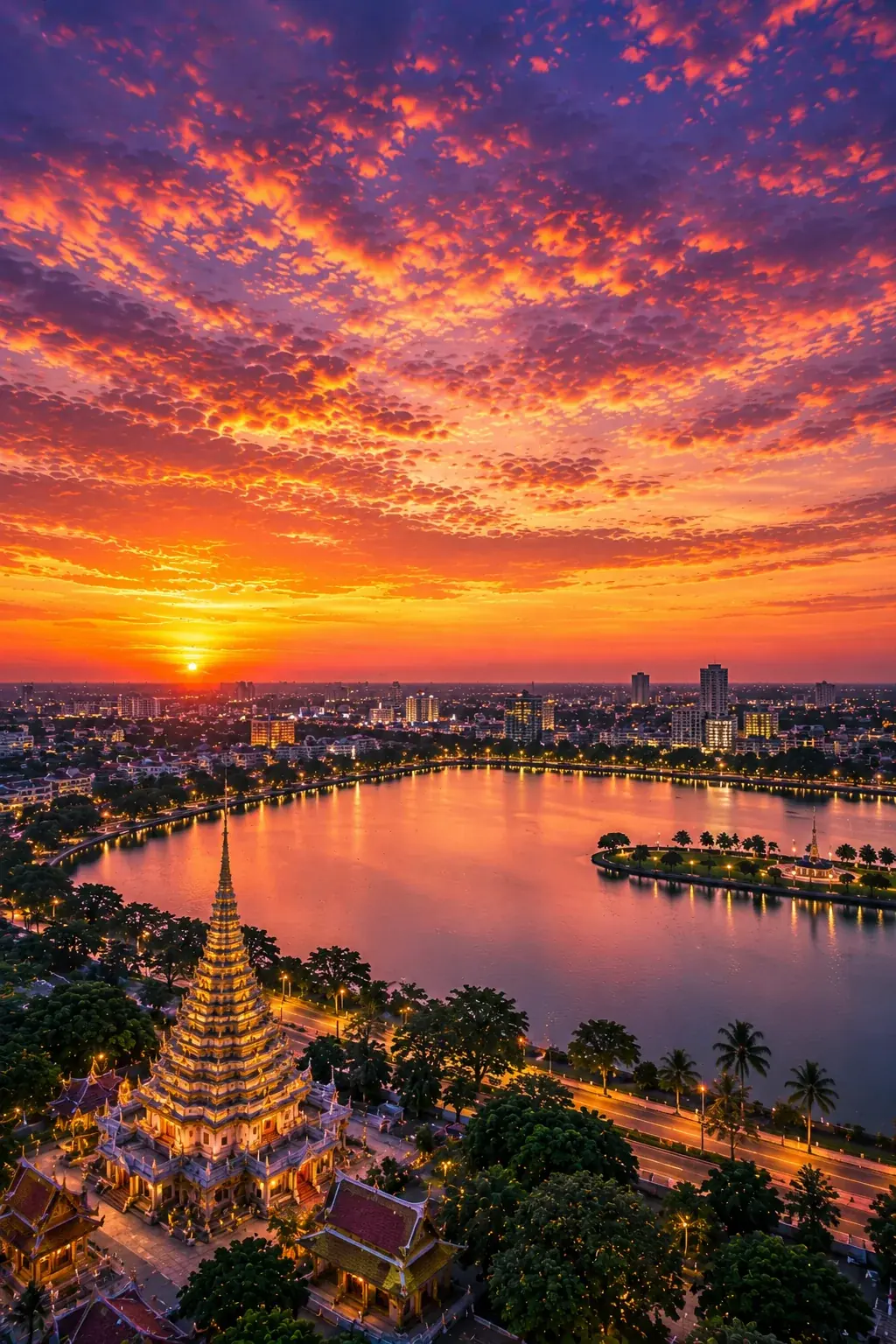
Khon Kaen is one of the clearest places to see modern Isan at work.
It is a large regional city shaped by universities, hospitals, business, transport, shopping and a strong local food culture. The atmosphere is younger and more contemporary than many visitors expect from northeastern Thailand, and much of the city’s energy comes from students, professionals and residents rather than international tourism.
That gives Khon Kaen a very different rhythm from Thailand’s resort destinations.
WHY KHON KAEN MATTERS
Khon Kaen is one of northeastern Thailand’s most important urban centres.
The city is a major transport, education and commercial hub, and its location makes it a natural stop for travellers moving through Isan.
Khon Kaen University has a major influence on the city. It brings a large student population, research, medical services, cafés, restaurants and a youthful evening scene.
At the same time, the city serves a much wider region, so malls, hospitals, markets, hotels and transport links are all built on a scale that reflects its regional importance.
THE LAKES GIVE THE CITY ITS SHAPE
Khon Kaen is not a city built around one old centre.
Instead, different parts of the city have their own roles, and the lakes help give some of them a clearer identity.
Kaen Nakhon is one of the best-known urban lakes and an important local landmark.
The area around it is useful for walking, relaxing and seeing a calmer side of the city.
Bueng Kaen Nakhon is also closely associated with Wat Nong Wang, whose tall stupa is one of Khon Kaen’s most recognisable sights.
Other lake and park areas around the city add more open space to what is otherwise a busy regional centre.
FOOD IS CENTRAL TO THE EXPERIENCE
Food is one of the strongest reasons to spend time in Khon Kaen.
You will find the full range of Isan favourites: som tam, grilled chicken, sticky rice, spicy salads, grilled meats and soups, as well as local restaurants serving regional dishes throughout the city.
Because Khon Kaen is a university and business centre, the restaurant scene is broader than traditional Isan food alone.
Thai food, cafés, Korean and Japanese restaurants, international comfort food, bakeries and modern dining are all part of everyday city life.
Night markets and food streets are especially useful for visitors because they bring together local dishes, snacks, drinks and a more social evening atmosphere.
A YOUNGER CITY
Khon Kaen’s student population changes the rhythm of the city.
Cafés, casual restaurants, live music, bars and late-night food are more visible than in many provincial cities.
The nightlife is still primarily local rather than tourist-focused, but the university influence gives it a noticeably youthful energy.
That does not make Khon Kaen a party destination.
It simply means that evenings can feel lively, social and contemporary without relying on international nightlife districts.
MARKETS AND MODERN SHOPPING
Like other major Thai regional cities, Khon Kaen mixes local markets with large modern malls.
Day and evening markets remain important for food, clothes and everyday shopping.
At the same time, major shopping centres offer cinemas, supermarkets, restaurants, cafés and air-conditioned spaces that are part of normal city life.
This contrast is useful for understanding Khon Kaen.
Traditional Isan food and silk can sit comfortably alongside modern retail, coffee culture and university life.
TEMPLES AND LOCAL IDENTITY
Khon Kaen is modern, but it is not disconnected from religion and regional tradition.
Wat Nong Wang is the city’s most recognisable temple and is known for its multi-level stupa overlooking Kaen Nakhon.
Temples throughout the city remain active parts of local life rather than simply visitor attractions.
The wider province is also strongly associated with northeastern cultural traditions, particularly silk and mudmee weaving.
These elements give the city a regional identity that sits underneath its modern surface.
NIGHTLIFE – LOCAL, YOUNG AND SPREAD OUT
Khon Kaen has a real nightlife scene, but it does not revolve around one tourist strip.
Bars, live music venues, pubs, restaurants and student-oriented areas are spread through different parts of the city.
The atmosphere is mostly Thai and local.
That can make evenings more interesting for visitors who want to go out without entering a tourism-focused nightlife district.
Nightlife is part of Khon Kaen rather than the reason the city exists.
The university influence gives Khon Kaen a younger feel.
BEYOND THE CITY
The wider province adds another layer to Khon Kaen.
Phu Wiang is famous for dinosaur discoveries and has become one of the province’s most distinctive attractions.
The area includes museums, fossil sites and landscapes linked to Thailand’s palaeontological history.
Ubolratana Dam is another well-known regional destination, while national parks, reservoirs, rural communities and silk-producing areas offer reasons to travel beyond the city.
These places are not all quick city-centre attractions.
Khon Kaen Province is large, so check distances before treating something listed under “Khon Kaen” as a short excursion.
GETTING AROUND
Khon Kaen is spread out enough that transport matters.
Walking works well around individual areas, lakes, markets and shopping districts, but not for moving across the whole city.
Ride-hailing services and taxis are useful for direct trips.
Local transport and motorcycle taxis can also work for shorter journeys.
The city is an important bus and rail hub, with connections to Bangkok and destinations across Isan.
Khon Kaen also has an airport, which makes it one of the easiest northeastern cities to reach directly from other parts of Thailand.
HOW LONG SHOULD YOU STAY?
Two nights is enough for a quick introduction to the city.
Three or four nights gives you more time to explore the food scene, markets, lake areas, temples and local nightlife without rushing.
A longer stay makes sense if you want to use Khon Kaen as a base for the wider province or as part of a slower journey through Isan.
Khon Kaen is not a city built around collecting famous attractions.
It is about understanding what modern northeastern Thailand looks like when education, business, local culture and everyday life all meet in one place.
For travellers who enjoy cities for their atmosphere as much as their sights, that mix is where Khon Kaen becomes interesting.