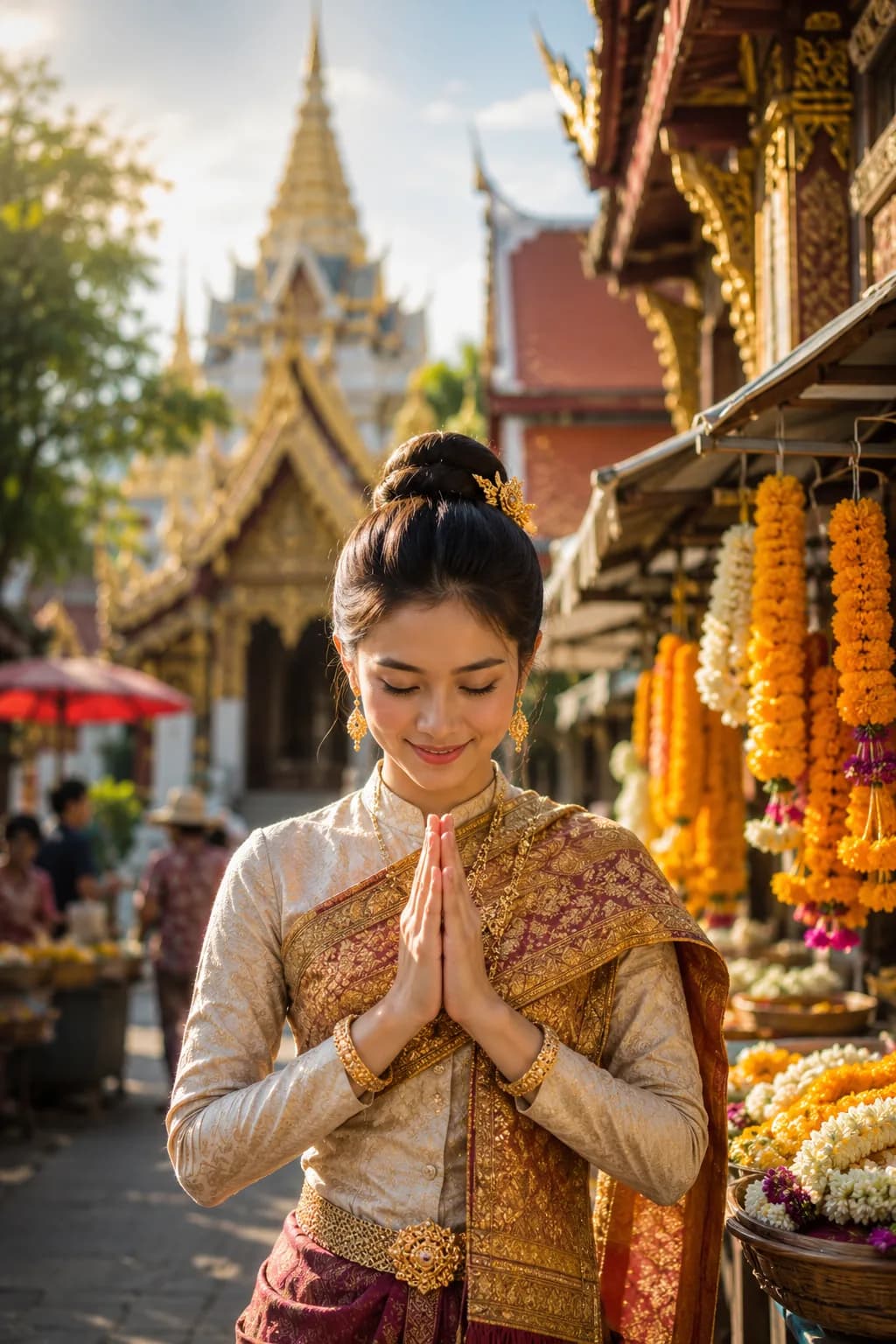
The stereotype of the gentle, dependent Thai woman waiting for a man to provide is far too convenient. It fits neatly into almost every lazy explanation of Western men and Thailand: he provides the money, she provides the femininity, and everybody can go home early because the mystery has apparently been solved.
Real Thai women have an inconvenient habit of ruining the story. They work. They earn. They raise children. They care for parents. They migrate for jobs. They manage households, make financial decisions, support relatives and, in many families, carry a rather impressive collection of responsibilities at the same time.
None of this means Thailand has somehow achieved perfect gender equality. It has not. Thai women still carry a disproportionate share of unpaid domestic and care work, and UN Women data show a substantial gap between the time women and men spend on those responsibilities. But that is precisely why the stereotype of passivity works so badly. Doing more care work is not the same thing as doing nothing. Quite the opposite.
One of the easiest mistakes a foreign observer can make is to look at a woman performing a recognisably feminine role — caring for children, looking after elderly parents, managing a household, perhaps expecting a male partner to contribute financially — and assume that this tells us everything about her power, competence or independence. It does not. A woman can value femininity and still be formidable. She can appreciate a man who provides and still have her own income. She can care deeply about family obligations while being perfectly capable of making decisions without anybody's permission, and she can prefer differentiated roles inside a relationship without wanting to be subordinate inside it. Femininity does not equal dependence.
That distinction matters because paid work and family responsibility can coexist rather than replacing one another. Thailand-specific labour research provides a useful counterweight to the image of marriage turning women into economically inactive dependants: one study found married Thai women in its analysis were more likely to participate in the labour force and work more hours than unmarried women, with differences by age, education and care responsibilities. Broader gender and economic indicators likewise show substantial female participation in paid work. The point is simple: paid work does not erase family responsibility, and family responsibility does not erase economic agency.
That has been visible for generations in migration as well. Women moving from rural communities to cities for employment have long been part of Thailand's modern economic story. Research on female labour migration has documented how leaving home for work could change income, independence, courtship and ideas about marriage without severing the connection to the family left behind. That combination is important. A young woman may leave her home province precisely because she wants greater independence, earn her own money, choose her own partner and build a life hundreds of kilometres away — and still send money home, worry about her parents, help a sibling, or expect to be involved when a family problem appears.
From a strongly individualist perspective, those things can look contradictory. They are not necessarily contradictory to her. Independence can mean having the ability to fulfil responsibilities rather than escaping them.
That changes the way we need to think about provision too. When a Thai woman values financial stability in a man, the lazy interpretation is often that she wants somebody to support her. Sometimes financial support is important — pretending otherwise would be as silly here as it was when we discussed money earlier — but what the money is for matters. Security can mean rent, children, being able to help ageing parents, protection against illness or an unstable income, or simply building something together. And the woman valuing that security may simultaneously be working, earning and contributing in ways that are less visible to the outsider making judgments from the next table.
This is where the language of “provider and dependent” starts becoming dangerously crude. Providing money is one contribution. Providing care is another. Managing children, family relationships, appointments, meals, paperwork and an elderly parent who has suddenly developed six different medications is labour too, even if nobody issues an invoice for it. And in Thailand, women perform substantially more unpaid domestic and care work than men.
That becomes particularly interesting in Thai–Western relationships because the balance can shift dramatically over time. Imagine the classic photograph again: an older Western husband and a younger Thai wife. At the beginning of the relationship, the visible imbalance may appear obvious. He has more money. Perhaps he owns the house, pays most of the bills or possesses the passport and savings that make international travel easier. She looks like the dependent one.
Now move the photograph forward twenty years. He is older, perhaps much older. His health deteriorates. His Thai remains limited. Hospitals, insurance, medication, government paperwork and everyday life become harder to navigate. The woman once assumed to be economically dependent may now be the person organising his appointments, translating conversations, making decisions and providing much of his daily care. Research into ageing Thai–Western couples has documented exactly this kind of reversal, showing how frail Western husbands can become highly reliant on Thai spouses later in life. The evidence is qualitative rather than something we should turn into a universal rule, but the mechanism matters: dependency moves, and power moves with it. Relationships last long enough for the person who once looked strongest to become the person who needs help getting out of bed.
That does not prove every unequal relationship eventually becomes equal, and it certainly does not remove the risks created by money, age or immigration dependence. But it reminds us how poor a single snapshot can be at explaining an entire marriage.
There is another easy mistake: confusing a restrained communication style in an individual with weakness. People differ enormously, and cultural habits can influence how openly disagreement is expressed, but quietness is not evidence of passivity. Not raising a disagreement in public is not the same as having no disagreement, and behaving in a feminine way does not mean surrendering the final say over one's own life.
The same caution applies in reverse. We should not respond to one stereotype by manufacturing another: the secretly dominant Thai woman who quietly controls everything while the clueless foreign husband signs cheques. That caricature is just the old stereotype wearing different clothes.
Women differ. Families differ. Relationships differ. Some Thai women want conventional roles; some want highly equal ones. Some are career-driven, some centre family, and some want both and spend years discovering that there are still only twenty-four hours in a day. Some want a Western partner because of attraction, personality or circumstance. Some value stability. Some prefer older men, some dislike older men completely. Some want marriage, some do not.
The important point is agency. Thai women are not scenery in a story about Western men. They are half of the decision. That sounds embarrassingly obvious, yet much of the conversation about these relationships manages to forget it. The Western man is analysed endlessly — what he wants, what he lacks, why he travels, what happened to him back home, whether he wants sex, status, affection or a second chance — while the woman can quietly become an explanation rather than a person. Poor. Young. Thai. Therefore interested.
But people do not form relationships because a demographic table instructed them to. Economic circumstances create possibilities and constraints. Culture influences expectations. Family responsibilities matter. Age matters. Attraction matters. Inside all of that, people still choose, and choices can contain several motives at the same time. A woman can love a man and appreciate the stability he brings. She can enjoy his personality and prefer the life they can build together. She can be attracted to him and care about what the relationship means for her family. None of those things automatically cancels the others — human motivation does not become suspicious simply because it contains more than romance. Most relationships would fail that test.
The more useful question is whether both partners retain meaningful agency: whether they can say no, whether they can negotiate, whether they can leave, whether their contribution is respected, and whether the relationship works for both of them rather than merely fitting somebody else's idea of what it should look like.
That brings us somewhere important. If Thai women are not simply passive recipients of Western money, and Western men are not simply purchasing a traditional relationship, then the existence of so many visible Thai–Western couples needs a better explanation. Why this country? Why did Thailand, specifically, become one of the places where tourism, migration, ageing, attraction, economics and cross-cultural relationships became so deeply intertwined? Because none of what we have discussed so far could happen at this scale if the two groups had never kept meeting each other in the first place. And that story began long before Tinder.