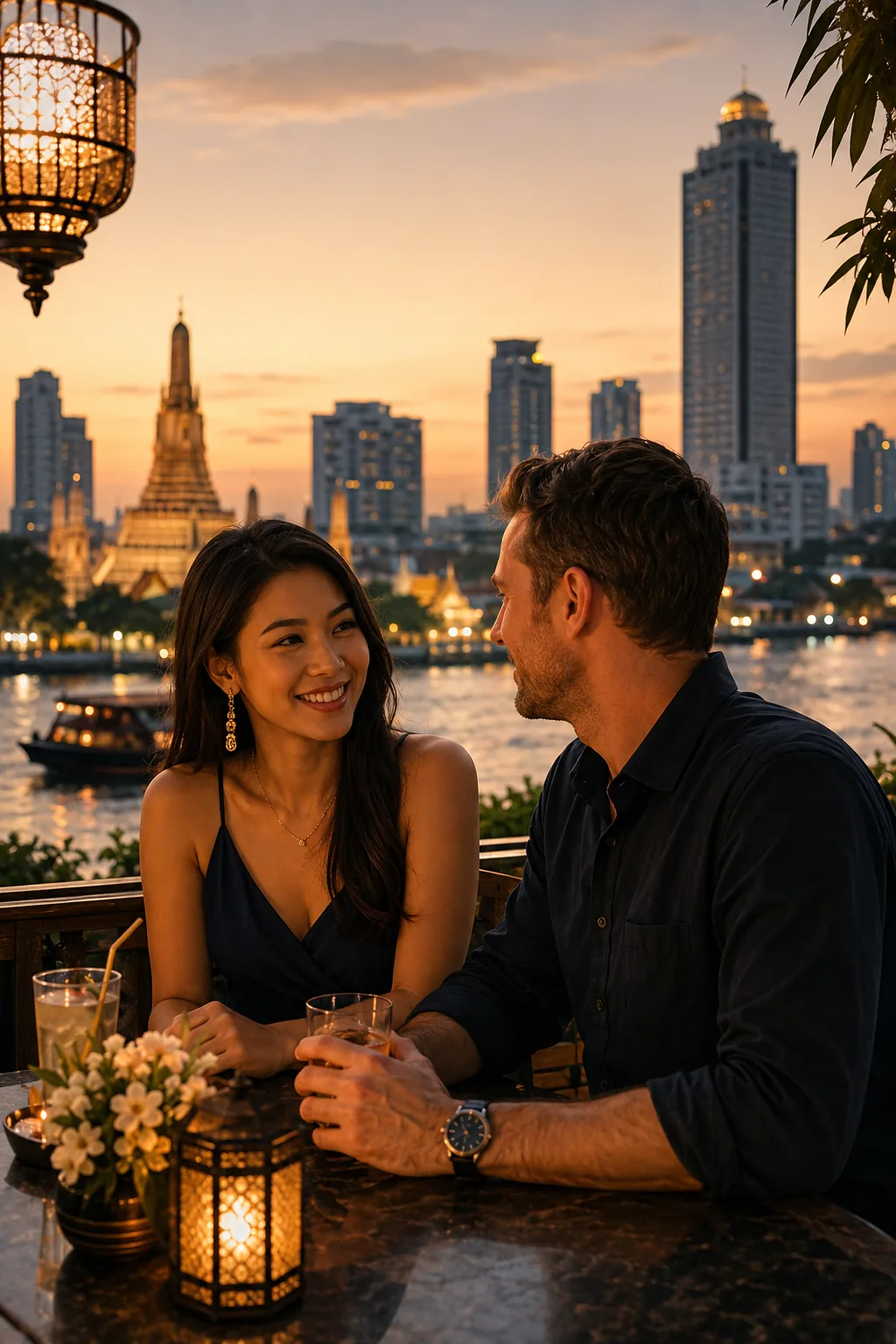
So, You Are Thinking About Marriage
A proposal in Thailand can look exactly like the proposal somebody imagines in London, Stockholm or New York.
A ring.
A restaurant.
A private conversation.
One person asking a question.
It can also be part of a much larger family process involving relatives, ceremonial trays, auspicious timing and wedding traditions.
Both can be Thai.
That is the first thing to understand about engagement in modern Thailand. There is no single national sequence that every couple follows. Regional traditions, religion, family preferences and personal style all matter.
The central requirement is simpler than the ceremony:
Both people intend to marry.
There Is No Single Thai Engagement
Traditional Thai engagement and wedding customs are not identical across the country, and contemporary couples often mix older customs with modern expectations.
Thailand Foundation notes that engagement and wedding ceremonies were traditionally held on separate dates, while many couples now combine them on the same day for convenience. Some couples still have a distinct engagement period. Others treat the proposal as the engagement and save traditional elements for the wedding day.
A foreign partner should therefore avoid arriving with a fixed expectation of what “Thai engagement” must look like.
Ask the person you plan to marry.
Then ask how much family tradition matters to both of you.
The Proposal
There is nothing culturally wrong with a private proposal.
There is also nothing inherently more authentic about arranging a large traditional family event.
Some couples exchange rings privately first and involve family later. Some families prefer early discussion before plans become public. Others are relaxed about the order.
The safest relationship advice is not to surprise somebody with a ceremonial structure they never asked for.
A proposal should express mutual intention, even if the exact moment is a surprise.
The answer still has to be voluntary.
Family enthusiasm is not consent on behalf of either partner.
When Family Enters the Picture
Family can become more visible around engagement because marriage links social networks as well as two individuals.
Parents or respected elders may be involved in discussions, ceremonial roles or planning. In some families that involvement is emotionally important. In others, the couple manages nearly everything themselves.
Do not translate family participation into control automatically.
Do not assume the opposite either.
If a family expects a formal visit, ceremony or discussion, ask your partner what it means and which parts matter to them personally.
The goal is not to perform for relatives while ignoring the couple.
Khan Maak
In traditional Central Thai wedding and engagement sequences, the Khan Maak procession is one of the most recognisable elements.
One side of the couple arrives with relatives and friends carrying ceremonial trays. Items can include auspicious objects, an engagement ring and, in ceremonies where it is part of the arrangement, Sin Sod. Music, dancing and playful symbolic “gates” may be included.
The point is family and community symbolism.
It is not a pricing exercise.
Online descriptions sometimes turn the gates or trays into a negotiation manual. That misses the cultural meaning. If your family plans a Khan Maak, let the people organising the ceremony explain the local form rather than assuming every wedding follows the same version.
Rings and Ceremonial Gifts
Engagement rings appear in modern Thai relationships and can also appear within traditional ceremonial sequences.
There is no universal rule about design, price or who must buy what.
Some couples follow international ring traditions.
Some use family jewellery.
Some keep rings simple.
Some ceremonies include other symbolic gifts.
Do not confuse every ceremonial transfer with Sin Sod or Khong Man. These concepts have distinct cultural and, in some contexts, legal meanings.
If a particular item matters to the family, ask what role it plays.
Sin Sod Deserves Its Own Conversation
Sin Sod is often the first subject foreign partners encounter when reading about Thai engagement and marriage.
It is also one of the most badly simplified.
Sin Sod has legal and cultural context, can be included in wedding or engagement traditions and varies widely in how families treat it. It is not a universal price for marriage and should not be collapsed into the cost of an engagement ring or a symbolic tray.
Do not begin the engagement discussion by searching “how much should a foreigner pay?”
Begin by asking whether Sin Sod is relevant to this family at all and what meaning the family attaches to it.
The dedicated Thailand4U Sin Sod article handles the subject in depth.
Regional and Religious Differences
A Central Thai ceremonial model should not be presented as the only authentic Thai engagement.
Northern traditions can draw on Lanna customs.
Isan families may have their own local wedding practices.
Southern Thailand includes Muslim wedding traditions and other regional communities with distinct customs.
Christian, Buddhist, Muslim, secular and mixed-faith couples may all structure engagement differently.
Modern Thailand also contains families that use very little traditional ceremony.
This is why a checklist copied from one wedding cannot define a country.
Auspicious Dates and Family Tradition
Some families consult monks, astrologers or traditional calendars when choosing auspicious dates for engagement or marriage.
Others choose a date based on venue availability and annual leave.
Both approaches exist.
If auspicious timing matters deeply to one side of the family, it is worth discussing early because it can affect planning. It should not be presented as an obligation for every Thai couple.
Tradition works best when the people involved understand why they are following it.
Engagement Is Not Legal Marriage
A proposal does not create legal marital status.
An engagement ceremony does not create legal marital status.
A wedding ceremony itself does not necessarily create legal marital status.
Thailand's legal marriage status comes from registration under Thai law.
That distinction matters for international couples because immigration, property, inheritance and recognition abroad depend on legal documents rather than photographs of a ceremony.
Romance and law can happen on the same day.
They are still different processes.
Marriage Equality and Modern Thailand
Thailand's marriage-equality reform made the legal framework gender-inclusive from January 2025.
Modern engagement writing should reflect that reality.
Thai engagement is not exclusively a “man proposes to woman” story. Same-sex couples, different-sex couples and people with varied family structures can all combine modern and traditional customs.
Some older sources use gendered language because the law and social expectations at the time were gendered.
Contemporary Thailand4U content should not reproduce that limitation as if it were still the only model.
Agree What Engaged Means
This is the part that matters after the photographs.
Does engagement mean a wedding is definitely planned?
Is there a rough timeline?
Will families be involved?
Are there financial expectations?
Where would the couple live?
Does one partner expect migration after marriage?
A couple can share a ring and still imagine completely different futures.
The engagement should make intentions clearer.
It should not replace the conversation.
The Thailand4U Take
There is no single Thai way to get engaged.
A private proposal can be authentic.
A family ceremony can be authentic.
A Khan Maak procession can be meaningful.
A modern ring exchange can be meaningful.
The important distinction is between tradition and obligation.
Let culture shape the celebration where it matters to you and your families.
Do not let ceremony replace consent.
An engagement should express a mutual intention to marry.
Everything else is how the couple chooses to tell that story.