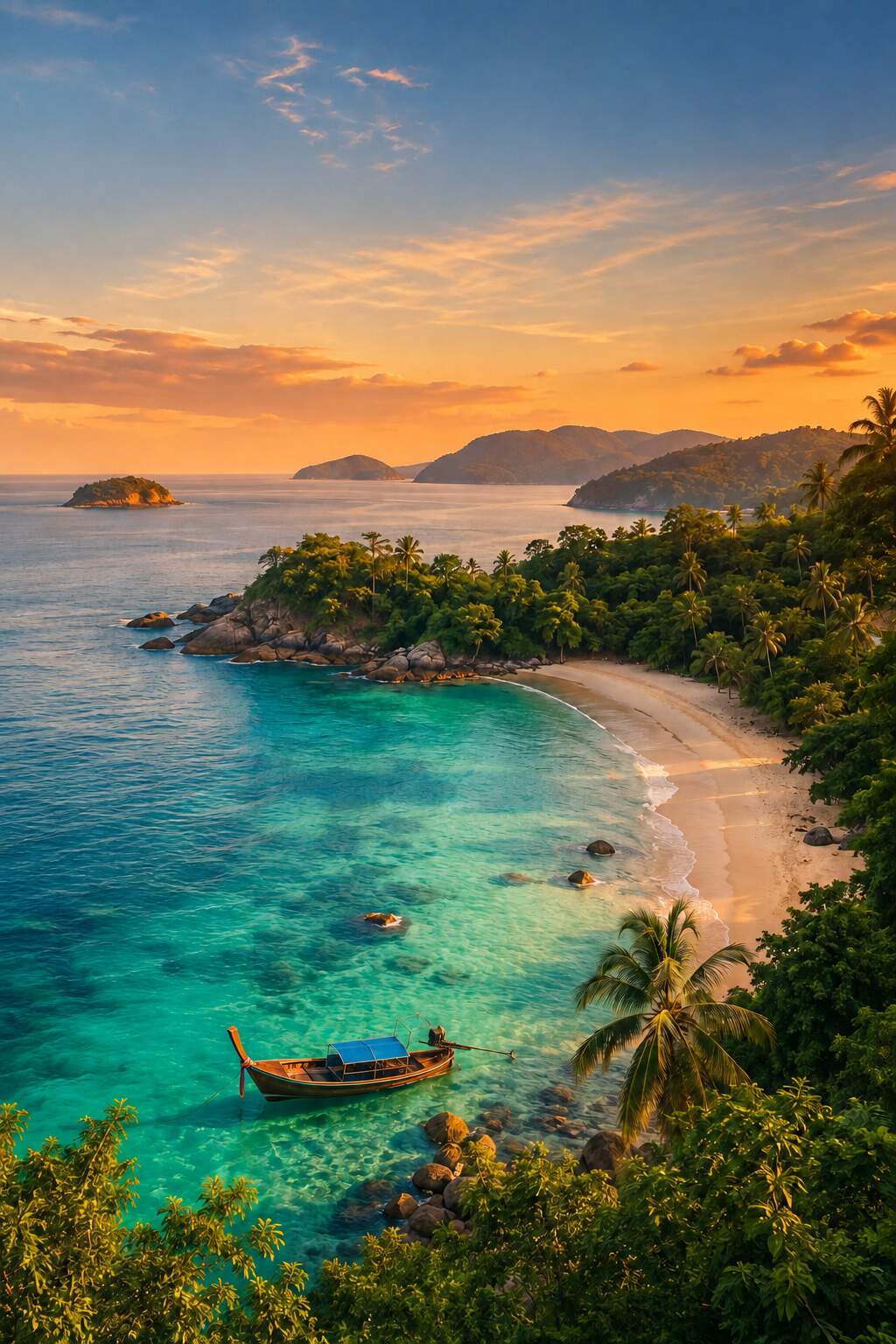
Phuket is large enough to feel like several destinations in one.
The west coast is dominated by beaches and resort towns, while Phuket Town has a completely different urban and cultural identity.
Thailand4U therefore uses four public traveller areas: Patong, Karon, Kata and Phuket Town.
PATONG
Patong is Phuket’s busiest resort centre.
Patong Beach, Bangla Road, Jungceylon and dense hotel development create the island’s most intense combination of beach tourism, nightlife and shopping.
It is ideal for travellers who want activity close at hand.
It is a poor fit for anyone looking for quiet evenings.
KARON
Karon sits south of Patong and feels more open.
The beach is long, the resort strip is less compressed and the nightlife is much calmer.
Families and couples often prefer it because it still has plenty of restaurants and services without the same late-night energy.
KATA
Kata is smaller and more compact than Karon.
Kata Beach and Kata Noi give the area two distinct beach settings, while the town has cafés, restaurants and a polished resort feel.
The hills around Kata mean hotel distance can be deceptive: a short map line can still mean a steep walk.
PHUKET TOWN
Phuket Town is the island’s historic urban centre.
Old Town streets such as Thalang Road, Dibuk Road, Phang Nga Road and Soi Romanee reflect the island’s trading, tin-mining and multicultural history.
The architecture is often described as Sino-European or Sino-Portuguese, and the area has strong Peranakan cultural influence.
Cafés, museums, shrines, local food and a smaller nightlife scene make Phuket Town a very different base from the beaches.
OLD TOWN
Old Phuket Town is one of the island’s strongest cultural experiences.
TAT highlights the historic streets, multicultural settlement history, museums and Sunday walking street as key parts of the area.
It is worth visiting even if you stay on the west coast.
If you specifically want the Sunday market, verify the current operating arrangement before travelling across the island for it.
BEACHES
Phuket’s major west-coast beaches include Patong, Karon and Kata, with many others outside Thailand4U’s four public area navigation structure.
Red flags matter.
During rough-sea periods, especially in the southwest monsoon, dangerous surf and rip currents can occur.
Do not swim against local warnings simply because other people are in the water.
VIEWPOINTS
Karon Viewpoint is one of Phuket’s classic scenic stops and overlooks Kata Noi, Kata and Karon.
Promthep Cape is another famous sunset and viewpoint area farther south.
These are island-wide sightseeing stops, not reasons to invent new top-level Thailand4U areas.
TEMPLES
Wat Chalong is one of Phuket’s most important Buddhist temples and a major visitor stop.
Visit respectfully and dress appropriately.
Religious sites should not be treated as photo sets.
NIGHTLIFE
Phuket nightlife is highly uneven.
Patong dominates the late-night scene.
Kata and Karon have bars and social evenings but are much calmer.
Phuket Town has cocktails, pubs, live music and cultural evening venues rather than resort-club nightlife.
Choosing the right area matters if nightlife is central to the trip.
FOOD
Phuket has one of Thailand’s broadest food scenes.
Patong is strongest for sheer variety.
Kata and Karon mix Thai and international resort dining.
Phuket Town is especially strong for local dishes, older restaurants, cafés and Peranakan-influenced food culture.
A good Phuket trip should include at least one meal away from the beach-resort strip.
SHOPPING
Phuket combines malls, markets, local shops and tourist retail.
Patong is convenient for mainstream shopping.
Phuket Town has markets, independent shops and more local urban retail.
Shopping is useful but should not overshadow the island’s beach, culture and food identities.
GETTING AROUND
Phuket is too large to treat as a walking destination.
Walking works inside each area.
Between Patong, Karon, Kata and Phuket Town, use taxis, ride-hailing, local buses or arranged transfers.
Traffic can be heavy and cross-island journeys often take longer than the map suggests.
Scooters are common but are not essential, and inexperienced riders should not treat Phuket as a place to learn.
AIRPORT
Phuket International Airport is in the island’s north and sits well outside the four Thailand4U visitor areas.
Transfer time varies significantly by destination and traffic.
Patong, Karon and Kata can take much longer to reach than northern beaches.
Leave a generous margin for departures.
MARINE TRIPS
Phuket is a major gateway for island and marine excursions.
Trips may connect with Phang Nga Bay, Phi Phi, Racha islands and other Andaman destinations depending on operator, season and weather.
These are excursions, not Phuket neighbourhoods.
Sea conditions matter, especially during the wetter monsoon period.
HOW LONG SHOULD YOU STAY?
Three nights works for one-area resort travel.
Five to eight nights is better for a first visit because it leaves room for a beach base, Old Town and at least one island or sightseeing day.
A week or more suits travellers who want to split the stay between two very different areas.
Phuket rewards visitors who stop asking which version of the island is “the real Phuket”.
Patong, Kata, Karon and Old Town are all real — they simply serve different kinds of trips.