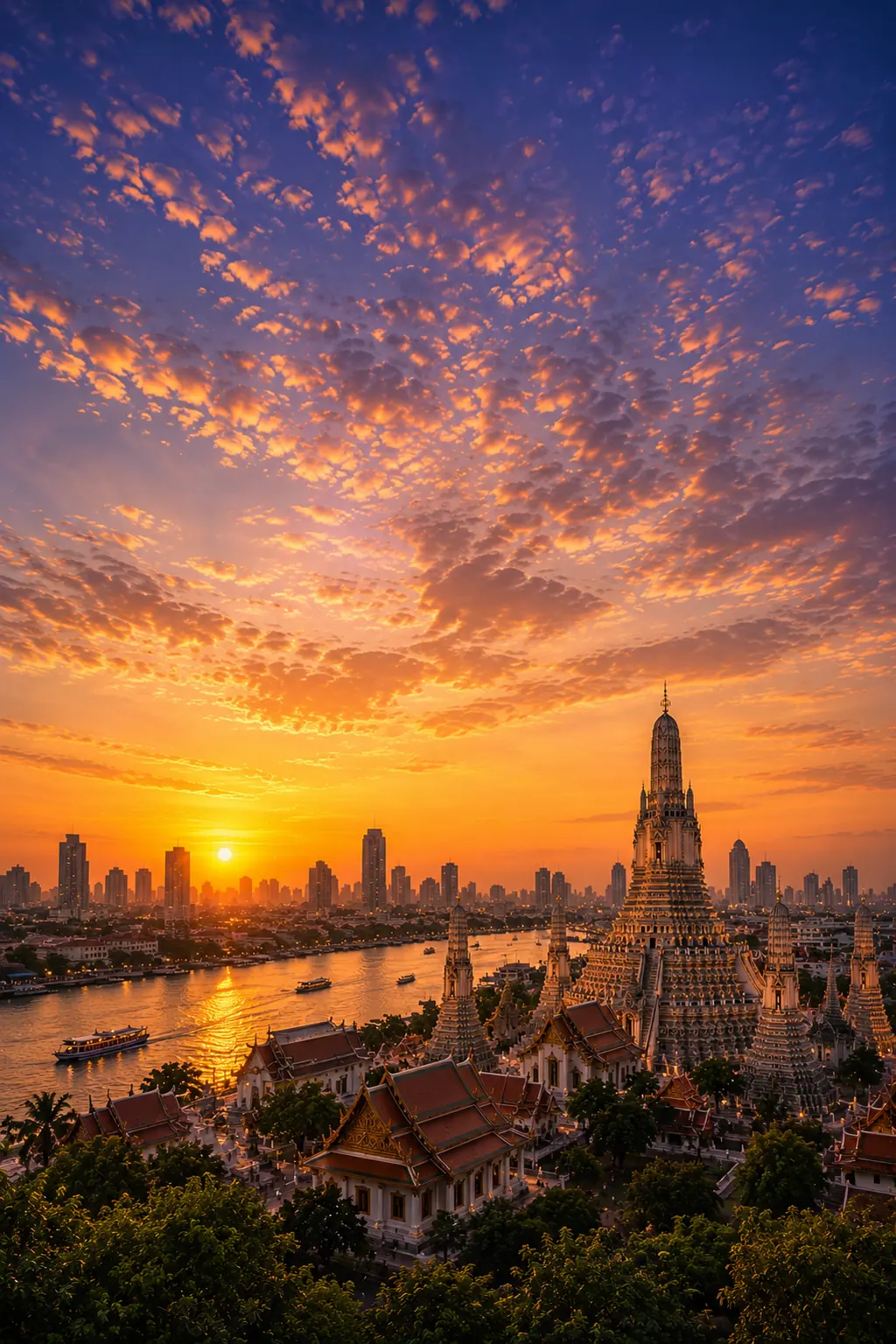
Bangkok rewards visitors who stop trying to find one universal city centre.
The capital is a network of historical, commercial, residential and entertainment districts, each with a different role.
Thailand4U therefore uses eight public traveller areas.
SUKHUMVIT
Sukhumvit is Bangkok’s most international visitor corridor.
BTS stations connect major hotel, restaurant, shopping and nightlife zones from Nana through Asok, Phrom Phong, Thonglor and Ekkamai.
It is one of the easiest first-time bases because transport and dining are so strong.
SIAM & RATCHAPRASONG
Siam and Ratchaprasong form the modern retail heart.
Siam Paragon, CentralWorld, Siam Square, the Erawan Shrine and elevated pedestrian links make this the strongest base for shopping and central BTS access.
The atmosphere is modern, crowded and highly urban.
OLD TOWN (KHAO SAN)
The Old Town is where Bangkok’s royal and early-capital history is most visible.
The Grand Palace, Wat Phra Kaew, Wat Pho, Golden Mount, museums and old civic streets dominate the daytime experience.
Banglamphu and Khao San bring a completely different backpacker and nightlife identity into the same broad catchment.
CHINATOWN
Yaowarat is one of Bangkok’s great food districts.
Chinese-Thai restaurants, street food, gold shops, temples and dense market lanes shape the area.
MRT access has made Chinatown far easier to combine with other parts of the city than it once was.
SILOM & SATHORN
Silom and Sathorn mix business towers, urban parks, nightlife and major transport.
Silom is busier at street level.
Sathorn is more office, hotel and restaurant oriented.
Together they form one of the city’s strongest central bases for travellers who want both BTS and MRT access.
RIVERSIDE
The Chao Phraya is both attraction and transport corridor.
Historic temples, heritage buildings, ferries, luxury hotels, local communities and modern developments all line the river.
Using boats can save time and also reveal a version of Bangkok that roads cannot.
RATCHADA & HUAI KHWANG
Ratchada and Huai Khwang feel more local and less tourism-dominated.
MRT stations connect residential districts, food, markets, entertainment and commercial zones.
This area suits repeat visitors and travellers who want easy city access without staying in the classic tourist core.
CHATUCHAK & ARI
Chatuchak is synonymous with the weekend market and major north-city transport.
Ari adds a very different layer of cafés, restaurants and neighbourhood life.
The two are not one walkable district, but together they form a practical north-central traveller catchment.
TEMPLES AND HISTORY
Bangkok’s headline historic sights remain concentrated around Rattanakosin and the Chao Phraya.
TAT continues to highlight Wat Phra Kaew, Wat Pho, Wat Arun, Golden Mount, Wat Ratchanadda and other major temples among the city’s core attractions.
Dress respectfully and remember that these are functioning religious and royal spaces.
FOOD
Bangkok is one of the world’s great food cities because every area offers a different pattern.
Chinatown is ideal for street food and Chinese-Thai heritage.
Sukhumvit is strongest for international breadth.
Old Town has historic local restaurants.
Silom and Sathorn span street food to fine dining.
Ari offers café culture.
The best strategy is to eat across several districts.
SHOPPING
Siam and Ratchaprasong dominate modern malls.
Chatuchak is the classic market experience.
Chinatown and Sampeng are dense traditional commercial districts.
Sukhumvit combines malls with neighbourhood retail.
Shopping geography in Bangkok is as varied as its food.
NIGHTLIFE
Bangkok nightlife is distributed rather than concentrated in one district.
Sukhumvit and Silom have the broadest late-night scenes.
Khao San is backpacker-heavy.
Ratchada and Huai Khwang offer more local entertainment.
Riverside and Siam lean more toward rooftops, restaurants and polished evening venues.
TRANSPORT
BTS and MRT should be the backbone of most first-time Bangkok travel.
River boats are especially useful for Old Town and Riverside journeys.
Taxis and ride-hailing fill gaps, but traffic can make road journeys slow.
Bangkok’s official tourism service highlights major visitor zones including Rattanakosin, Ratchaprasong, Sukhumvit and Silom, reflecting how multi-centred the city really is.
AIRPORTS
Suvarnabhumi and Don Mueang are outside the eight traveller areas.
Airport Rail Link connects Suvarnabhumi with the city rail network.
Don Mueang has rail and road connections.
Always check the current best route for your arrival time and hotel area.
HOW LONG SHOULD YOU STAY?
Two nights barely scratches the surface.
Four to seven nights is a strong first visit.
A week or more works extremely well for travellers who want food, markets, nightlife, temples and several neighbourhood days without rushing.
Bangkok becomes easier when you stop measuring the trip by the number of attractions and start thinking in districts.